Have you noticed the vibrant blue cages appearing at your local sports club or park lately? Padel is no longer just a holiday curiosity from Spain; it has officially become the fastest-growing sport in the United Kingdom. Whether you are a tennis convert or a total newcomer, finding the right padel tips can be the difference between a frustrating afternoon and dominating the court. This guide goes beyond the basic rules to tackle the nuanced questions players actually ask in UK clubs—from the “rude” short serve to the mysteries of the Playtomic ranking system.
The UK Padel Phenomenon: More Than Just a Game
Under the governance of the Lawn Tennis Association (LTA), padel has evolved from a niche activity into a nationwide social phenomenon. It is often described as a hybrid of tennis and squash, but that description fails to capture its unique spirit. In the UK, padel is a social glue, bringing together players of all ages on a padel tennis court size that is roughly 25% smaller than a standard tennis court. If you are wondering what is padel exactly, think of it as a game of chess played with a racket—where strategy and placement always trump brute force.
The “Transition” Mindset: Deep Padel Tips for Beginners
For many in Britain, the journey starts with a racket background. However, your greatest asset can often be your biggest liability. To truly excel, you must embrace specific padel tips for beginners that focus on unlearning old habits from tennis and squash. This is the most critical stage of your development; bad habits formed now will limit your ceiling as an intermediate player.
Unlearning Tennis Habits
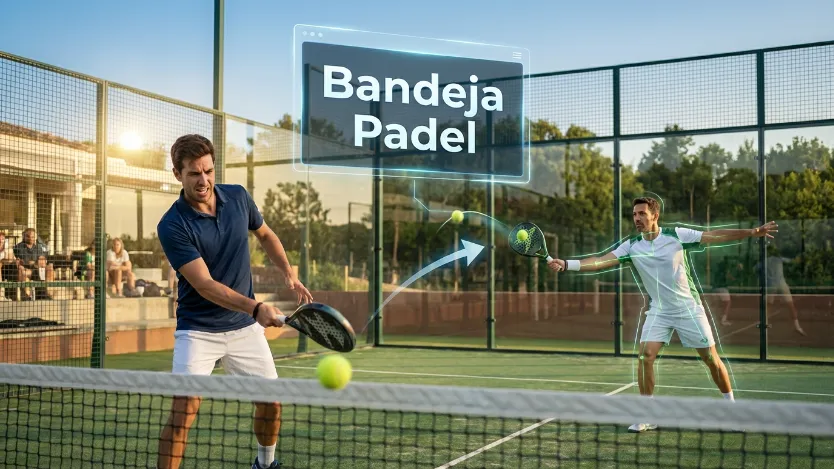
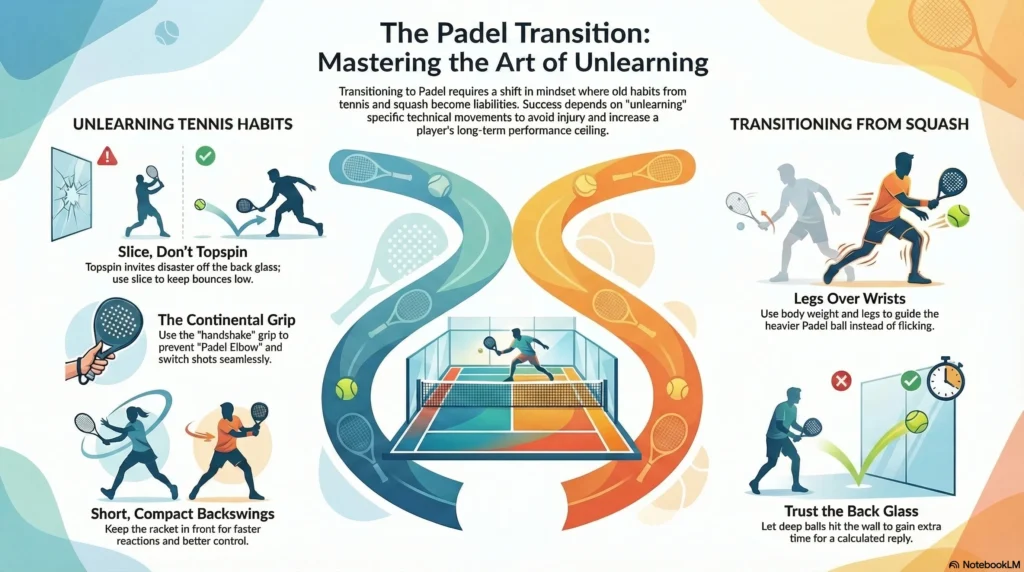
- Ditch the Topspin: In tennis, heavy topspin is king. In padel, it is an invitation for disaster. A high-bouncing topspin shot hits the back glass and pops up perfectly for your opponent to smash. Instead, focus on “slicing” the ball or hitting it flat to keep the bounce low and difficult to return.
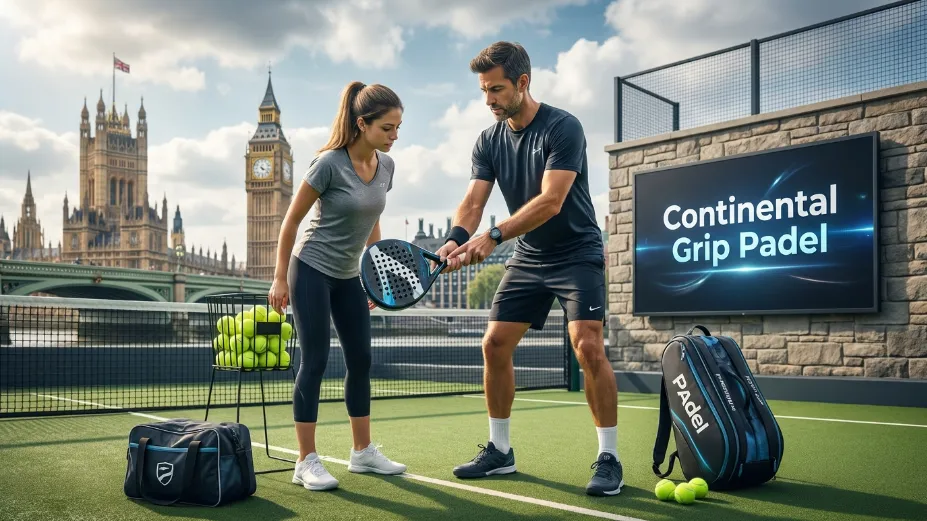
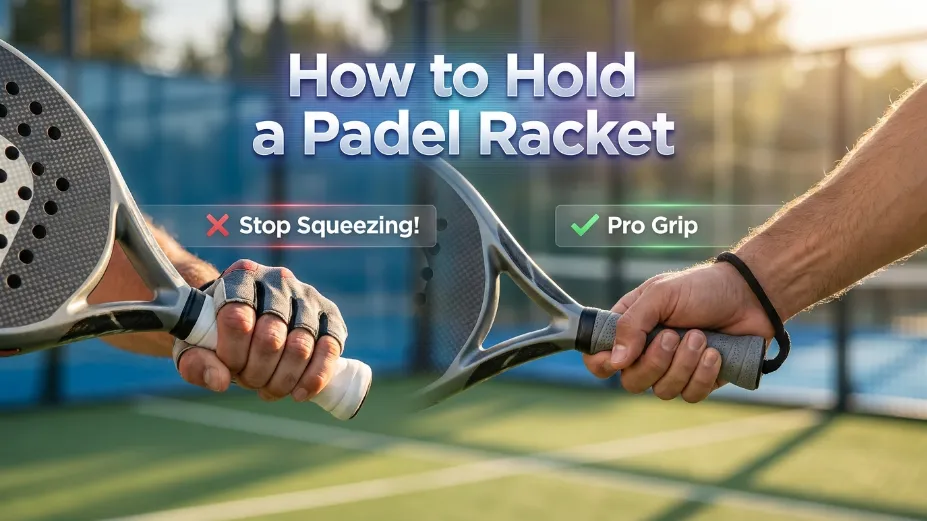
- The Continental Grip: Known as the “handshake” grip, this is non-negotiable. It allows you to transition between volleys and groundstrokes without adjusting your hand. Mastering the padel racket grip early will prevent the common “Padel Elbow” caused by flicking the wrist.
- Short Backswings: Because the court is enclosed and the ball is less pressurised, you do not need a massive wind-up. Keep your racket in front of you. A short, compact swing provides more control and faster reaction times during rapid net exchanges.
Transitioning from Squash
- Legs Over Wrist: Squash players love to use their wrists to flick the ball. In padel, the ball is heavier and the racket is solid. Using your wrist leads to inconsistency and injury. Use your legs to get low and your body weight to guide the shot.
- Trusting the Back Glass: Squash players are used to the ball “dying” in the corners. In padel, the glass is your friend. If a ball is too deep to hit comfortably, let it hit the glass. It will bounce back towards you, giving you an extra second to prepare a more calculated reply.
padel tips for beginners
Mastering the Serve: Expert Padel Serve Tips
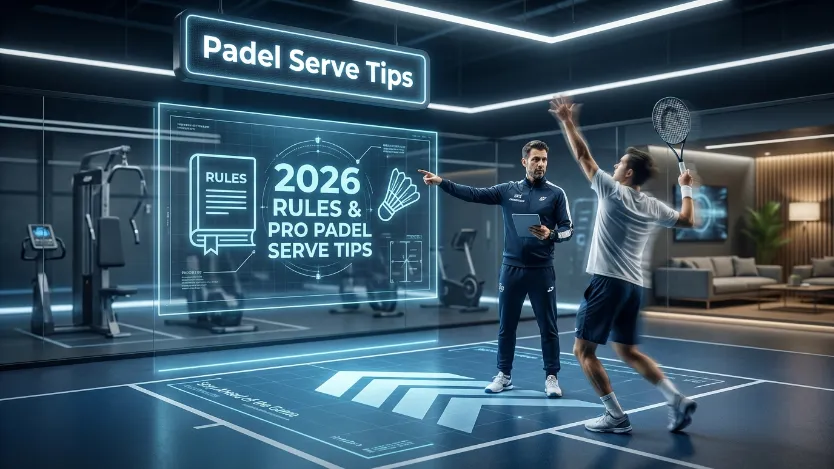
The serve in padel is often underutilised by recreational players who view it merely as a way to start the point. However, a strategic approach using padel serving tips can put you on the front foot immediately. According to the padel serve rules, the ball must be struck at or below waist height after a single bounce behind the service line.
The Mechanics of a Pro-Level Serve
To move beyond just “getting it in,” focus on these technical padel serve tips:
- High Contact Point: You are allowed to hit the ball up to your waist/belly button. Many beginners hit it too low near their knees. By hitting it as high as legally possible, you create a flatter trajectory that skids through the service box.
- The Slice Effect: Brush the back and side of the ball to create side-spin. When this serve hits the glass, it doesn’t bounce predictably; it “dies” or slides down, making it nearly impossible for the opponent to return with power.
- The 70% Power Rule: Do not serve at 100% speed. Why? Because the serve’s primary goal is to buy you time to get to the net. If you smash the ball, it comes back to you just as fast, often catching you in “no man’s land” near the service line.
Targeting and Tactics
- Target the Side Glass: This is the gold standard of padel serving tips. A ball that bounces and then clips the side glass forces the receiver to judge a complex rebound. Even if they get it back, it is usually a weak lob you can easily finish.
- The Body Serve: Occasionally aim directly at the receiver’s hip. This “jams” them, preventing a full swing and forcing a hurried block return.
- The “T” Serve: Aiming for the central line (the T) keeps the opponent honest. It prevents them from gravitating too far toward the side wall in anticipation of a glass-hitting serve.
The “Missing” Serve Ethics: Legal vs. Rude
One angle rarely covered by major coaching sites is the etiquette of the “Short Serve.” This is a serve hit very softly with a lot of backspin so that it bounces twice before reaching the receiver.
Is it legal? Absolutely.
Is it “rude”? In the UK social mix-in scene, it is often viewed as “unsporting” or “un-British” to win a point on a “cheap” trick serve. In competitive LTA tournaments, however, it is a legitimate tactical weapon. Our advice? Save the short serves for the final of a tournament, not your Saturday morning social match.
Common Newbie Question: “Is it legal if the ball hits the handle?” Yes. The handle is considered part of the racket. If the ball strikes the handle and goes over, it is a legal shot. However, if the ball touches any part of your hand or fingers, you lose the point immediately.
UK Court Etiquette: The Unwritten Rules of the Club
Padel is inherently social, but the British club scene has its own specific decorum. Understanding these padel tennis tips regarding etiquette will ensure you are invited back for the next match.
- Ball Management: Never hit a failed first serve back to the server. Either put it in your pocket or roll it gently against the net. Hitting it back disrupts the rhythm of the game.
- Two Balls in Pocket: If you are the server, you should always have two balls ready. Do not make the other players wait while you chase a stray ball after a fault.
- The Lucky Hand Raise: If your ball clips the net cord and falls for a winner, or if you hit a “shanker” off the frame that happens to land in, raise your hand in a silent apology. It’s the British way of acknowledging that luck played a part.
- Golden Point Clarity: Most UK clubs use the “Golden Point” (No Advantage) at 40-40 to keep games moving within the 60-minute booking slot. Ensure you agree on this with your opponents before the first serve. You can refresh your memory on padel scoring to avoid mid-match arguments.
Equipment for the British Climate: What You Really Need
The UK weather—cold, damp, and unpredictable—dictates your equipment choices. Using the wrong gear in a Manchester winter or a London drizzle is a recipe for frustration.
Racket (Bat) Selection
Beginners should always opt for the best padel racket for beginners, which usually features a “Round” head shape. Round rackets have a centralised “sweet spot” and offer maximum control.
Weight Matters: Look for a racket under 360 grams. Heavier rackets provide more power, but they are much harder on the elbow and shoulder, especially during the long defensive lobs that characterise beginner play.
The Ball Dilemma: Pro vs. Speed
Temperature has a massive impact on ball physics. In the summer or at indoor centres, a standard “Pro” ball is perfect. However, during a damp British winter, balls become heavy and “dead.”
- Standard Balls (e.g., Head Padel Pro): Best for warm days or fast, indoor courts.
- Speed Balls (e.g., Head Padel Pro S): These have higher internal pressure. They are designed for sea-level play and colder climates to ensure the ball still bounces high enough to make rallies exciting. Always check for the latest Head padel balls before your winter league matches.
Footwear: The Forgotten Essential
Do not wear running shoes. They are designed for forward motion and have high soles that lead to ankle rolls during padel’s frequent lateral shifts. You need padel shoes with a “Herringbone” (zig-zag) or “Omni” sole to provide grip on the sand-dressed turf found in the UK.
Adaptation: The “Winter Smash” and Wet Glass
Outdoor play in the UK requires tactical flexibility. When the glass walls are wet, the ball will not “pop” off them; it will slide down vertically.
The Winter Smash: This is a coaching term for a smash aimed deeper into the court than usual. Because the ball loses its bounce in the cold, a traditional smash won’t clear the fence. By aiming deeper, you force the ball to travel low and fast off the back glass, keeping it at your opponent’s feet.
Navigating the Digital Game: Playtomic & Rankings
Almost every club in the UK, from London to Edinburgh, uses the **Playtomic** app. Understanding how the digital side works is as important as your backhand.
The 0 to 7 Scale
Playtomic ranks players on a scale from 0 (total novice) to 7 (professional). Most social players in the UK sit between 1.5 and 3.5.
The Reliability Index: This is the most misunderstood part of the game. If you win a match but your level drops, do not panic. It means the system’s “Reliability %” has increased. The algorithm has decided that while you won, your previous level was statistically inflated based on your opponents’ rankings. To get an accurate assessment, many clubs offer padel coaching “levelling sessions” where a pro can manually adjust your rank.
Injury Prevention: The 10-Minute Padel Warm-Up
Entering a cold court in 5°C weather without a warm-up is “buying a ticket to the physio.” Padel is explosive and puts massive strain on the calves and rotator cuffs.
- Dynamic Movement: Leg swings, torso twists, and “shadow” volleys are essential. Static stretching (holding a position) should be avoided before a match as it can actually decrease muscle power.
- Hydration: Even in cold weather, you lose fluids. Managing your electrolytes will prevent the mid-match cramping that often leads to muscle pulls.
Frequently Asked Questions (FAQ)
Is padel easier than tennis?
Technically, yes. The underhand serve and shorter racket make it much easier for beginners to have a rally within 20 minutes of starting. However, the tactical depth involving walls makes it very challenging to master.
Can I play padel with only two people?
While traditional padel is a doubles sport, you can find “Singles Courts” in some UK centres. Playing singles on a doubles court is great for fitness but doesn’t follow official rules.
How often should I replace my padel racket?
Unlike tennis rackets which can be restrung, a padel racket’s EVA foam core eventually loses its elasticity (and “pop”). Frequent players (2-3 times a week) should look to replace their racket every 6-12 months.
Why is my serve considered a fault if it hits the fence?
In padel, a serve that bounces in the box and then hits the side or back glass is “in.” However, if it hits the metal fence (mesh) after the bounce, it is a fault. This rule only applies to the serve; during a rally, the fence is live after a bounce.
Conclusion: Your Roadmap to Padel Excellence
Mastering the UK padel scene is about more than just a powerful smash; it’s about patience, community, and tactical awareness. By unlearning your tennis instincts, respecting the unwritten etiquette of the club, and choosing the right gear for the British climate, you will see your Playtomic level climb steadily. For the most up-to-date tournament listings and official coaching programmes, visit the LTA Padel official site.
The blue cages are waiting—grab your racket, trust the glass, and enjoy the most addictive sport on the planet!