
Hold a padel racket for the first time and your instinct might lean towards a tennis-style forehand, yet mastering the continental grip padel coaches swear by is the single most important transition you will ever make on the court. It is the silent engine behind every crisp volley and lethal overhead, acting as the versatile “hammer grip” that eliminates the need for constant adjustments during a fast-paced rally at the net.
The core technical benefits of using a continental grip padel across various match situations
| Shot Category | Grip Alignment | Racket Face Position | Technical Advantage |
|---|---|---|---|
| Net Volleys | Pure Continental | Perpendicular (Neutral) | Instant reactivity; facilitates natural slice for low bounce. |
| Bandeja | Continental (Hammer) | Slightly Open (Skyward) | Stability for high contact; controls ball height off the glass. |
| Flat Smash | Continental | Flat (Facing Target) | Maximum power transfer and downward leverage for X3 shots. |
| Wall Defence | Neutral Continental | Dynamic Adjustment | Clean exits off the glass without needing to re-grip under pressure. |
| The Serve | Bevel 2 (Standard) | Neutral/Waist-high | Consistency, placement accuracy, and reliable underarm slice. |
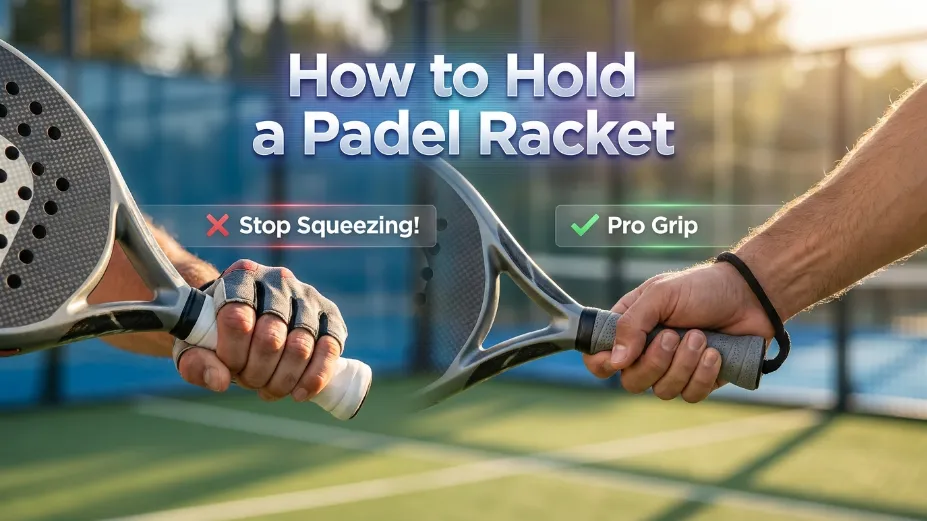
What is continental grip in padel? The continental grip in padel is a neutral “hammer” style position where the V-shape between your thumb and index finger sits on the second bevel (the sloped edge) of the octagonal handle. This grip is the essential baseline for 90% of padel shots, providing the stability needed for volleys and the leverage required for smashes without the need for time-consuming grip changes mid-rally. Mastering this position is crucial for players in the UK looking to transition from tennis and improve their net-play reactivity.
Why the Continental Grip Padel is Your Court Foundation
In the rapidly growing UK padel scene, from the cheapest indoor courts in London to the new centres in Huddersfield, the continental grip padel is the first thing taught by professional coaches. Unlike tennis, where players frequently rotate their hands to generate heavy topspin, padel is a game of manoeuvrability and reflexes. Because the court is smaller and the ball returns faster off the glass, you rarely have the luxury of time to switch your grip between a forehand and a backhand volley.
Using a padel grip continental setup allows you to remain in a “ready state.” It places the racket face in a neutral position, which is perfect for padel school fundamentals like blocking a high-speed body shot or digging out a low ball that has just nipped off the side fence. For those suffering from injuries, it is also highly recommended; using the best padel rackets for tennis elbow in conjunction with a neutral continental grip reduces the torsional strain on the tendons of the forearm, as the impact is absorbed more linearly through the wrist and elbow.
The Versatility of the “Hammer” Position
The beauty of the continental padel grip lies in its “Jack of all trades” nature. While it may not be the “best” for a heavy topspin drive, it is the master of the slice (cortado), which is the most effective spin in padel. By holding the racket like a hammer, you naturally maintain a slightly open racket face. This allows you to “cut” the ball, ensuring it stays low after hitting the opponent’s glass—a nightmare for defenders trying to return the ball from the back of the court.
Finding the ‘Hammer’ Position: A Step-by-Step Guide
To understand what is continental grip in padel, you must first look at the handle of your racket. Most modern rackets, such as the Nox Equation, feature an octagonal handle with eight distinct sides or “bevels.” For a right-handed player, bevel 1 is the flat surface on the very top when the racket is held on its edge. Bevel 2 is the first sloped surface to the right.
- The “V” Check: Place your hand on the handle so the V-shape between your thumb and index finger points towards bevel 2 (the top-right slope).
- The Handshake: Hold the racket as if you are shaking hands with it. Your palm should rest naturally against the side, not fully on the top or bottom.
- The Heel Pad: Ensure the fleshy part of your palm (the heel pad) is in contact with the handle. This prevents the racket from twisting during high-impact shots like the Bandeja.
If you find the grip feels too thin, leading to “death-gripping” and subsequent fatigue, consider adding a padel racket overgrip. A properly sized grip should leave a small gap (about the width of an index finger) between your fingertips and the base of your thumb when holding the racket firmly.
Transitioning from Tennis and Squash to Padel Grips
One of the biggest hurdles for UK players is the “Squash-to-Padel” or “Tennis-to-Padel” transition. In squash, the wrist is incredibly active—frequently “flicking” to find corners. In tennis, the Eastern or Semi-Western grips are used to brush up the back of the ball for topspin. Bringing these habits to padel often leads to inconsistent volleys and “floaty” lobs that are easily smashed by the opposition.
If you are coming from a tennis background, the padel continental grip will initially feel weak on the forehand. You might feel the urge to rotate your hand to the right to “feel” more power. Resist this. In padel, power comes from body rotation and leg drive, not from the wrist. Players who refuse to adapt often find themselves plateauing at the lower-intermediate level because their padel serve and net play lack the stability that only the continental position provides.
The “Topspin Trap”
Using a tennis-style forehand grip in padel creates a “closed” racket face. This generates topspin, which causes the ball to bounce high off the glass. In LTA sanctioned tournaments, a high bounce is a gift to your opponent. The continental grip padel ensures your contact is flat or sliced, keeping the ball “dead” and difficult to retrieve. Mastering this “unlearning” process is the first step towards a professional-style game.
Technical Nuances: The Index Finger and Pressure Rules
Beyond the basic alignment, there are two “pro-level” nuances often missed by beginners. These details separate those who simply play from those who truly master the padel grip continental mechanics.
The “Revolver” or Trigger Grip
Watch a professional like Ale Galán, and you will notice a slight gap between his index finger and the middle finger. This is often called the Trigger Grip. By extending the index finger slightly up the handle (but not onto the racket face), you gain significantly more manoeuvrability and “touch” for delicate drop shots. It also provides a better fulcrum for generating “whip” on overhead shots. However, be careful—extending the finger too far onto the face can lead to injury if the ball strikes the finger directly.
The 5/10 Pressure Rule
A common mistake on Birmingham padel courts is holding the racket too tightly. On a scale of 1 to 10, your grip pressure during a rally should be around a 5. This keeps the wrist relaxed and allows for faster reactions. You only tighten to an 8 or 9 at the exact moment of impact. Staying relaxed between shots prevents forearm fatigue and reduces the risk of lateral epicondylitis (tennis elbow).
Tactical Adaptations for Overheads (Víbora and Bandeja)
While the continental padel grip is the default, advanced play sometimes requires “micro-adjustments.” For example, when executing a Víbora—the aggressive side-spin overhead—some players find success by slightly rotating the hand towards a Backhand Eastern grip. This opens the racket face further, allowing for more “bite” on the side of the ball.
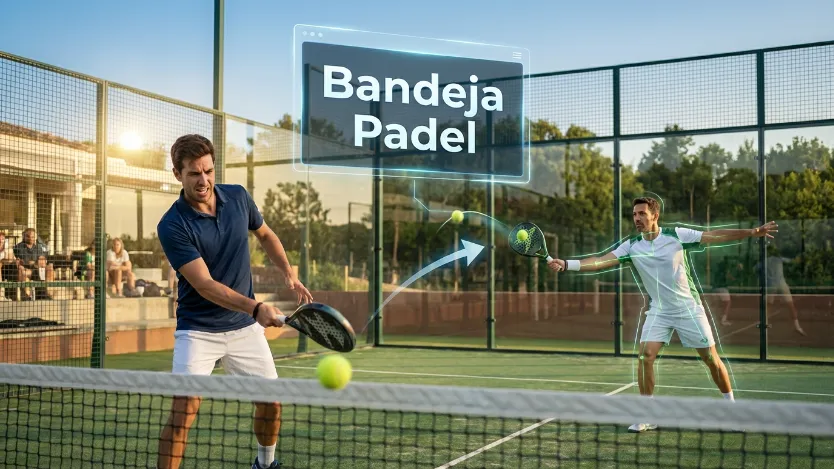
However, for the Bandeja, the continental grip padel coaches recommend is usually kept static. The goal of the Bandeja is safety and depth; the neutral continental grip allows you to maintain a consistent racket face angle as you move backwards, ensuring the ball lands deep in the opponent’s corner. If you are struggling with this shot, checking your padel fundamentals is often more effective than changing your grip.
Playing in Damp UK Weather: Grip Management Tips
Playing padel in the UK often means dealing with moisture. Whether it’s a humid morning at Canterbury or a rainy session in Glasgow, dampness is the enemy of a consistent padel continental grip.
- The “Winter Smash”: In cold, damp conditions, the ball gets heavier and doesn’t bounce as high. UK experts recommend the “Winter Smash”—a flatter, deeper shot aimed past the service line that skids off the back glass rather than trying to kick it out.
- The Surgeon’s Wash: To ensure maximum traction, many pros suggest washing your hands with dish soap (to remove all oils) before a match. A bone-dry hand provides a far superior connection to the overgrip.
- Tacky vs. Dry Overgrips: In the UK, most players prefer “Tacky” overgrips (like the Wilson Pro) for their “sticky” feel. However, if your hands sweat significantly even in the cold, a “Dry-Feel” overgrip (like Tourna Grip) that absorbs moisture might be a better choice to prevent the continental padel grip from slipping.
Ergonomic Innovations: Hesacore and Custom Grips
The continental grip padel experience can be further enhanced by modern accessories. The Hesacore grip is perhaps the most famous. It replaces the factory grip with a hexagonal silicone sleeve. The benefit? Your fingers “lock” into the hexagons, meaning you don’t have to squeeze the racket nearly as hard to prevent it from twisting. This is a game-changer for players with tennis elbow or those with smaller hands playing at Southall or Northampton.
Another option is the Nox Custom Grip, which uses adjustable rings to allow for a bespoke fit. These innovations aren’t just “gimmicks”—they are designed to help you maintain the padel grip continental position for longer periods without the physical toll on your hand and arm.
Frequently Asked Questions: Padel Grips
Is the continental grip the same as the “hammer grip”?
Yes, they are identical. The name “hammer grip” is used to help beginners visualise the what is continental grip in padel concept by imagining they are driving a nail into a wall with the edge of the racket.
Can I use two hands for a backhand in padel?
While the continental padel grip is usually for one hand, many players (especially those from a tennis background) use a two-handed backhand for extra stability on groundstrokes. However, volleys are almost always hit with one hand for greater reach.
How often should I change my overgrip?
For optimal padel continental grip performance, you should change your overgrip every 4-6 hours of play. If the grip starts to look “shiny” or feels slippery, it’s time for a fresh one.
Will a thicker grip help my tennis elbow?
Generally, yes. A slightly thicker grip prevents the hand from closing too tightly, which reduces tension in the forearm. Using an ergonomic undergrip like Hesacore is a popular solution in the UK.
Does the continental grip work for the smash?
Absolutely. It is the best grip for a flat smash or a kick smash. It allows for the necessary wrist pronation to snap the racket head down and generate power.
Summary Checklist for Muscle Memory
To truly master the continental grip padel, you must move beyond conscious thought. Here is a checklist to follow during your next practice at Stratford Padel Club or Birmingham:
- The Wall Drill: Spend 5 minutes hitting against a wall using ONLY the continental grip. No changing for the backhand!
- The “V” Reset: Between every single point, consciously look at your hand and reset the V to bevel 2.
- Check Your Tension: During a rally, ask yourself: “Am I holding this like a vice?” If so, loosen up to a 5/10 pressure.
- Compact Swings: Remember that the padel grip continental works best with short, compact swings. Avoid the big tennis “wind-up.”
By committing to these fundamentals, you will build the muscle memory required to compete at the highest levels of UK padel. The continental grip isn’t just a technicality—it is the foundation of every winning point.