Imagine a sport that combines the tactical chess of squash with the social energy of tennis, all contained within a twenty-foot glass cage. This is the reality of the fastest-growing sport in Britain, where the concept of a Padel School is no longer just a niche interest but a cornerstone of community fitness. From elite training platforms to revolutionary padel courts for schools, the infrastructure of the game is evolving to meet an unprecedented demand for high-quality instruction and accessible facilities.
The Queens’ School Padel Football Facility: A £2 Million Game Changer
One of the most significant developments in the Hertfordshire “padel hotbed” is the queens’ school padel football facility. This £2 million project, developed in partnership with Powerleague, represents a forward-thinking approach to educational sports infrastructure. Scheduled to launch in early 2026 at the Aldenham Road site in Bushey, the facility will feature four state-of-the-art padel courts alongside a full-size 11-a-side artificial grass pitch.
What makes this project unique is its dual-purpose access model. During standard school hours, the courts are reserved for the exclusive use of students to support physical health and teamwork. However, outside of these hours, the facility opens to the public on a commercial basis. This “community use agreement” ensures that local residents and weekend players have access to top-tier padel coaching in an area already dubbed the UK’s padel hotspot. For school administrators, this provides a sustainable revenue stream that can be reinvested into the school’s broader sports academy programmes.
The Padel School Methodology: Structured Learning for Every Level
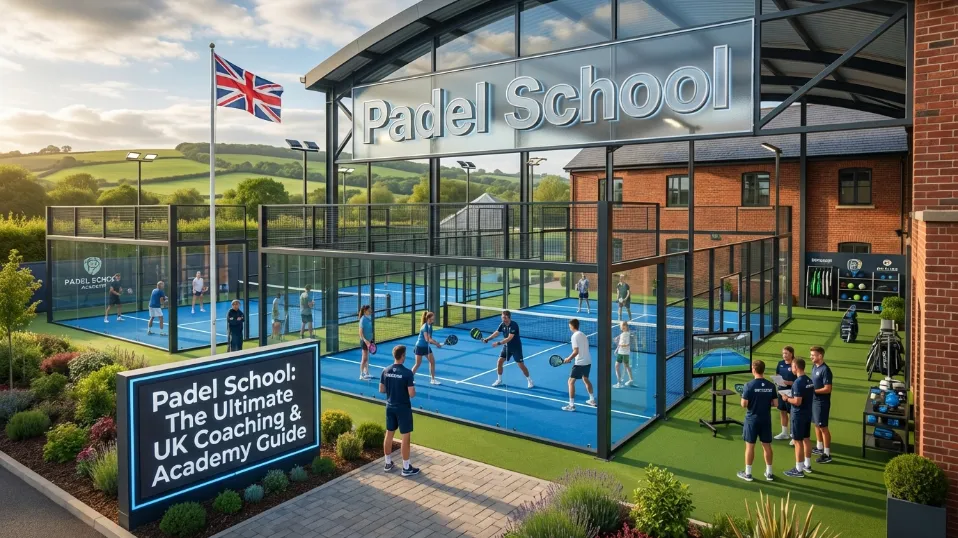
While physical courts are essential, the “how-to” of the game is dominated by the padel school, a world-leading coaching platform founded by Sandy Farquharson. In the UK, where many players transition from tennis, the learning curve can be steep. The methodology used here moves away from “mini-tennis” and focuses on padel-specific tactics, such as the use of the glass and the essential bandeja padel stroke.
Training Programmes and Pricing Structures
For players looking to commit to a structured path, the digital and in-person hybrid model is becoming the gold standard. The padel school offers various membership tiers designed to guide a player from a total beginner to a competitive level:
- Monthly Membership (£30): Includes access to all video courses, a personalised training roadmap tool, and the ability to submit technique videos for professional feedback.
- Quarterly Membership (£80): A mid-term commitment that offers a slight discount for those looking to see tangible results over a three-month block.
- Yearly Membership (£300): The most cost-effective option, saving 20% over the monthly rate, intended for “padel addicts” who want long-term access to webinars and exclusive drills.
For those just starting, understanding padel scoring and positioning is the first milestone. The school’s “Personalised Roadmap” quiz helps players identify their current standing—whether they are a Level 1.0 unrated player or a Level 3.0 intermediate—ensuring they don’t waste time on drills that aren’t suited to their ability.
Infrastructure: Installing Padel Courts for Schools
As the “dwindling popularity” of traditional tennis courts leaves many school facilities underutilised, the shift toward padel courts for schools is accelerating. A single tennis court can typically accommodate three padel courts, tripling the number of active students in the same footprint. However, the installation process in the UK involves strict LTA Padel Guidance regarding safety and planning.
Cost Breakdown and Maintenance
Based on 2025/2026 benchmarks, the investment for a school or club is significant but scalable:
| Facility Type | Estimated Cost (Turnkey) | Key Features |
|---|---|---|
| Single Padel Court | £71,000 | Lighting, ring beam, and drainage. |
| Double Court (Side-by-Side) | £148,000 | Shared foundations and power supply. |
| Four-Court Complex | £268,000 | Optimal for commercial community use. |
| Covered Canopy Addition | +£25,000 per court | Essential for year-round UK play. |
Beyond construction, schools must factor in a “Sinking Fund”—typically £1,500 per court per year—to cover surface replacement every five years and periodic glass inspections. Schools must also consider “acoustic fencing” if the courts are within 50 metres of residential boundaries, as the “crack” of a padel ball against glass can lead to noise complaints if not properly mitigated.
Padel School Holidays: Junior Camps and Childcare Benefits
The rise of padel school holidays has solved a major problem for active parents. Junior camps are now staple fixtures during half-terms and summer breaks across the UK. These programmes are often divided into age-specific groups: The Padel Cubs (ages 5–7) focusing on coordination, and The Padel Crew (ages 8–14) moving into match play and tactics.
Financial Support for Parents
One “missing piece” of information often overlooked by competitors is the financial accessibility of these camps. Many UK padel centres, such as CourtFit or England Sports Group, are Ofsted-registered. This allows parents to use Tax-Free Childcare or Childcare Vouchers, effectively reducing the cost of a camp by 20% (the government contributes £2 for every £8 paid). Prices for these camps typically range from £26.50 to £45 per day, making them a competitive alternative to traditional multi-sport holiday childcare.
The “Missing Gaps”: Expert Nuances and Court Etiquette
To truly master the sport, players must understand the nuances that the major “surface-level” sites often miss. In the UK, a common frustration involves the “low ceiling” in warehouse-converted clubs. While LTA guidance suggests a height of at least 7 metres, many UK venues operate at 5.5 to 6 metres. This fundamentally changes the game, making the lob a high-risk shot and forcing a more aggressive, fast-paced “flat” game.
The “Fridge” Tactic and UK Ratings
In social play and “Open Matches” (often booked via apps like Playtomic), players must navigate the “Fridge” (or La Nevera) tactic. This involves “freezing out” the stronger player by only hitting to the weaker opponent. While acceptable in padel tournaments UK, it is considered poor etiquette in social sessions where everyone has paid a service fee to play. Understanding the UK Rating system (from 1.0 Beginner to 3.25+ Advanced Plus) is crucial for ensuring competitive matches and avoiding “No-Man’s Land”—that awkward spot in the middle of the court where you are most vulnerable.
Essential Gear: Beyond the Basic Rental
If you have spent more than six months at a Padel School, it is time to invest in your own equipment. Using a “head-heavy” diamond racket as a beginner is a common mistake that leads to “tennis elbow.” Instead, experts suggest a round-shaped racket for maximum control. For a detailed guide, see our breakdown on how to choose a padel racket.
Footwear is equally critical. You should never play in running shoes, as they lack lateral support and the specific grip needed for sand-dressed turf. Look for padel shoes with a deep “Herringbone” (zig-zag) pattern to ensure you don’t slip on the back glass. These technical details are what separate a casual player from a dedicated padel athlete.
Frequently Asked Questions (UK Padel)
Q: Can I use Tax-Free Childcare for padel school holidays?
A: Yes, provided the venue is Ofsted-registered. You can use your government account to pay for eligible junior camps, receiving £2 for every £8 you contribute.
Q: When will the Queens’ School padel football facility be open?
A: Construction is set to begin in late 2025, with a target opening date of early 2026 for both the football pitch and the four padel courts.
Q: Is padel coaching better online or in-person?
A: Most experts recommend a “hybrid” approach. In-person lessons provide immediate correction, while digital platforms like The Padel School provide the tactical depth and roadmaps needed to improve between sessions.
Q: How much does it cost to book a court at Powerleague Watford?
A: While prices vary by peak and off-peak times, public hire typically ranges from £45 to £70 per hour per court, often split between four players.
The evolution of padel in the UK is moving from “pay-and-play” curiosity to a structured, educational ecosystem. Whether it is through the £2 million queens’ school padel football facility or the comprehensive curriculum of the padel school, the path to mastery is now clearly defined for the British public. By focusing on quality infrastructure, proper padel coaching, and inclusive junior programmes, the sport is setting a new standard for community-led athletics in the United Kingdom.