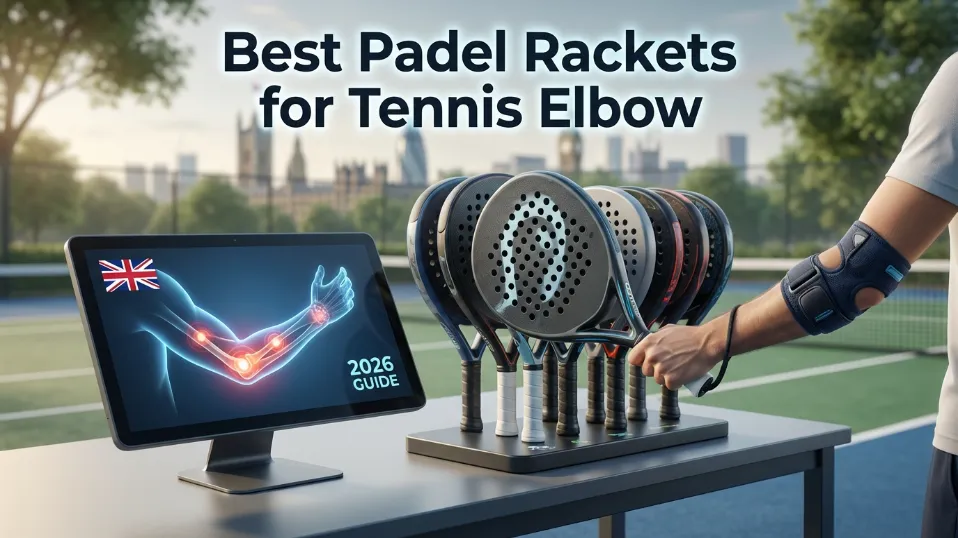
Imagine this: the sun is finally out in London, you’ve booked a court at The Padel Yard, and your overheads are feeling crisp. But by the second set, that familiar, sharp twinge radiates from your elbow to your wrist. You’re not alone; “Padel Elbow” is sidelining players across the UK at an alarming rate. While many reach for the lightest padel rackets thinking weight is the culprit, the real enemy is vibration. If you want to stay on court, you need to find the best padel rackets for tennis elbow that prioritises mechanical shock absorption over simple lightness.
The Science of “Padel Elbow”: Why Your Racket is Vibrating
Lateral epicondylitis, commonly known as tennis elbow, occurs in padel due to repetitive eccentric contractions of the forearm muscles. Unlike tennis, where strings act as a primary shock absorber, a padel racket is a solid object. When the ball hits the face, kinetic energy must go somewhere. If your racket lacks anti-vibration padel rackets technology, that energy travels straight up your arm.
In the UK, this issue is exacerbated by our damp climate. Cold, humid air makes balls feel “heavy,” increasing the force of impact. Therefore, choosing best shock-absorbing padel rackets is not just a luxury; it’s a medical necessity for longevity in the sport. Before you buy, you must understand how to choose a padel racket that balances core density with frame stability.
Core Materials: Soft EVA vs. Polyethylene (FOAM)
The core of your racket is its engine. For those suffering from arm pain, the material choice is the first line of defence. There are two primary contenders in the market for soft EVA core padel rackets and foam alternatives:
- Polyethylene (FOAM): This is the softest material available. It provides a “trampoline effect” that absorbs the ball’s impact almost entirely. It is the gold standard for players in active recovery.
- Soft EVA / Ultrasoft EVA: Found in many Nox padel rackets, this material is more durable than foam but offers a slightly crisper feel while still being highly effective at dampening high-frequency vibrations.
Expert Tip: UK players should be wary of hard EVA in winter. When temperatures drop below 10°C, EVA becomes more rigid, losing its shock-absorbing properties. If you play year-round, a Soft EVA core padel racket or a polyethylene core is essential to prevent padel rackets for arm pain from becoming a reality.
The Top 4 Best Padel Rackets for Tennis Elbow in 2025/26
1. Royal Padel Whip Polyethylene: The Recovery King
Widely considered the most arm-friendly racket on the market, Royal Padel specialises in shock absorption. The “Whip” features a full polyethylene core and a physical strut in the heart area designed to break the path of vibrations before they reach the handle.
- Why it works: Total absorption of impact; round shape for a massive sweet spot.
- Best for: Chronic tennis elbow sufferers.
2. Nox AT10 Pro Cup Comfort: Professional Protection
Built with Soft EVA core technology, this racket includes the “Pulse System”—two elastomer bands in the handle that filter out vibrations. It’s a favourite at Stratford Padel Club for its blend of pro-level playability and joint safety.
- Why it works: HR3 Comfort foam combined with a flexible fiberglass face.
- Best for: Intermediate players wanting a pro feel without the strain.
3. Oxdog Ultimate Tour X: Engineering Excellence
The Oxdog padel racket range has taken the UK by storm with its “Vibradamp” system. This involves four silicone inserts under the grip that mechanically isolate the hand from the frame’s vibrations.
- Why it works: Precision engineering; adjustable weight via the Optiweight system.
- Best for: Tech-savvy players who want customisation.
4. Head One Ultralight: The Featherweight Choice
While we focus on vibration, mass still matters. At 300g, this is the lightest adult racket available. However, because it is so light, Head has engineered it with a specific “Comfort Foam” to ensure the lack of mass doesn’t lead to higher vibration levels.
- Why it works: Minimal muscle effort required for every swing.
- Link: Read our full breakdown of the lightest padel rackets for more on this model.
The “Light Racket” Paradox: Why Weight Isn’t Everything
A common mistake in the UK padel community is assuming that a lighter racket is always better for padel rackets for arm pain. In reality, a racket that is *too* light (under 345g) can actually vibrate more because it lacks the mass to dissipate the ball’s energy. This is why we often suggest how to lighten your padel racket weight cautiously, or even keeping a slightly heavier racket (360g) if it has superior anti-vibration padel rackets technology like Hesacore.
For women specifically, the balance between weight and tech is vital. Check our guide on the best lightweight padel rackets for women to see models that don’t sacrifice power for arm health.
Essential Anti-Vibration Accessories
If you love your current racket but your elbow is complaining, you don’t always need to buy a new one. The UK market offers world-class accessories designed for best shock-absorbing padel rackets performance:
- Hesacore Grip: This honeycomb-patterned undergrip increases the contact surface area between your hand and the handle. This allows you to hold the racket with 30% less pressure, drastically reducing forearm tension.
- ShockOut Dampeners: Small silicone cylinders that fit into the holes of your racket. They reduce surface vibration and allow you to shift the balance point.
- Noene Undergrip: A thin, high-tech material that can be placed under your regular padel racket grip to filter out up to 96% of vibrations.
The UK Context: Managing Your Gear in Cold Weather
British humidity is the silent killer of soft EVA core padel rackets. When balls absorb moisture, they become “heavy balls” (learn more in our article: are padel balls the same as tennis balls?). Striking a heavy, wet ball with a cold, stiff racket is a recipe for instant elbow injury.
Maintenance Checklist:
- Store your racket in a thermal-lined bag to protect the EVA core.
- Never leave your gear in a cold car boot overnight.
- Replace your balls frequently during the winter months to avoid excess impact strain.
Frequently Asked Questions (FAQ)
What is the absolute best padel racket for tennis elbow?
The Royal Padel Whip Polyethylene is widely considered the best for active recovery due to its shock-absorbing core and specialized frame strut.
Does a heavier racket help with tennis elbow?
Surprisingly, yes. A racket with more mass (360g+) can absorb more of the ball’s energy, provided the balance is “head-light.” Very light rackets can sometimes transfer more vibration to the arm.
Should I use an overgrip to prevent arm pain?
Yes, but the size matters. If your grip is too thin, you’ll squeeze too hard. The “finger test” is the best way to ensure your padel racket grip is the correct size.
Is Carbon 18K too hard for tennis elbow?
Generally, yes. Higher “K” values mean stiffer carbon. If you have arm pain, look for fiberglass faces or 3K carbon with a soft EVA core.
Conclusion: Prioritising Longevity over Power
Winning a match at Padel Box Bermondsey is great, but being able to play again the next day is better. By choosing one of the best padel rackets for tennis elbow, you are investing in your future in the sport. Focus on vibration dampening, invest in a Hesacore grip, and always respect the impact of the UK climate on your equipment. According to the LTA’s safety guidelines, proper equipment and warm-ups are the best defence against common musculoskeletal injuries.
For more advice on customising your setup, don’t miss our guide on how to lighten your padel racket weight safely.