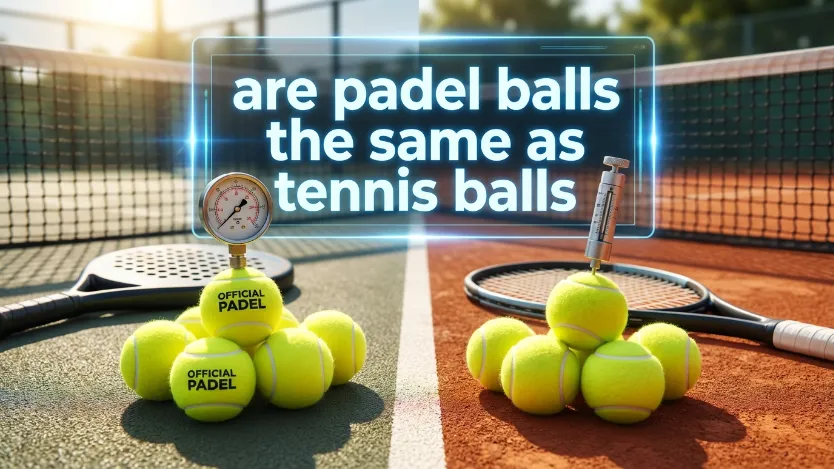
You’ve just stepped onto a pristine court at S3 Padel Brent Cross, racket in hand, only to realise you’ve forgotten your balls. You reach into your old tennis bag, pull out a fresh can of Slazenger Wimbledon pros, and wonder: are padel balls the same as tennis balls? It’s a question that has sparked countless debates in clubhouses across London and Manchester, but using the wrong answer could cost you more than just a match—it could ruin your expensive carbon-fibre racket.
The Technical Verdict: Are Padel Balls the Same as Tennis Balls?
At first glance, they look identical. Both are fluorescent yellow, fuzzy, and packaged in pressurised tubes. However, the short answer is no; are padel balls the same as tennis? Definitely not. While they share a common lineage, they are engineered for entirely different physics. If you are a beginner looking for essential padel tips, understanding your equipment is the first step toward mastery.
According to the International Padel Federation (FIP) and the Lawn Tennis Association (LTA), the specifications differ in three critical areas: Internal Pressure, Size, and Bounce Dynamics.
- Internal Pressure: Padel balls are pressurised to approximately 10–11 PSI, whereas tennis balls sit at a much higher 14 PSI.
- Diameter: Padel balls are slightly smaller (6.35cm – 6.77cm) compared to standard tennis balls (6.54cm – 6.86cm).
- Weight: Interestingly, both weigh between 56.0g and 59.4g, but the lower pressure in padel balls makes them feel “heavier” and slower on the court.
Why Tennis Balls Are a “Death Sentence” for Your Padel Racket
This is the “missing link” that most generic guides fail to mention. Padel rackets are not made of strings; they feature a core of EVA Foam or Polyethylene. When you ask, are tennis balls the same as padel balls, you must consider the impact on your gear. Using high-pressure tennis balls on a 20-metre court creates a rebound force that the internal foam of a padel racket isn’t designed to absorb.
Repetitive impact with high-pressure tennis balls causes “foam fatigue.” This leads to dead spots on your racket face, particularly on premium models like the Adidas Metalbone HRD 2026. Once the internal cells of the foam collapse, your racket loses its “pop” and control, effectively turning a £250 investment into a wall ornament.
The Warranty Trap: A UK Player’s Warning
Many UK retailers and manufacturers have strict policies regarding manufacturing defects. If you attempt to claim a warranty for a cracked frame or collapsed core, expert inspectors can often identify the fracture patterns caused by non-regulation balls. Using tennis balls is classified as misuse, which can void your warranty entirely. If you’ve invested in advanced padel rackets, stick to dedicated balls like HEAD Padel Pro to protect your purchase.
The British Climate Factor: Humidity and Cold
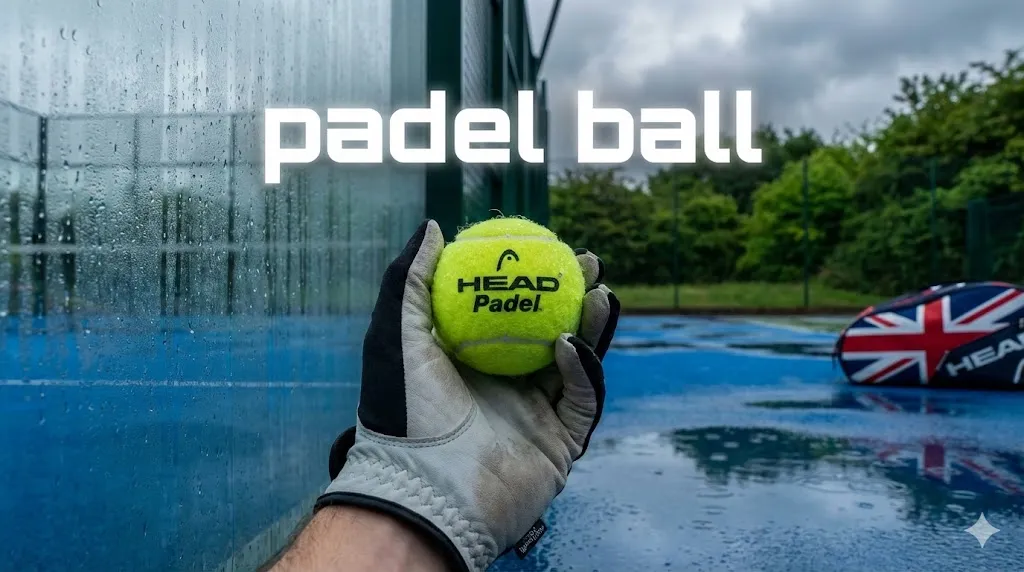
Playing at an outdoor club like Stratford Padel Club in the middle of a British winter introduces environmental variables that change the game. Humidity is the primary enemy of the padel ball’s felt cover.
In the UK, moisture absorption is a common issue. When the felt gets damp, the ball becomes significantly heavier. This extra weight, combined with the cold air which already contracts the gas inside the ball, leads to a “dead” bounce. This is why many UK players prefer “Speed” versions of balls, such as the Head Padel Pro S+, which are designed with slightly higher pressure to compensate for the sluggish UK weather conditions.
The “Green Dot” Training Hack: A Viable Alternative?
If you are truly stuck and cannot find official padel balls, some coaches suggest using “Green Dot” (Stage 1) tennis balls. But are padel tennis balls the same as tennis balls of the green dot variety? Not exactly, but they are closer. These are low-compression tennis balls designed for juniors, featuring roughly 25% less pressure than a standard ball.
- Pros: Lower bounce that mimics padel dynamics; safer for the racket foam.
- Cons: Larger diameter than a standard padel ball; different “felt” texture that may react oddly to the dimensions of a padel court.
Common Questions from the UK Padel Community
Q: Can I use tennis balls just for practicing my serve?
Even for a legal padel serve, tennis balls will bounce too high after hitting the turf, making it impossible to practice your tactical placement accurately.
Q: How long do padel balls last in the UK?
Due to the humidity, a can of balls typically lasts 2–3 matches (about 4.5 hours of play) before the pressure drop becomes noticeable. Using a ball pressuriser can extend this by up to 50%.
Q: Do tennis balls damage the glass?
While they won’t shatter the tempered glass, the higher impact force of a 14 PSI tennis ball puts unnecessary strain on the fixings and structure over time. Most clubs like Carbon Padel Club strictly forbid their use for this reason.
Padel vs Tennis Balls: Frequently Asked Questions
Are padel balls the same as tennis balls?
While they look identical, they are not the same. Padel balls are slightly smaller (6.35–6.77 cm) and have significantly lower internal pressure (10–11 PSI) compared to tennis balls (14 PSI). This results in a slower, more controlled bounce suited for enclosed courts.
Can I use tennis balls on a padel court?
It is technically possible but strongly discouraged. Tennis balls bounce too high and fast for the 20-metre padel court, making the game chaotic and unplayable. Furthermore, the higher impact of a tennis ball can damage the EVA foam core of your padel racket and may void your manufacturer’s warranty.
How long do padel balls last in the UK climate?
Typically, a can of balls lasts for 2 to 3 matches (roughly 3–5 hours of play) before the pressure drops noticeably. In the UK, high humidity often saturates the felt, making the balls heavy and slow, while winter temperatures cause the air inside to contract, further reducing the bounce.
What is the best padel ball for winter or outdoor play in the UK?
For cold and damp conditions, players in Northern England and Scotland often recommend “Speed” or “S” variants, such as the Head Padel Pro S+ or Kuikma Speed (Red). These are pressurised at a slightly higher level to compensate for the lack of bounce caused by low temperatures.
Are “Green Dot” tennis balls a good substitute for padel training?
Yes, for training purposes. Green Dot (Stage 1) tennis balls are designed with 25% lower pressure than standard tennis balls. This brings their bounce and speed closer to a regulation padel ball, making them a cost-effective alternative for high-volume practice drills.
Is a ball pressuriser worth it?
If you play at least once a week, yes. Devices like the Pascal Box or Tubo+ create a high-pressure environment for your balls between matches. This can extend the life of your balls by approximately 50%, saving money and reducing environmental waste.
Final Thoughts: Invest in the Right Gear
Understanding that are padel balls the same as tennis balls is the first step toward becoming a serious player. While the visual similarity is misleading, the technical differences are vast. Using dedicated padel balls ensures your game remains tactical, your padel shoes maintain their grip on the sand-dressed turf, and your racket stays within its warranty period.
Next time you’re heading to Padel Milton Keynes or any other top UK facility, leave the tennis balls at home. Your racket—and your game—will thank you for it.