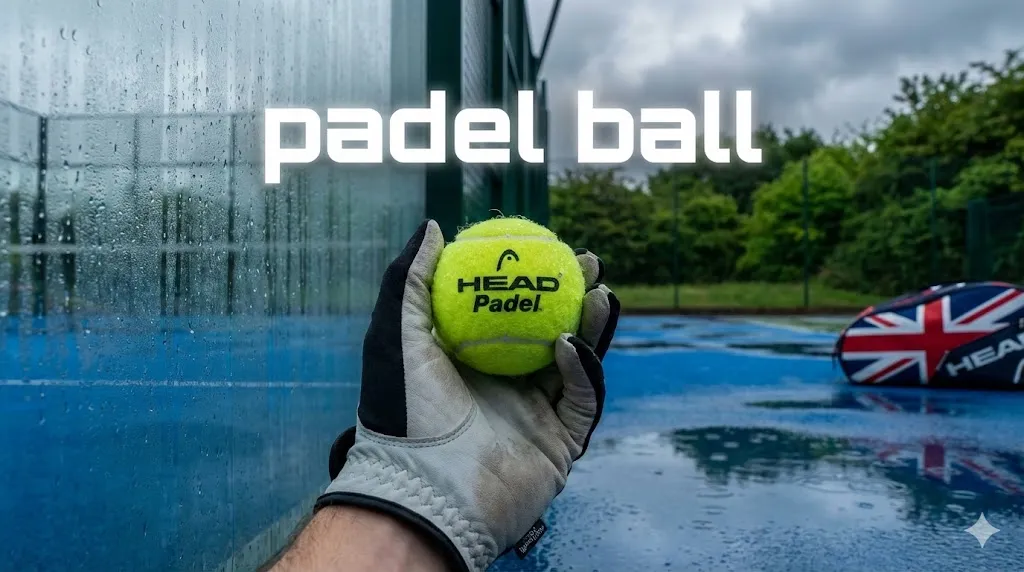
Picture this: It is a damp Tuesday evening at your local club. You step onto the court, unleash what feels like a winning smash, and the ball hits the glass with a dull thud, dropping dead to the floor. It is not your technique; it is likely your choice of ball. In the world of UK Padel, where conditions vary wildly from the dry heat of July to the humid chill of November, understanding your equipment is half the battle.
While rackets get all the glory, your choice of head padel balls is arguably the single biggest factor in how enjoyable your match will be. As the undisputed market leader and the long-standing partner of professional tours, Head sets the global standard. However, for the average British player, the choice isn’t always clear.
Should you be using the industry-standard Pro, or has the faster Pro S been designed specifically to save your arm on those heavy, cold nights? This guide dives deeper than the standard reviews, exploring the physics, the playability, and the “missing angles” regarding how head padel balls perform specifically in the United Kingdom.
The Great Debate: Head Padel Pro vs. Head Padel Pro S
If you have browsed any pro shop or online store recently, you have likely faced the binary choice: the silver canister (Pro) or the gold-accented canister (Pro S). While many assume the difference is simply “one is fast, one is slow,” the technical reality is far more nuanced. To truly elevate your game, you need to understand the engineering behind these head padel pro balls.
1. Head Padel Pro: The Control Specialist
The Head Padel Pro is the original icon. For years, this was the solitary choice for the World Padel Tour. It is characterised by a slightly heavier feel on the racket face and a “fluffier” felt texture.
- The Physics of Control: The core of the Pro ball is designed to compress slightly more upon impact. This increases the “dwell time” (the milliseconds the ball stays on your racket face), giving you immense control over lobs and chiquitas.
- Who is it for? If you are a tactical player who builds points slowly, playing lobs into the corners and waiting for a mistake, this is your ball. It rewards patience.
- The UK Context: In the height of a British summer, when the courts are dry and fast, the Head Padel Pro is essential to stop the game from becoming too chaotic. It allows you to slow down the pace against aggressive opponents.
2. Head Padel Pro S: The Speed Demon
The “S” stands for Speed. Head developed the head padel pro s balls specifically to address complaints from players in low-altitude, humid locations (like sea-level cities in Spain… and almost all of the UK) where the original Pro felt too heavy.
- The Physics of Speed: The rubber core in the Pro S is slightly harder, and the internal pressure is tweaked to provide a sharper rebound. Furthermore, the felt is engineered to be slightly less resistant to air drag.
- Who is it for? This is the ball for the “smashers.” If you find yourself hitting the ball perfectly but failing to get it over the fence (x3) or back to your side (x4), the head padel pro s balls will give you that extra 10-15% rebound you are missing.
- The “Missing Angle”: It is not just about power; it is about defence. A faster ball comes off the back glass with more life, making it easier to return difficult shots from the baseline.
| Feature | Head Padel Pro | Head Padel Pro S |
|---|---|---|
| Core Density | Softer (More Dwell Time) | Harder (Instant Rebound) |
| Speed | Standard / Control | Fast / Dynamic |
| Best For | Precision & Tactics | Power Smashes & Block Volleys |
| Ideal UK Season | Summer (Dry/Warm) | Winter (Cold/Damp) |
The UK Weather Factor: Humidity, Cold, and Bounce
Most reviews focus on how these balls perform in ideal conditions. But as any British player knows, ideal conditions are rare. This is where the choice between standard balls and head pro padel balls becomes critical.
The “Heavy Air” Phenomenon
In the UK, high humidity is common. Moisture in the air essentially thickens the atmosphere the ball travels through. Additionally, the felt on the ball absorbs microscopic moisture particles, making the ball physically heavier as the match progresses.
If you use a standard head padel ball (The Pro) on a damp November evening in Manchester or London, the ball will feel like a stone. It will die on the glass, and your arm will take the brunt of the impact. In these scenarios, the Head Padel Pro S is not just a “power” option; it is a necessity for joint health and playability. The extra speed compensates for the atmospheric drag, normalising the game speed.
For more on how equipment adapts to conditions, you might want to read our comprehensive guide to padel balls.
Durability: How Long Do They Really Last?
A common question amongst club players is regarding value for money. Padel balls are under immense stress, compressing against the hard court surface and the rigid face of your Head padel rackets.
The Felt vs. Core Dilemma
Head padel pro balls are famous for their durability, but they degrade in two ways:
- Pressure Loss: Once the canister is opened, pressure begins to escape. After 2-3 matches, even if they look new, the internal pressure has dropped, leading to a lower bounce.
- Felt Fluffing: On abrasive sand-based courts (common in the UK), the felt “fluffs up.” While this slows the ball down (great for control), it eventually makes the ball too large and heavy.
Pro Tip: To get the most out of your purchase, ensure you keep the balls dry. Never leave your quality padel bag in the car overnight during winter; the cold contracts the gas inside the ball, permanently killing the bounce.
Technical Check: Padel vs. Tennis Balls
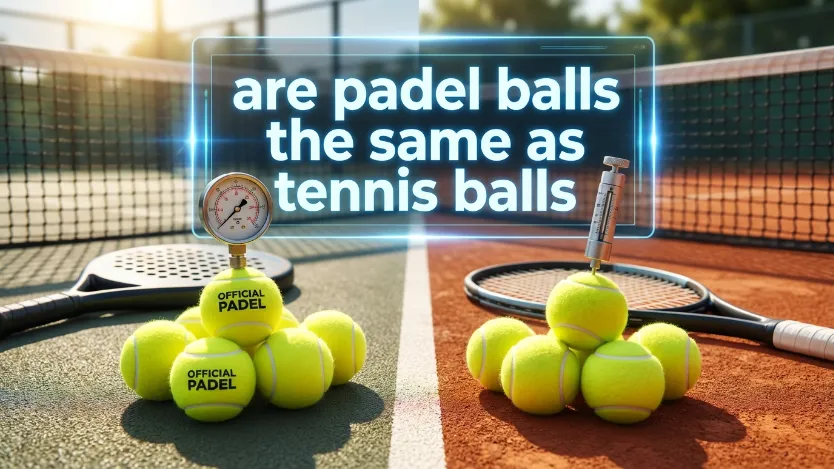
It is a rookie error, but one we must address: Can I use tennis balls for Padel? The answer is a resounding no. While a tennis ball looks identical to a head padel ball, the internal pressure of a tennis ball is significantly higher (around 14psi vs 11psi for Padel).
Using a tennis ball will make the game uncontrollably fast and, more importantly, will likely damage the foam core of your racket and cause tennis elbow. Always look for the specific Padel branding. If you are new to the sport, it is worth understanding the basics of padel equipment standards before buying in bulk.
For official regulations on ball sizes and pressures, you can check the LTA Padel guidelines.
Frequently Asked Questions (UK Edition)
Q: Why do my Head Padel Pro balls feel different on indoor vs. outdoor courts?
A: Indoor courts usually have a more stable temperature and humidity. Outdoors, the wind strips the “fluff” faster, but moisture adds weight. The Pro S is generally recommended for outdoor UK play to counteract the dampness.
Q: Can I repressurise Head Padel balls?
A: Yes. Because Head uses high-quality rubber, they respond very well to pressurising tubes (like Pascal Box). You can often extend the life of a can from 3 matches to 6 or 7 matches by storing them under pressure.
Q: Which Head ball is used on the World Padel Tour?
A: It varies by city. In high-altitude locations (like Madrid), pros use the standard Pro to keep the ball under control. In sea-level tournaments (like Alicante or London), they often switch to the Pro S to ensure the game remains exciting and fast.
Q: Is the Head Padel Pro S suitable for beginners?
A: Absolutely. In fact, many beginners find the “S” easier because it requires less physical effort to get the ball over the net. The extra bounce helps you defend shots off the glass that would otherwise be difficult.
Q: How can I tell if a Head Padel ball is counterfeit?
A: Check the logo print quality on the ball itself; it should be crisp, not bleeding into the felt. Also, the “pop” sound when opening the can should be loud and distinct. If the can feels soft before opening, avoid it.
Final Verdict: Which Canister Should You Open?
The debate between head padel pro balls and the S variant isn’t about which is “better” in a vacuum—it is about which is better for today’s conditions.
If you are playing in the peak of a British summer or you are a player who relies on touch, precision, and placing the ball in awkward corners, stick with the classic Head Padel Pro. It remains the benchmark for control.
However, for the majority of the year in the UK—when the air is thick, the glass is cold, and the court is slightly damp—the head padel pro s balls are the superior choice. They bring life back to the game, spare your elbow, and ensure that your smashes are rewarded.
The best advice? Keep a can of both in your bag. Gauge the weather, check the court, and choose your weapon accordingly.