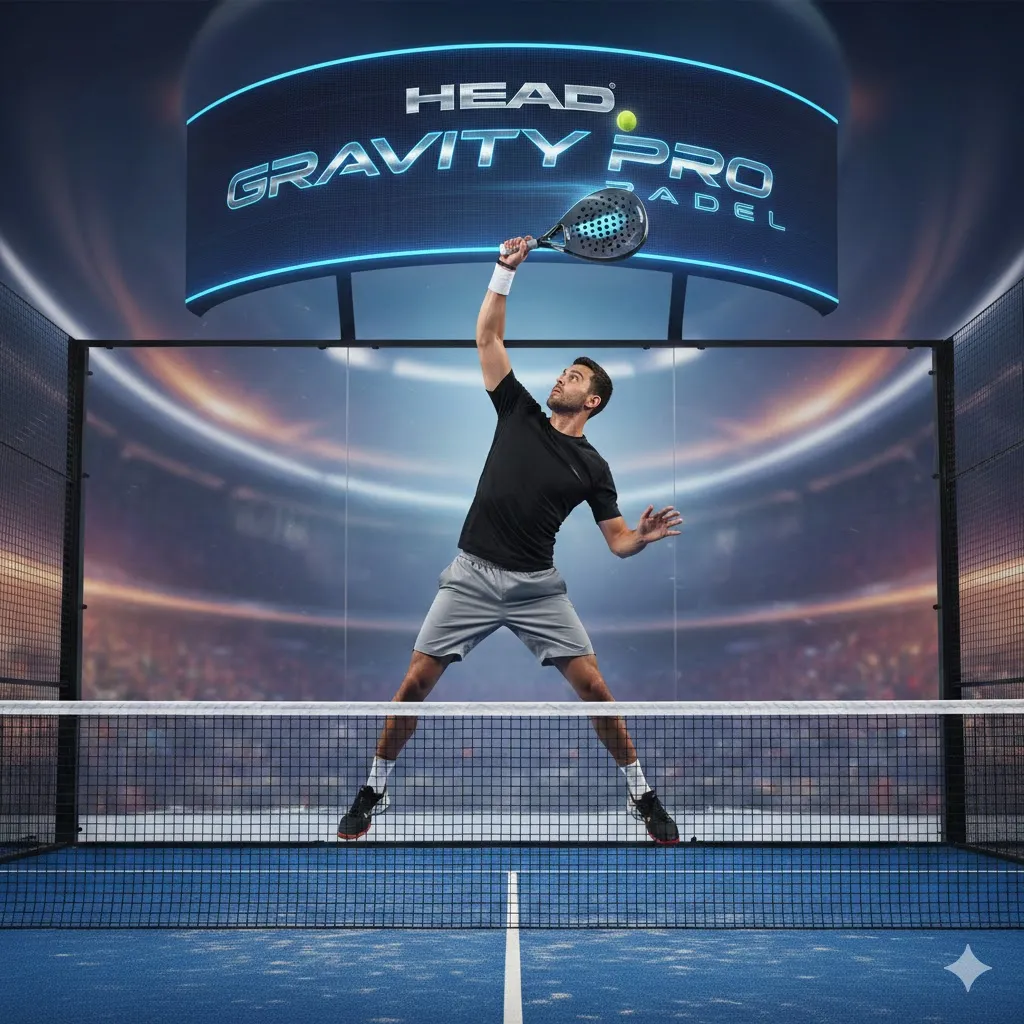
The sport of padel is sweeping across the United Kingdom at an unprecedented pace, transforming from a casual club pastime into a highly competitive arena. As players progress through the amateur tiers and begin eyeing the LTA Padel Rankings, a fundamental shift in equipment preference occurs. The initial obsession with raw, explosive power fades, replaced by a deep appreciation for surgical precision, steadfast defence, and tactical point construction. Enter the head gravity pro padel: an engineering marvel designed precisely for this mature, control-oriented style of play.
Unlike the diamond-shaped aggressive weapons that dominate highlight reels, the Gravity Pro series takes a markedly different approach. It is a tool for the architect of the court—the player who values consistency over chaos and placement over pace. In this comprehensive, 2000-word guide, we will dissect the anatomy of the Gravity Pro, explore its generational evolution (with a massive deep dive into the latest 2026 innovations), and uncover the hidden realities of playing with this racket in the unique conditions of the UK.
Engineering & Materials: The Anatomy of Absolute Control
To truly understand why the Gravity Pro behaves the way it does, we must look under the hood at the specific materials and geometry chosen by Head’s engineers.
- The Hybrid Round Shape: While officially classified as a round racket, the Gravity Pro features slightly elevated “shoulders,” making it a round-teardrop hybrid. This unique mould generates an enormous sweet spot situated squarely in the centre of the face, ensuring that off-centre hits do not catastrophically punish the player.
- Control Foam Core: At the heart of the racket lies Head’s proprietary Control Foam. Unlike highly elastic foams that create a trampoline effect, Control Foam offers a linear, predictable response. The speed of the ball leaving the racket is directly proportional to the effort you put into the swing, eliminating unpredictable defensive lobs that accidentally hit the back glass.
- Hybrid Woven Face: The hitting surface is constructed from a sophisticated blend of carbon fibre and fibreglass. The carbon provides the necessary torsional stability and crisp feedback, while the fibreglass injects a degree of flexibility that increases ball dwell time, enhancing touch.
- 3D Grain Texture: For players who rely on heavy slice (viboras and bandejas), the moulded 3D Grain surface offers exceptional bite on the ball. Unlike sandpaper finishes that wear off after a few months, this moulded roughness is permanent.
Generational Evolution: The Massive Leap of the head gravity pro 2026 padel
Head operates on a two-year release cycle, meaning each new iteration brings substantial technological leaps rather than mere cosmetic paint jobs. If you are deeply passionate about the gear and want to know every detail about the head gravity pro 2026 padel, this section is for you.
The 2022 version was revered for its precision but criticised for being overly stiff due to its 100% carbon face, which sent harsh vibrations up the arm during off-centre hits. The 2024 model addressed this by introducing the Hybrid Woven face and the first generation of Auxetic technology in the bridge, significantly improving comfort.
However, the head gravity pro 2026 padel represents the pinnacle of this lineage, boasting upgrades that fundamentally alter the user experience for the better :
- Auxetic 2.0 Integration: The biggest leap is the implementation of Auxetic 2.0. This material physically expands when stretched and contracts when compressed. In the 2026 model, Head has expanded this technology from the yoke (bridge) down into the carbon centre bar of the handle. The result? When you block a 100mph smash, the internal structure stiffens instantly to provide a solid wall. When you execute a delicate drop shot, it flexes, offering unparalleled, buttery-smooth feedback.
- The Soft Butt Cap Revolution: Arm health is a massive concern in the UK. The 2026 Gravity Pro introduces a specialised ‘Soft Butt Cap’ made from vibration-dampening elastomer. This cap actively absorbs low-frequency shockwaves before they enter the palm of your hand, drastically reducing the risk of tennis elbow during lengthy three-set matches.
- Refined Weight Optimisation: While previous models often fluctuated wildly in weight, the 2026 manufacturing process is tighter, keeping the racket consistently around the 365g to 370g mark with a strict 265mm low balance. This makes it marginally faster through the air than its predecessors, allowing for lightning-fast reflexes during net clashes.
If you are looking for a Head padel racket that perfectly balances modern injury prevention with tournament-level control, the 2026 Gravity Pro is an engineering masterpiece.
Tactical Court Position: Who Should Wield It?
Every racket has a tactical identity. The Gravity Pro is unequivocally the ultimate weapon for the right-side (drive) player.
The low 265mm balance and massive sweet spot make this racket an impenetrable shield in defence. When you are pinned to the back glass, digging out heavy, spinning shots from your opponents, the racket’s stability allows you to reset the point effortlessly with deep, measured lobs.
Conversely, if you are an aggressive left-side player whose primary role is to finish points with explosive x3 smashes, this head gravity pro padel racket will demand flawless technique and immense physical effort. The Control Foam absorbs energy, meaning there is zero “free power”. You must generate all the pace yourself using a perfect kinetic chain. For smashers, a diamond-shaped alternative might be more appropriate.
Biomechanics & Arm Health: Managing the Weight
A crucial factor to consider is the physical toll of the racket. While it is marketed as a control racket, it is not exceptionally light. Weighing in at approximately 365-375 grams out of the factory, it carries significant mass.
However, Head masterfully disguises this weight through the low balance point (265mm). By keeping the mass near your hand, the swingweight is reduced, preventing the nasty downward torque on the wrist that typically causes tennis elbow. The combination of the low balance, Control Foam, and the Auxetic 2.0 technology makes it incredibly arm-friendly.
The caveat? Muscle fatigue. During a long match, moving a 375g frame back and forth during rapid volley exchanges requires solid forearm strength. If your technique falters when tired, the racket’s lack of free power will expose your fatigue, resulting in balls dropping short into the net.
The Missing Angles: What No One Tells You About Playing in the UK
Most reviews test rackets in sunny, 30°C Spanish weather. But playing padel in the UK presents highly specific challenges that drastically alter how the Gravity Pro performs. Here are the missing angles you need to know.
A. The Cold Weather Phenomenon
If you play outdoors or in unheated warehouse clubs during a British winter (5°C to 10°C), you must understand how temperature affects EVA and foam cores. The Control Foam inside the Gravity Pro is medium-density. In the cold, this foam contracts and hardens significantly. Players on UK forums report that a Gravity Pro that feels plush and perfectly balanced in July will feel stiff, “boardy,” and completely stripped of its power in December. In winter, you will need to exert much more physical effort to achieve depth on your shots.
B. The Handle Customisation Trap
UK players love modifying their grips to combat sweaty hands in indoor venues or to increase comfort. But be warned: adding a padel racket grip like a Hesacore or a Noene undergrip, plus two standard overgrips (like the popular Wilson Pro or Toalson), can add 15g to 20g of dead weight directly to the handle. While this brings the balance point even lower—making the racket feel incredibly fast and manoeuvrable—it pushes the total static weight well past 380g. This massive total weight can cause shoulder fatigue over time, even if the racket feels head-light.
C. The Factory Protector Dilemma
The Gravity Pro comes with an Integrated Protector System (IPS) pre-installed on the crown. Many advanced players, looking to make the racket even more agile, attempt to peel this padel racket protector off to shed 8-10 grams from the head. Do not do this cold. The adhesive is incredibly strong, and ripping it off at room temperature will often peel the glossy paint right off the carbon frame, ruining the racket’s aesthetic. If you must remove or replace it, UK club coaches highly recommend blasting it with a hairdryer for 5 minutes to melt the glue first.
Market Comparisons: Gravity Pro vs. The Competition
How does it stack up against its direct rivals in the premium control category? If you are searching for the best padel racket for intermediate to advanced control players, you are likely comparing these three:
- Head Gravity Pro vs. Bullpadel Vertex 04 Control: The Vertex Control uses a MultiEVA core (hard outer layer, soft inner layer). This makes the Bullpadel much bouncier at low speeds, giving you more free power on defensive blocks. The Gravity Pro, conversely, has a much “drier” and strictly linear feel. If you want the racket to help you push the ball deep, go Vertex; if you want exact, unassisted precision, go Gravity.
- Head Gravity Pro vs. Nox AT10 Genius 12K: The Nox is shaped like a teardrop but plays like a control racket. It generally feels slightly softer and more forgiving on the arm than the Gravity Pro, but the Gravity Pro’s round shape offers a significantly wider sweet spot for defensive digs off the back wall.
UK Market Dynamics: Pricing and Availability Gaps
The UK padel market operates on unique supply constraints. As of early 2026, the highly sought-after head gravity pro 2026 padel is experiencing rolling stock shortages across major retailers. Because it is widely recommended by coaches as the ultimate arm-friendly pro racket, shipments often sell out within days of arriving at UK ports.
However, this creates a brilliant opportunity for savvy buyers. The transitional 2024 Gravity Pro models are currently seeing heavy discounts, frequently dropping from their £200 RRP down to the £149–£159 mark. If your budget is tight, grabbing a discounted 2024 model provides 90% of the performance of the 2026 version at a mid-tier price point.
Frequently Asked Questions
“`
Is the Head Gravity Pro suitable for players with tennis elbow?
Yes, absolutely. Despite its heavier weight (~370g), the low 265mm balance point prevents excessive torque on the forearm. Furthermore, the introduction of the Soft Butt Cap and Auxetic 2.0 technology in the 2026 model actively absorbs high-frequency vibrations before they reach your joints, making it one of the most arm-friendly professional rackets on the market.[2, 3, 7]
Why do my shots feel weak with the Gravity Pro during winter matches?
The Control Foam core is sensitive to temperature drops. In the cold, damp conditions typical of a UK winter, the foam condenses and hardens, drastically reducing the racket’s elasticity and ball output. You will need to bend your knees more and actively push through the ball with your body weight to compensate for this weather-induced stiffness.
Should I remove the factory bumper protector to make the racket lighter?
While removing the Integrated Protector System (IPS) will reduce the head weight by roughly 8 to 10 grams and increase manoeuvrability, it comes with risks. Many players report that peeling it off cold pulls the paint directly off the carbon frame. If you choose to remove it, you must use a hairdryer to soften the adhesive first.
Is the Gravity Pro a good choice for left-side attacking players?
Generally, no. Left-side players are typically tasked with finishing points via aggressive, high-power smashes.[16] The Gravity Pro’s low balance and energy-absorbing Control Foam mean you have to work twice as hard to hit the ball out of the court (x3) compared to using a diamond-shaped racket like the Head Extreme Pro.[17, 8, 9]
“`
Conclusion: The Verdict
The head gravity pro padel racket is not for the player who wants to smash the ball out of the club on every point. It is a sophisticated, highly engineered tool for the tactical thinker. If you are an intermediate-to-advanced right-side player looking for a massive sweet spot, unparalleled control, and state-of-the-art vibration dampening to protect your arm, the 2026 iteration is arguably the finest racket Head has ever produced. Master your swing, trust the linear feedback, and watch as your unforced errors plummet.