If you play regularly in the United Kingdom, you already know that glass walls, metal fences and gritty artificial turf are unforgiving. One mistimed vibora against the cage and your frame takes the hit. This is where a padel racket protector becomes more than an accessory – it becomes a strategic investment in both durability and performance.
Yet here is the uncomfortable truth: most players either ignore protectors altogether or fit them without understanding how they affect balance, swing weight and feel. As a coach and competitive player, I have seen rackets ruined in weeks – and others preserved for seasons – purely because of how (and whether) a protector was used.
This guide goes far beyond “stick it on and hope for the best”. We will cover the science, the brand-specific nuances, the hidden weight implications (4g–10g at the head is not trivial), the Adidas Metalbone dilemma, and even the professional “hairdryer hack” for seamless application.
1. The Reality Check: Do You Really Need a Padel Racket Protector?
Short answer? If you compete, train hard, or play twice a week or more – yes.
But let’s break that down properly.
What a Protector Actually Does
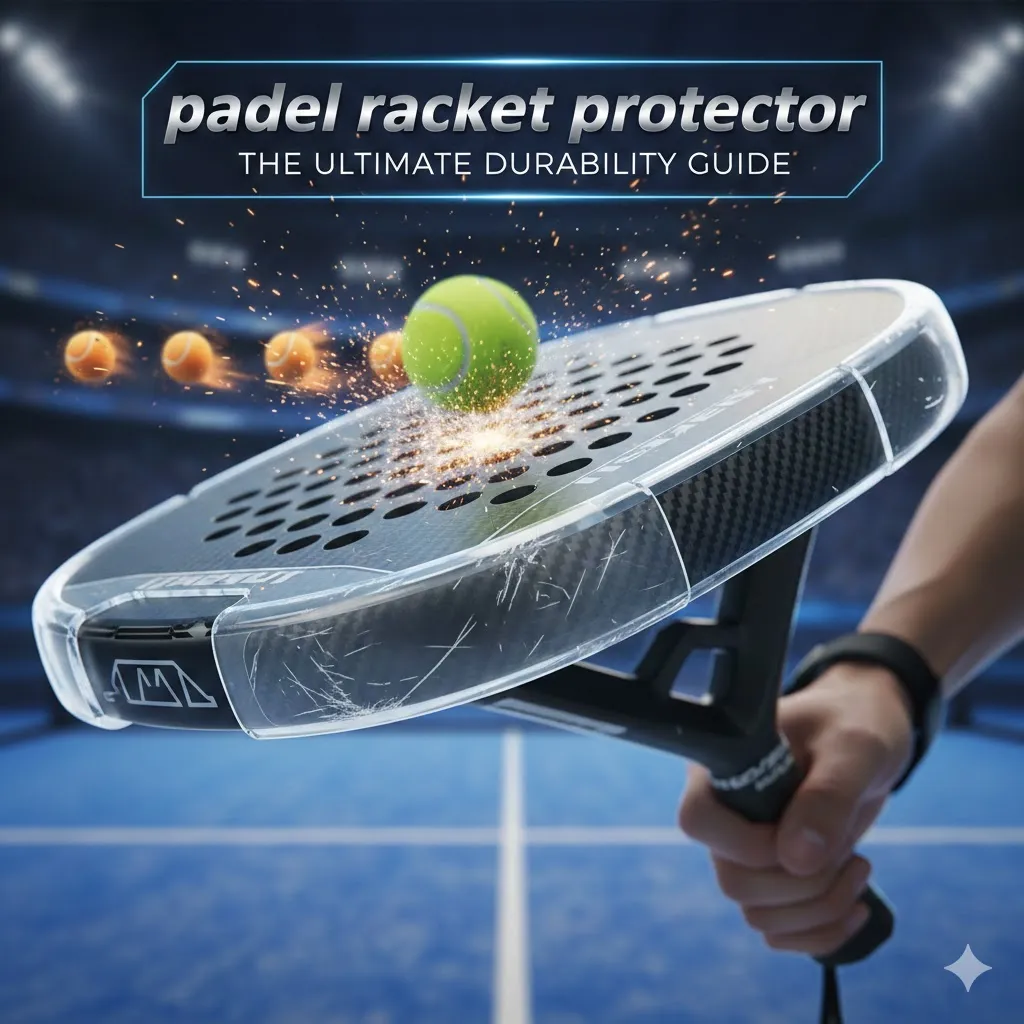
A padel racket head protector is a thin strip – usually adhesive-backed polymer, TPU or reinforced plastic – applied to the upper frame of the racket. It is designed to:
- Absorb abrasion from glass and metal contact
- Reduce cosmetic damage to paintwork
- Protect structural integrity of the carbon frame
- Extend the resale value of your racket
What it does not do is reinforce a cracked frame. Once structural damage occurs, no protector will save it.
Who Can Skip It?
- Beginner players who rarely approach the glass
- Players using older rackets purely for social games
- Those rotating multiple rackets in training
However, if you have invested in premium models – such as those featured in this guide to padel rackets in the UK – protecting that investment is simply logical.
The Hidden Cost of Not Using One
Carbon fibre frames chip. Micro-fractures develop. Paint seals break. Moisture seeps in over time. The damage is often gradual – until one heavy bandeja causes catastrophic failure.
A £10–£20 protector can realistically extend the usable lifespan of a £200–£350 racket by months or even years.
2. How Protectors Impact Your Gameplay: The Science of Weight and Balance
This is where most competitor articles fail. They talk about “protection” but ignore physics.
Adding a padel racket protector typically increases head weight by:
- Light protectors: 4–6 grams
- Reinforced protectors: 7–10 grams
Four grams might sound negligible. At the head of a racket, it is not.
Understanding Swing Weight
Swing weight refers to how heavy a racket feels during motion, not when placed on scales. Adding mass at the head increases:
- Power potential
- Momentum through contact
- Stability on off-centre hits
But it also:
- Reduces manoeuvrability
- Slows reaction speed at the net
- Increases fatigue over long matches
For players interested in deeper sports science principles, the International Padel Federation (FIP) provides official context on regulations and equipment standards.
Balance Point Shift
Adding 6–8 grams at the head can shift the balance point upwards by several millimetres. On head-heavy rackets, this can make them feel noticeably more demanding.
On round or control-focused rackets, it may actually improve punch on volleys.
The Adidas Metalbone Dilemma
If you use an adidas padel racket protector on a Metalbone model with its adjustable weight system, you face a specific issue.
The Metalbone series allows you to add or remove weight screws in the frame. If you install a protector:
- You may block access to the weight ports
- You alter the calibrated balance Adidas designed
- You risk uneven weight distribution
Solution: apply the protector only after finalising your weight configuration, or use a thinner model designed to accommodate adjustment systems. If you are exploring these models, see this detailed breakdown of Adidas padel rackets.
3. Navigating Brands and Styles
Not all protectors are equal. Adhesive quality, thickness and curvature matter significantly.
Nox Padel Racket Protector
The nox padel racket protector is known for:
- Strong industrial-grade adhesive
- Moderate thickness (usually 6–8g)
- High durability against cage scraping
It pairs particularly well with the teardrop and diamond frames seen in many Nox padel rackets.
Missing angle: Nox protectors slightly stiffen the upper hoop feel. Some advanced players report marginally firmer response on high contact points.
Adidas Padel Racket Protector
The adidas padel racket protector typically features:
- Sleeker design
- Lighter overall mass (around 5–7g)
- Better visual integration with factory graphics
However, on rough-textured frames, adhesion may require heat activation (see hairdryer hack below).
Babolat Padel Racket Protector
The babolat padel racket protector is generally:
- Thicker and more impact-resistant
- Slightly heavier (often near 8–10g)
- Designed for aggressive baseline players
For those using models from this overview of Babolat padel rackets, the protector adds tangible durability but also a noticeable head-weight increase.
Universal protectors can work well, but:
- Curvature mismatches cause peeling
- Edges may lift after heavy glass contact
- Visual finish may look less integrated
Brand-matched protectors generally offer superior alignment.
4. The Expert’s Guide: Flawless Application and Safe Removal
The Hairdryer Hack (For Rough Surfaces)
Many modern rackets feature textured or sandy finishes. Applying a protector directly often leads to poor adhesion.
Professional method:
- Clean frame thoroughly with isopropyl alcohol
- Allow to dry completely
- Warm the adhesive strip gently with a hairdryer (10–15 seconds)
- Apply from centre outward, pressing firmly
- Reheat lightly and press again to activate adhesive
The heat softens the adhesive, allowing it to conform perfectly to micro-textures.
Safe Removal Technique
Never rip it off cold.
To remove safely:
- Warm the protector with a hairdryer
- Peel slowly at a shallow angle
- Remove adhesive residue with citrus-based remover
- Avoid sharp tools that strip factory paint
Improper removal is one of the main causes of cosmetic damage.
When to Replace
- Edges lifting
- Deep gouges exposing frame
- After heavy impact collision
Do not wait until structural carbon is visible.
5. Frequently Asked Questions
Frequently Asked Questions About Padel Racket Protectors
Does a padel racket protector affect power?
Yes. Adding 4g–10g to the head increases momentum and can enhance power slightly, especially on overheads. However, it may reduce manoeuvrability at the net.
Will a protector damage my racket?
Not if applied and removed correctly. Damage usually occurs during improper removal, not during normal use.
Are brand-specific protectors better?
Often yes. A nox padel racket protector, adidas padel racket protector or babolat padel racket protector is typically shaped to match their frames precisely.
Can beginners use a heavy protector?
Beginners should generally opt for lighter options (4–6g). Heavier models may make the racket harder to control.
How long does a protector last?
With regular competitive play in the UK climate, expect 2–6 months depending on frequency and playing style.
Conclusion
A padel racket protector is not just cosmetic tape. It is a calculated modification that influences durability, balance and feel.
Used intelligently, it protects your investment and can even subtly enhance power. Used carelessly, it can disrupt balance and interfere with custom weight systems.
The key is understanding the trade-offs: 4g–10g at the head changes swing dynamics. Brand compatibility matters. Application technique determines longevity.
If you take your padel seriously in the United Kingdom, a properly chosen and expertly fitted protector is not optional – it is part of your equipment strategy.