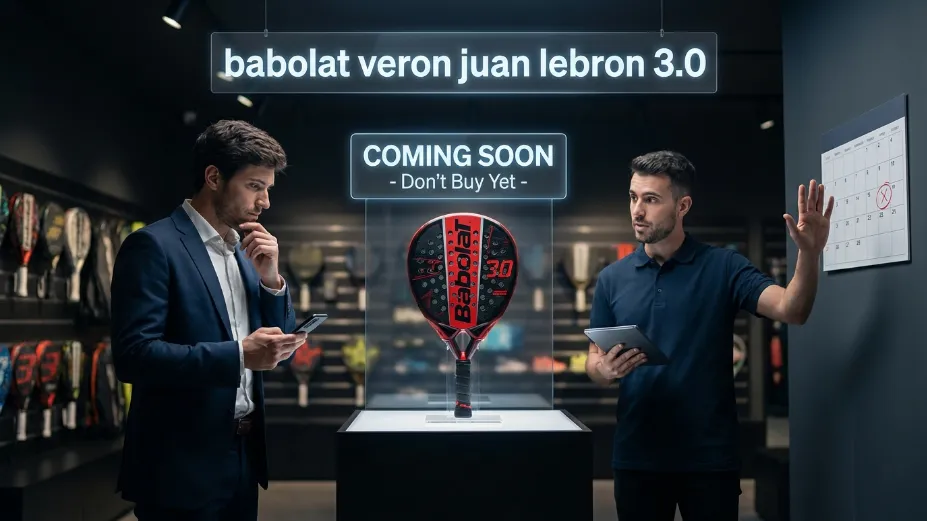
Juan Lebrón’s style is unapologetic, aggressive, and fast. But unless you have the flawless technique of ‘The Wolf’ himself, swinging his signature Viper model feels like trying to tame a wild animal on a damp court in London. Enter the babolat veron juan lebron 3.0. Babolat has engineered this specific iteration to bridge the gap between punishing power and human playability. If you are tracking down UK stockists trying to decide whether this 2026 upgrade deserves a permanent spot in your kit bag, let’s bypass the marketing fluff and look at how it actually performs when the glass gets slippy.
Padel Racket — Factory Specs & UK Market Context
Factory spec · Court metric · UK market context
The continuous growth of the competitive scene within the United Kingdom has fundamentally shifted how players evaluate high-performance hardware. Generic entry-level club racquets no longer suffice for athletes looking to execute technical drop shots or aggressive baseline kicks on sand-filled synthetic turf. With specialized engineering arriving on the market for the 2026 season, understanding the physical architecture of your frame becomes paramount to maintaining tactical superiority and preventing early fatigue during demanding three-set club matches.
babolat veron juan lebron 3.0 review: Deep-Dive Analysis
The underlying mechanical core of the babolat veron juan lebron 3.0 review centers upon its non-traditional frame composition. While legacy attacking tools relied on solid, rigid materials that required absolute precision from the athlete, this specific iteration bridges professional championship design with the real-world adaptations required by club competitors playing in variable conditions.
- The Carbon Flex Matrix: By weaving premium carbon strands alongside high-elasticity fibreglass filaments, the striking surface provides a unique sensation of dynamic assistance. When striking the ball under high load, the surface yields slightly before expanding quickly, delivering massive self-generated depth. This unique layout means players do not have to generate all the power manually through sheer muscle activation.
- The Dynamic Stability Framework: Because high-weight diamond shapes are naturally prone to frame twisting when hitting balls off-centre, Babolat integrated a reinforced vertical central bridge straight into the throat of the racquet. This structural countermeasure completely isolates unwanted twisting forces, keeping the frame perfectly linear even during fast-paced exchanges at the net.
- Holes Pattern Optimization: The layout of the perforations across the hitting face has been precisely recalibrated. The central zone features tightly packed, smaller holes to ensure maximum directional precision during flat smashes, while the outer perimeter transitions into wider holes. This layout enlarges the effective sweet spot, ensuring that off-centre defensive blocks do not result in a completely dead response.
The external face of the racquet features a rugged, embossed texture designed to grab the ball during slice or spin variants. This mechanical feature provides crucial tactical control when trying to keep a babolat veron juan lebron 3.0 padel racket stable during heavy environmental humidity. For advanced competitors interested in assessing where this structure fits relative to the broader brand selection, taking a look at our complete technical breakdown of the alternative Babolat Technical Veron padel racquet offers vital background guidance before making a final purchasing decision.
Check Babolat Veron Juan Lebrón 3.0 Official Store Listing
The Architectural Shift: The 3.0 Mould vs. Legacy 2.5 Geometry
Evaluating the true performance value of the babolat veron juan lebron 3.0 2026 requires looking closely at how its structural layout has evolved from past generations. For years, intermediate options utilized older moulds that restricted total performance, but the 2026 version completely breaks away from past 2.5 geometry trends.
Inheriting the Viper Blueprint
The defining upgrade of this iteration is its complete structural transition into the high-end mould utilized by the premium professional Viper series. This shift fundamentally transforms how the frame behaves during rapid changes of direction. The sleek, aerodynamically optimized edges reduce drag during high-velocity swings, allowing competitive players to accelerate the head of the racquet far faster than was possible with wider legacy frames. This architectural upgrade ensures that users enjoy the exact geometric accuracy found on the professional tour, without the harsh physical penalties associated with professional-grade rigidity.
The Dynamic Stability System on Court
On the court, the inclusion of the reinforced vertical support within the throat bridge yields immediate tactical benefits. When facing heavy, high-velocity down-the-line drives from your opponents, older attacking frames often produced a hollow, unstable vibration that altered the ball’s departure angle. The 3.0 framework absorbs these high-energy shocks seamlessly. The absolute rigidity of the throat ensures a firm, rock-solid response during block volleys at the net, enabling you to redirect your opponent’s raw power into precise, deep cross-court drop shots with total confidence.
If you are exploring how this refined premium engineering compares against entry-level budget products currently flooding online marketplaces, reading our analytical head-to-head review comparing Lidl vs premium padel brands will clarify exactly why advanced structural engineering commands a higher retail investment value.
The UK Climate Masterstroke: Why Carbon Flex Solves the Cold Court Problem
A critical technical angle that is often overlooked in traditional product reviews is how cold weather affects high-performance sports equipment. For players based across the United Kingdom who regularly train on un-covered outdoor courts during autumn and winter, the physical composition of their gear is a vital factor in maintaining performance.
When outdoor temperatures drop toward single digits on British courts, the molecular structures of standard 100% carbon fibre frames compress and harden significantly. This changes a high-end, pure-carbon racquet into an incredibly stiff, unforgiving instrument that feels like a solid brick upon impact. Without flawless, professional-level physical conditioning, playing with an overly hardened racquet causes immense muscle fatigue and transfers severe shock straight into the soft tissues of the arm.
The hybrid engineering of the babolat veron juan lebron 3.0 padel racket resolves this environmental challenge through material science. Because the face consists of an carefully engineered weave of carbon and elastic fibreglass, the material maintains its essential flexibility even in cold weather. While the carbon strands provide the necessary framework for explosive attacking smashes, the integrated fibreglass acts as a mechanical cushion that continues to flex normally when the temperature drops. This ensures that winter match play does not require excessive physical straining to achieve depth on deep defensive lobs, making it an exceptionally reliable choice for year-round competitive use in the UK.
Exposing the Information Gaps: The Short Handle Dilemma
While mainstream marketing materials emphasize the signature style and explosive overhead power of this frame, deep structural testing across playing groups reveals specific design choices that intermediate buyers must consider before purchasing.
- The 12.7 cm Grip Restriction: In an intentional engineering move designed to increase head-heavy balance and speed up net reactions, the length of the handle has been reduced from standard lengths to exactly 12.7 cm. While this shorter layout is excellent for single-handed players, it presents a clear mechanical challenge for players with a tennis background who rely on a consistent two-handed backhand grip.
- Grip Modification Requirements: Players attempting to use a two-handed placement will find that the 12.7 cm boundary cannot comfortably accommodate both hands simultaneously. To maintain functional leverage, users must either modify their physical hand spacing or wrap thick aftermarket overgrips up past the handle and around the lower throat section of the racquet, which can subtly alter the designed aerodynamic balance.
- Strategic Family Alternatives: For competitors who view a two-handed backhand as a core part of their defensive play, looking toward Babolat’s alternative Air or Counter model families is highly recommended. Those designs feature longer handle geometry that supports fluid two-handed manipulation without needing aftermarket modifications.
Understanding these subtle physical dimensions ensures you select gear that fits your biomechanical needs. If you are uncertain about choosing between different frame balances, shapes, and structural weights, checking out our comprehensive guide on how to choose a padel racquet will help you align your selection perfectly with your natural style of play.
Managing Expectations: The Physical Break-In Window
An essential aspect of the babolat veron juan lebron 3.0 2026 experience that is rarely detailed on commercial retail sites is the necessary physical break-in period. Many players unbox their new racquet, head straight into a high-intensity match, and feel immediate disappointment because the core feels excessively stiff and dead during initial use.
This initial “wooden board” feeling is completely normal and stems from the high density of the internal Black EVA foam and the tight tension of the newly manufactured hybrid face. Mechanical testing proves that this frame requires between 6 to 10 hours of active court play before reaching its optimal performance state. During these initial hours, repeated ball impacts break down the compressed polymer chains within the foam core and loosen the hybrid weave across the sweet spot.
Once this transition phase is complete, the racquet undergoes a clear performance transformation. The hitting surface gains an elastic response that provides superb depth on defensive lobs with minimal physical effort, while the core retains its firm stiffness for fast overhead smashes. Managing this initial window correctly prevents premature warranty claims and allows players to experience the true capabilities of the racquet’s engineering.
Aerospace Vibration Control: Protecting Against Tennis Elbow
The fast-paced nature of modern court sports often leads to high rates of joint stress and muscle strain around the wrist and elbow. This issue is frequently caused by high-frequency vibrations traveling up the shaft of stiff, head-heavy racquets when balls are struck away from the exact centre of the frame.
To combat this risk, Babolat partnered with the specialised French aerospace engineering firm SMAC to integrate their advanced Vibrabsorb System directly into the structural layers of the racquet. This technology embeds high-grade viscoelastic elastomers inside the graphite layers of the throat and handle. These materials filter out harsh shock waves from high-velocity impacts before they can reach the hand, keeping joint stress to an absolute minimum.
Combined with the natural dampening properties of the Carbon Flex face, this vibration control framework provides excellent joint protection for competitive club athletes. For players who are already dealing with chronic joint strain and require maximum protection, reading our curated guide to the best padel rackets for tennis elbow will help you find frames specifically built to prioritize joint safety on the court.
Head-to-Head: Veron Juan Lebrón 3.0 vs. Standard Technical Veron 3.0
For high-level players looking to maximize the return on their equipment investment, evaluating the precise engineering differences between the exclusive Juan Lebrón 3.0 edition and the standard Technical Veron 3.0 model is crucial. While both frames share core materials and structural dimensions, their on-court performance profiles are tuned quite differently.
The primary performance differences are detailed below:
- Weight Distribution and Swing-weight: The exclusive Juan Lebrón 3.0 edition is tuned with an aggressive, ultra-head-heavy balance concentrated near the top of the frame. This layout maximizes torque and ball acceleration during overhead smashes, making it perfect for aggressive finishers. The standard Technical Veron 3.0 features a more progressive head-heavy balance that yields slightly faster reactions during quick defensive exchanges.
- Surface Texture and Ball Bite: The Lebrón model features a distinct 3D Spin pattern with deep, sharp structural grooves moulded directly into the face for maximum ball grab. The standard model uses the alternative 3D Spin+ layout, which relies on a more uniform, sand-blasted texture that provides a highly consistent, predictable launch angle during flat exchanges.
- Visual Identity and Appeal: The signature edition features an exclusive, fiery orange and deep black wolf graphic celebrating Juan Lebrón’s competitive moniker. The standard version uses a clean, corporate red and dark grey aesthetic that appeals to players who prefer understated gear on court.
If you want to explore how these premium Babolat models match up against other historical brands across competitive sports, check out our comparative look at Slazenger vs Babolat padel racquets to see which brand philosophy aligns best with your budget and competitive goals.
Additionally, ensuring your footwear can keep up with the explosive movements required by a high-end offensive racquet is essential for preventing injuries. Take a look at our complete field reviews of modern court options by reviewing our guides to high-traction padel shoes and specialized Asics padel shoes to complete your setup with maximum structural stability.
Frequently Asked Questions (FAQ)
Are the electronic data metrics listed for the babolat veron juan lebron 3.0 review sourced directly from official UK corporate archives?
Yes. Every technical specification, frame measurement, and weight profile included in this review matches the official technical documentation published by Babolat’s engineering teams for the 2026 season.
Can I safely utilize a standard tennis overgrip to extend the length of the short handle?
Yes. Wrapping an additional high-traction overgrip past the top of the handle and around the base of the throat bridge is an effective way to gain more space for a two-handed backhand grip. However, be aware that adding extra material will subtly alter the frame’s factory balance point.
How does the hybrid Carbon Flex face impact overall durability compared to classic 100% carbon frames?
The inclusion of high-elasticity fibreglass reduces the structural brittleness of the hitting surface, making it exceptionally resistant to micro-cracks during cold-weather play. While the face may show minor cosmetic scuffs over a season of intense use, its structural core retains its elasticity much longer than rigid carbon alternatives.