Walk into any premium venue across the UK, from the bustling courts of Chelsea Harbour to the vibrant atmosphere of the Padel Social Club, and you will notice a distinct shift in how the modern game is played. Unlike tennis, where the start of the point is often a weapon of mass destruction, the padel serve is a strategic builder. It is not about hitting an outright winner; it is about securing the net, seizing the initiative, and dictating the point’s behaviour from the very first strike.
If you want to elevate your game and dominate local tournaments, mastering padel serve tips is your ultimate starting point. In this comprehensive guide, we will explore the essential padel serve tips that will transform your opening shot from a mere formality into a tactical masterpiece.
Whether you are playing at a local leisure centre or enrolled in a professional coaching programme, understanding these mechanics is absolutely crucial. We will dive deep into everything from legal standards to advanced kinetic motions, ensuring your defence and attack are perfectly balanced. For those looking to maximise their control on the court, implementing these padel serve tips will give you the competitive edge you have been looking for.
The Legal Mechanics: LTA and FIP Standards
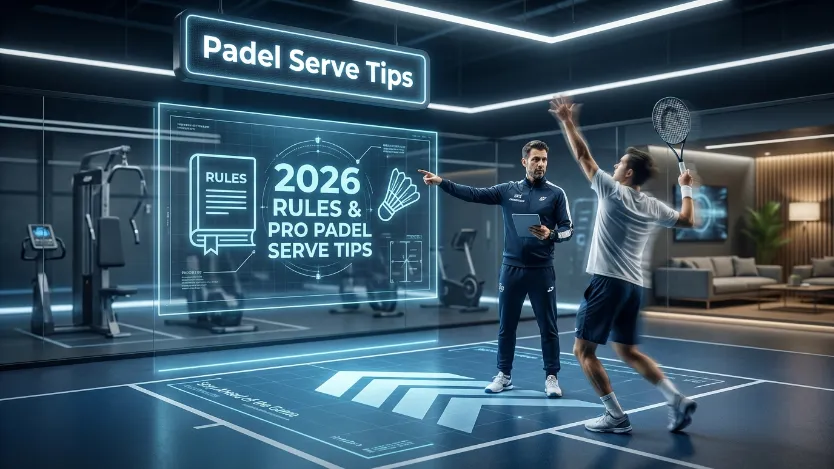
Before applying any advanced padel serve tips or experimenting with aggressive spins, you must completely understand the legal framework. A common misconception among beginners and intermediate players alike involves the “waist height” rule. While many players use their hips or the top of their shorts as a visual guide, the most accurate and legally binding metric is the belly button. When the racket strikes the ball, contact must be made at or below the level of your belly button.
- The Height Shift: Remember that your legal contact point changes dynamically when you bend your knees. If you crouch low to generate more power, your belly button drops toward the floor, meaning your racket contact point must also be lower to remain legal.
- The One-Bounce Rule: The ball must bounce exactly once behind the service line before you strike it. Dropping it on the line itself is a fault.
- Foot Placement: Both feet must remain completely behind the service line until the racket makes contact with the ball. Proper adherence to the LTA Official Padel Rules ensures you never give away cheap points due to clumsy foot faults.
2026 Regulatory Breakthrough: The Star Point & Imaginary Lines
Staying ahead of the game means looking at future regulations and preparing your strategy today. One of the most critical padel serve tips for competitive players is adapting to the upcoming 2026 rule changes. A new system known as the “Star Point” is set to be activated at Deuce 3 (the third deuce of a game). This will introduce a “golden point” scenario where the receiving team chooses which side to receive from, drastically altering how you deploy your serves under immense pressure.
Furthermore, understanding the “Imaginary Lines” rule is vital for anyone taking their game seriously. When serving, neither your body nor the ball can cross the imaginary extension of the central line before the moment of impact. Breaking this rule is a common fault that proper padel serve rules strictly forbid. Practising your positioning now will save you from frustrating penalties in future matches.
Technical Mastery: The Continental Grip and Kinetic Chain
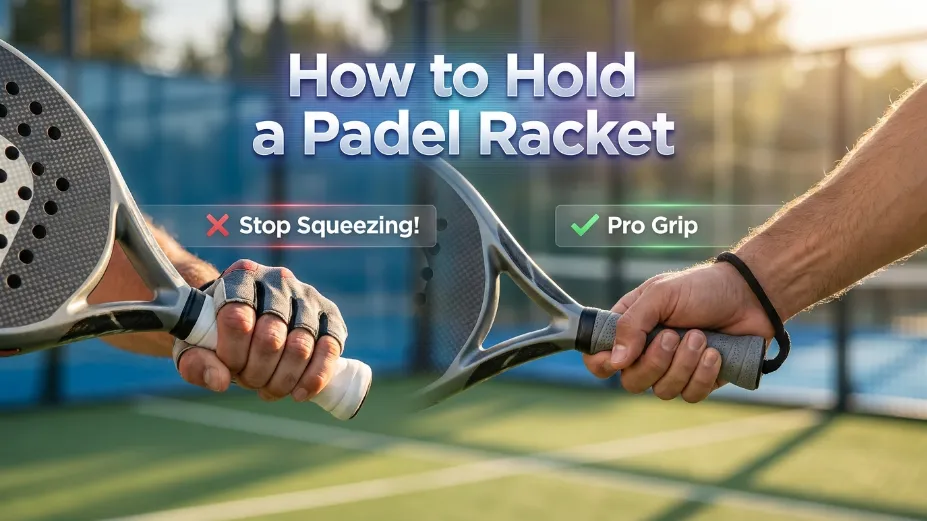
To truly benefit from these padel serve tips, you must build your technique on a solid foundation. The Continental grip—often likened to holding a hammer—is the absolute baseline for generating a vicious, unreturnable slice. This grip naturally opens the racket face, allowing you to cut underneath the ball, keeping the bounce incredibly low and skidding on your opponent’s side.
- The Pendulum Swing: Instead of a chaotic, jerky motion, use a smooth pendulum swing. This ensures absolute consistency in the height, depth, and trajectory of your serve.
- Weight Distribution: Proper kinetic energy transfer requires shifting your weight from your back foot to your front foot seamlessly. This forward momentum is what gives your serve a “heavy” feel, forcing a weak return without you needing to over-swing.
Mastering this fluid motion is one of the most critical padel serve tips you will ever receive, making your transitions to the net feel effortless and natural.
Tactical Targeting: The Glass, The “T”, and The Body
When we delve deep into padel serving tips, we must comprehensively analyse strategy. The serve is a game of chess. A deep dive into tactical targeting reveals how you can completely dismantle your opponent’s return before they even swing their racket. Let us explore the three primary targets and how to maximise their effectiveness:
1. Targeting the Side Glass: Directing your serve towards the side glass is a classic, high-percentage tactic. It forces the returner into an awkward, cramped position, often resulting in a lofty return that your partner can easily volley away. The heavy slice you generate with the Continental grip will make the ball skid dramatically off the glass, complicating their defence. The key here is depth; a short serve to the glass is easily stepped into and punished.
2. The Body Serve: Sometimes, the most effective padel serving tips involve playing the player, rather than the court. A fast, flat serve aimed directly at the opponent’s torso forces them to make a split-second, uncomfortable decision. It jams their racket swing, often leading to a popped-up ball. This is especially useful against players who like to take large, sweeping swings.
3. The “T” Serve: Serving down the middle line (the “T”) achieves two things: it limits the angles your opponent has for their return, and it often creates confusion between partners over who should take the shot down the middle. This allows you and your partner to step forward and cover the net with supreme confidence.
An interesting information gap in the UK padel scene is the legality and ethics of the “Drop Serve” (an intentionally very short serve that barely clears the net). While entirely legal according to the official padel rules, it is often seen as a cheeky, almost frowned-upon tactic in friendly club matches. However, using it sparingly in a tournament can completely disrupt an opponent who favours standing too far back behind the baseline.
The Transition: Getting to the Net
The ultimate goal of your serve is not to win the point outright, but to secure the net position. One of the best padel serve tips you can practice is the “Second Post” drill. After striking the ball, your forward momentum should carry you naturally to a position roughly in line with the second structural post of the cage.
This positioning ensures you are close enough to volley aggressively but far enough back to retreat for an overhead smash if a lob is played. You must avoid “No Man’s Land” at all costs. Hesitating in the middle of the court leaves you highly vulnerable to balls hit directly at your feet. For a more structured approach to court positioning and movement, consider seeking out professional padel coaching in the UK.
Playing in the British Climate: Wet Weather and Indoor Courts
Here is an often-overlooked area in most online padel serve tips articles: adapting specifically to the British climate. The weather in the UK can dramatically alter court conditions, and your serve must adapt accordingly.
When playing outdoors in damp, humid weather, the ball absorbs moisture and becomes heavier, while the glass becomes slick and unpredictable. A high-spin slice serve will often slide erratically on wet glass, but a heavy, wet ball is also much harder to impart spin onto in the first place. Therefore, when the balls are damp, one of the best padel tips serve adjustments is to drastically reduce your spin and rely on a deeper, flatter serve with more pace. Conversely, for premium indoor venues, like The Padel Club, the climate is perfectly controlled, allowing you to utilise maximum spin and aggressive glass targeting without fear of unpredictable skids.
Advanced Strategy: Disguise and Left-Handed Opponents
As you progress to a higher level, incorporating visual disguise becomes one of the most vital padel serve tips in your arsenal. You want your opponent guessing your target until the very last millisecond. To achieve this, use the exact same ball toss, knee bend, and racket setup for a serve to the glass as you do for a serve down the “T”. The deception lies entirely in the subtle flick of the wrist at the point of contact.
Furthermore, serving against a left-handed opponent requires flipping your entire spatial awareness. Their backhand is now on the glass side (on the right side of the court), which fundamentally changes which spins and angles are most effective. Adjusting your tactics for lefties is a hallmark of an advanced player. Exploring more comprehensive padel tips will help you navigate these complex, asymmetrical matchups with confidence.
Padel Serve Tips-Frequently Asked Questions (FAQ)
Can I jump while serving in padel?
No, you absolutely cannot jump. According to the strict regulations, at least one foot must remain in solid contact with the ground when the racket hits the ball. Breaking this rule results in a foot fault, which can cost you a crucial first serve.
What happens if the ball hits the corner between the glass and the wire fence?
If the ball hits the corner directly on the seam where the glass meets the wire mesh (often called the “egg”), it is generally considered a “let” in club etiquette, and the point is replayed. However, if the ball hits the wire mesh at any point during its trajectory after the serve, it is considered an immediate fault.
Is serving from the “wrong” side allowed if the opponent does not notice?
No. If a player serves from the wrong side of the court, all points played up to the discovery of the error will still stand, but the positioning must be corrected immediately. Always double-check your side and the score before applying your padel tennis serve tips to avoid unnecessary confusion.
Conclusion: Building Your Game from the Ground Up
Mastering the serve is a continuous, rewarding journey. By consistently integrating these padel serve tips into your weekly practice programme, you will quickly see tangible improvements in your overall match control. Remember to always respect the legal standards regarding height and foot placement, adapt your tactics to the unpredictable British climate, and always use your serve as a strategic tool to gain the net position.
Whether you are a beginner learning to control the Continental grip or an advanced player refining your disguise against left-handed opponents, the fundamentals remain the same. With dedication, strategic thinking, and the right technique, your serve will transform from a simple baseline stroke into the most reliable and intimidating foundation of your padel game. Keep practising these padel serve tips, and you will dominate the court from the very first bounce.