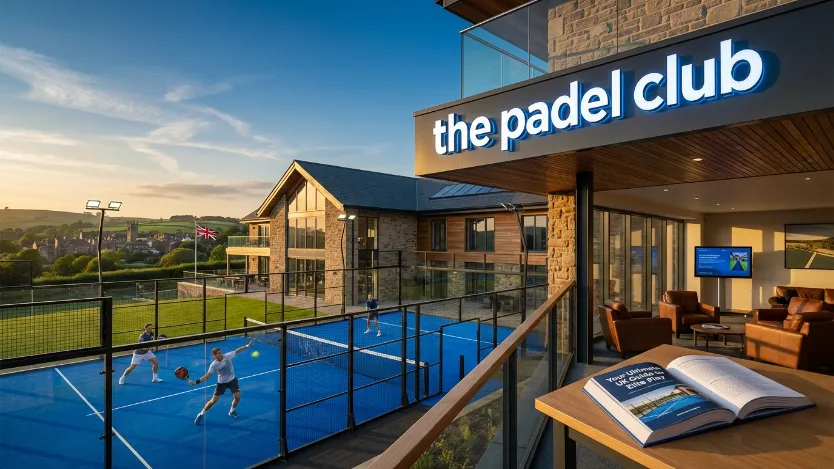
Step onto any court from the industrial hubs of Manchester to the iconic skyline of North Greenwich, and you will immediately recognise the distinct sound of carbon bats meeting high-performance balls. While the sport has exploded across the country, the padel club has emerged as the definitive benchmark for what a premium sporting venue should offer in the 2020s.
With the UK padel market projected to surpass 1,000 courts by 2026, the industry is shifting from a “pay-and-play” model to a sophisticated “lifestyle destination” approach. However, for the dedicated player, there is more to selecting a venue than just location. To truly master your game and avoid common pitfalls, you need to understand the technical nuances—ceiling heights, sand distribution, and recovery facilities—that most generic reviews simply overlook.
The Cultural Dominance of The Padel Club in the UK Market
The dominance of the padel club in the United Kingdom isn’t merely a result of the sport’s rapid growth; it is a result of a meticulously crafted social experience. In a nation where traditional gym memberships are declining, players are craving “competitive socialising”—a blend of high-intensity sport and premium hospitality. This brand has successfully positioned itself as the “Goldilocks” of the industry, offering facilities that are accessible to beginners yet technically rigorous enough for the seasoned pro.
Standardisation has become the new goal. Whether you are playing at a regional flagship or a boutique urban site, players now expect a consistent baseline of quality. This includes high-performance LED lighting, courts that adhere to the official padel tennis court size, and social spaces designed by wellness experts. This balanced profile has led to a state where the padel club is now the primary search term for anyone looking to enter the “Padel Society.”
The Flagship Standard: The Padel Club Gloucester Quays
As the crown jewel of the group’s regional expansion, the padel club gloucester represents a £1 million investment in indoor sports excellence. Located directly opposite the historic Gloucester Quays, this venue was designed from the ground up by wellness experts to ensure that the social environment matches the quality of the play. It features nine premium indoor courts, making it one of the largest dedicated facilities in the South West.
What sets this location apart is its role as a pioneer for the industry; it recently hosted the inaugural UK Padel Convention, bringing together club owners and investors from across Europe. For players, the draw is the consistency of the environment. Each court is equipped with customised Portico Sport structures and sports-grade LED lighting that eliminates the “blind spots” often found in converted industrial units. To enhance your game here, coaches recommend using a high-quality Babolat padel racket to handle the fast-paced indoor rallies typical of this high-octane venue.
The Padel Club Cheltenham: Wellness, Pets, and Priority Access
Expanding into the Festival Trade Park, the padel club cheltenham takes the social aspect of the sport a step further. While it offers four state-of-the-art panoramic courts, the real focus here is on the “spectator experience.” The clubhouse features premium seating and high-end changing facilities that rival boutique London gyms. Most notably, the club has adopted a “dog-friendly” policy, understanding that for many UK players, a weekend match is part of a wider family outing.
Strategic players at this branch often opt for “The Society” membership—a £150 annual subscription that grants 18-day advanced booking windows. This is a critical advantage in a high-demand area like Cheltenham, where peak-time slots often disappear within minutes of being released. The club also bridges the information gap by offering free introductory sessions for newcomers, ensuring that the barrier to entry remains low while the quality of play remains elite.
Luxury in the Capital: Padel Social Club the O2
In the shadow of London’s most iconic entertainment arena, padel social club the o2 offers a vision of the sport’s future. Described as the “Soho House of Padel,” this venue prioritises luxury and recovery. Unlike standard regional clubs, the O2 site features five panoramic outdoor courts surrounded by sustainably designed social spaces, including a “Recovery Room” equipped with saunas and cold plunge pools for post-match restoration.
However, players should be aware of specific logistical nuances at this site. While parking is available within the O2 arena complex, there is no internal bike storage—a surprising gap for a city like London where many players arrive via e-bike. Technically, the courts here are built to withstand 120km/h winds, which is essential given the exposed nature of the Greenwich Peninsula. For those transitioning from tennis at this venue, understanding padel balls vs tennis balls is vital, as the outdoor humidity at the O2 can significantly affect ball pressure and bounce height.
The Heron Padel Club: Innovative Construction and Elite Coaching
Located in Brentwood, the heron padel club demonstrates how innovative engineering can solve the UK’s “covered court” crisis. By utilising Smart-Space “instant buildings,” the club created a 20m x 20m indoor facility without the need for traditional, time-consuming foundations. This Maxi-Space framework provides a robust, all-weather solution that allows play to continue until 9:30 pm daily, even during the harshest British winters.
The technical edge at The Heron comes from its leadership. With Frankie Langan—the UK’s number one padel player—serving as Director of Padel, the coaching programmes here are arguably the most advanced in Essex. Players can choose from high-performance tactical clinics or beginner sessions, all conducted under a translucent PVC roof that allows 60% natural light penetration, creating an “outdoor feel” with total indoor protection. This model is a key part of the wider Padel4all expansion strategy seen across underserved regional markets.
The “Missing Angles”: Ceiling Heights and Sand Quality
One of the most frequent complaints on player forums like Reddit involves the “invisible” technical failures of indoor clubs. In many repurposed UK warehouses, the ceiling height (truss height) is often neglected. While beginners may not notice, advanced players require at least 8 to 10 metres of clearance to execute a proper “Lob.” At the padel club venues, high pitched roofs are the standard, but players should always check if a court is situated under a low beam, which can ruin competitive rallies.
- Sand Distribution: A critical gap in UK court maintenance is the over-application of sand. This leads to “dead” bounces and dangerous slips. Premium clubs ensure a “monofilament” grass balance where sand is brushed deep into the pile.
- Grip Decay: In the humid British climate, overgrips lose their tackiness 20% faster than in Spain. Expert players at Gloucester often rotate grips every 4-5 matches to maintain control.
- Lighting Consistency: Inferior LED systems can cause “strobe” effects on high-speed smashes. Always look for venues that use integrated sports lighting rather than standard industrial floodlights.
The Amazon and Counterfeit Problem in the UK
As padel’s popularity grows, so does the influx of counterfeit equipment on platforms like Amazon. Many UK players are unknowingly purchasing “no-name” bats that lack the internal foam density required for injury prevention. Authentic equipment from a pro shop at a venue like the padel club ensures you are getting certified carbon-fibre faces rather than cheap injection-moulded plastic.
The Authenticity Checklist for UK Players:
- The Weight Test: Professional rackets should weigh between 360g and 375g. Fakes are often significantly lighter or inconsistently balanced.
- The Seam Inspection: Check the holes of your racket. In genuine models, the edges are smooth; fakes often have rough, unfinished burrs inside the holes.
- Holographic Seals: Major brands now include holographic serial numbers. If the price for a high-end bat seems 50% lower than the RRP, it is likely a counterfeit.
The “Invisible Failure”: Racket Stiffness and Vibration
A critical gap in player knowledge is the rate of structural decay in padel bats. Independent testing shows that a carbon racket loses roughly 15% of its “pop” (restitution coefficient) after 50 hours of play. Because the racket doesn’t “snap” like a string, many players keep using “dead” equipment that vibrates excessively, leading to the dreaded “Padel Elbow.” To avoid this, players are encouraged to follow official guidelines from the LTA Padel governing body regarding equipment safety and maintenance.
the padel club photos
Ready to Play?
Join the Court Today
Whether you’re brand new or a seasoned player — there’s always a spot for you.
✓ No experience needed · ✓ All skill levels welcome
the padel club-Frequently Asked Questions (FAQ)
Do I need to be a member to play at The Padel Club?
No, most premier venues, including the padel club gloucester and the padel club cheltenham, operate on a “Pay-and-Play” basis. However, members of “The Society” receive significant benefits, such as priority booking and discounts on clubhouse retail and refreshments.
What is the best way to book a court at The O2?
All bookings for padel social club the o2 are managed through the Playtomic app. Non-members can typically book 3 days in advance, while members enjoy a much larger 10 to 12-day window. This is the standard system across most elite London clubs.
Are these clubs suitable for children?
Yes, venues like The Heron and Gloucester offer “Padel Cubs” (ages 5-7) and “Padel Crew” (ages 8-14) coaching terms. These sessions are led by LTA-accredited coaches and include all necessary equipment hire within the session fee.
Can I rent a racket before committing to a purchase?
Absolutely. Most clubs offer racket hire for around £4 to £7 per session. A “pro tip” for serious players is to look for “test-and-buy” schemes where your hire fee is deducted from the final price of a new racket if you choose to purchase it from the club shop.
Is there a specific dress code for UK padel clubs?
There is no formal dress code, but “general sports clothing” is required. However, the artificial grass surfaces used at the padel club venues perform best with padel-specific trainers, which offer the correct grip for the sand-infill turf.
Conclusion: The Verdict on the UK’s Elite Padel Scene
The the padel club ecosystem remains the backbone of the British scene for a reason. Its blend of high-tech facilities, welcoming social culture, and strategic regional expansion makes it the safest bet for players of all levels. However, as the sport matures into 2026, the gap between “standard” and “premium” facilities will only widen. By choosing venues that prioritise ceiling height, court maintenance, and recovery—like padel social club the o2—you ensure your progress is never hindered by your environment.
Whether you are visiting the heron padel club to learn from the nation’s best or joining a social mix-in at Gloucester, remember that padel is as much about the “Chat” as it is the “Game.” Treat your gear with respect, understand the technical specs of your chosen venue, and your performance on the court will undoubtedly reflect the quality of the facilities you choose to call home.