There is a unique brand of humility in watching your hardest, most aggressive baseline drive hit a reinforced glass wall, only to sit up perfectly for your opponent to tap away for an effortless winner. Across the UK’s rapidly multiplying clubs, thousands of experienced racquet players are currently discovering a harsh reality: bringing a pure tennis philosophy to a padel court is tactical suicide. The geometry of the enclosure is tighter, the cold British weather inherently kills the bounce, and brute force is routinely dismantled by structural patience.
Bridging the gap from a confused newcomer to a composed net player doesn’t require elite athleticism; it demands a total rewiring of your spatial awareness. By applying the right padel tips for beginners, you can instantly bypass months of frustrating trial-and-error, turning those intimidating glass walls from your biggest liability into your most lethal defence.
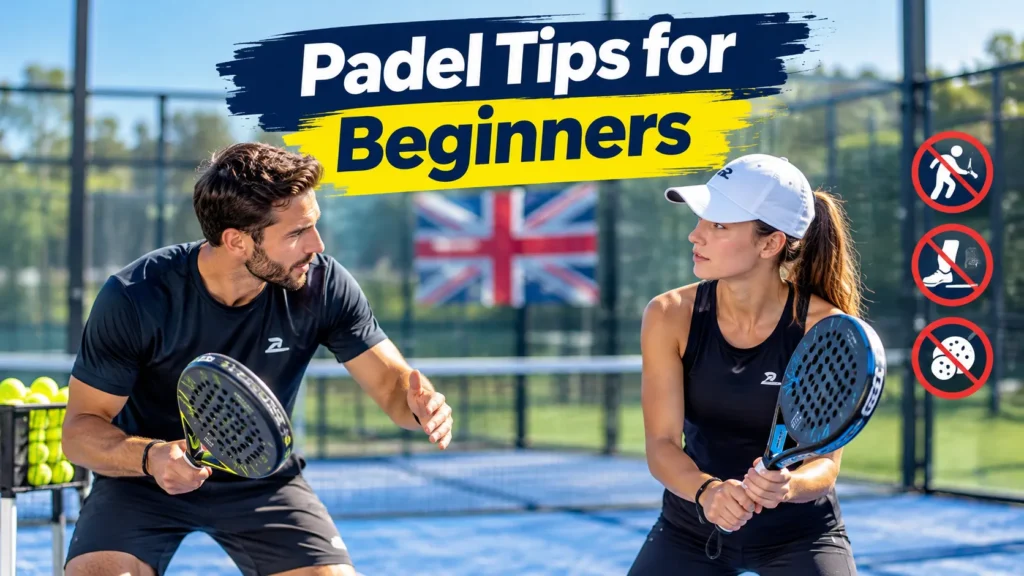
Padel Tips for Beginners
Verified Court Rates & Execution Logic · 2026
best padel tips for beginners
The engineering core of any successful match centres upon unlearning traditional racquet habits. While legacy court sports rely primarily on raw baseline power, this modern silhouette of play requires bridging defensive patience with rigorous spatial awareness. Applying these padel coaching tips for beginners transforms random hitting into a structured, highly effective methodology.
- The Grip Matrix: Utilising the continental grip padel technique is non-negotiable. This classic “hammer” hold allows players to execute flat returns and sudden slices without changing hand positions during hyper-fast exchanges near the net.
- The Court Boundary: Because the playing area is remarkably compact, standing in the middle of the court is a severe tactical error. The internal chassis of your strategy must rely on the service line rule: either defend deep behind the line or attack aggressively at the net.
- Wall Mechanics: The glass walls incorporate multi-directional rebound angles. This allows players to execute defensive resets by letting the ball hit the glass first, absorbing its heavy momentum and buying crucial seconds to prepare a precise, low-velocity return.
The defensive layer balances ultra-lightweight footwork with protective positioning. For players analysing tactical options across the entire match matrix, evaluating the dedicated framework outlined in our analytical look at padel rules provides clear contextual background before booking your first court.
Climate and Gear: Optimising Your Setup for the UK
Navigating the British padel landscape requires a clear understanding of the mechanical differences between playing in warm, ideal climates and standard UK weather. Selecting your specific equipment dictates both your physical comfort and your kinetic velocity on a damp outdoor court.
The Temperature Variance
The physical architecture of the ball focuses extensively on internal pressure. Cold UK temperatures cause this gas to contract, making the ball feel exceptionally heavy and reducing its natural bounce. Conversely, playing in premium indoor centres employs a climate-controlled environment designed for high-to-the-glass responsiveness. To counter cold weather outdoors, players must adapt their swing mechanics to lift the ball proactively rather than relying entirely on a high rebound.
Weight and Equipment Discrepancies
The extreme density of hard carbon fibre introduces an undeniable rigidity penalty, pushing a standard setup to feel overly stiff in winter. A softer foam core drops this resistance noticeably, providing a forgiving sensation for nimble baseline defenders. This structural variance reflects clearly across the market, where choosing the best padel racket for beginners ensures your gear mechanically absorbs the heavier impact of a cold, dense ball without compromising your swing speed.
If you are a high-level competitor seeking to match advanced movement dynamics with elite-tier control tools, exploring the definitive mechanics of appropriate turf traction is crucial. Investing in highly specialised padel shoes will ensure your entire equipment setup functions in perfect technical alignment, granting 360-degree rotation on sandy artificial grass.
Head-to-Head: Padel Tennis Tips for Beginners vs Traditional Tennis
For players trying to transition their racquet skills seamlessly, the choice comes down to a fundamental split in tactical philosophy. Both sports command top-tier athleticism across UK venues but approach court stability and point construction from completely opposing angles.
The primary differences in on-court performance are detailed in the comparative matrix below:
- Swing and Break-In Period: Tennis demands long, sweeping strokes to generate massive topspin. Padel requires a decisively compact, short backswing, delivering a plush, controlled feel the very first time you strike the ball. Large, looping swings in an enclosed glass box lead to severe timing errors.
- Net Lock-down and Support: Tennis often features isolated baseline dominance. Padel dominates the tactical category through its rigid requirement to move strictly as a paired unit. If your partner pushes to the net, you must move up in tandem to lock the middle spaces down completely.
- Lifespan of the Rally: A tennis point can end swiftly with a single ace. The heavy glass reinforcements on the padel court easily deliver extended 20-shot defensive rallies. The high lob remains your ultimate tool to reset these long exchanges and force aggressive opponents backward.
For a complete, comprehensive overview of the broad variety of choices currently occupying the competitive landscape across British clubs, take a moment to review the official strategic frameworks provided by LTA Padel to select your ideal developmental pathway.
Frequently Asked Questions (FAQ)
Do damp UK weather conditions fundamentally alter the bounce off the glass walls?
Absolutely. When outdoor glass panels accumulate moisture or morning dew, the friction coefficient drops to zero. Instead of bouncing outwards towards the centre, the ball will skid downwards rapidly. Beginners must adjust by stepping forward and taking the ball early before it reaches the wet glass.
Should I play with the same aggressive baseline power I use in traditional tennis?
It is highly discouraged. The intense kinetic energy generated by a full tennis swing will cause the ball to rebound massively off the opponent’s back glass, setting them up for an easy smash. Padel prioritises structural placement, soft touches, and tactical lobs over pure brute force.
Why is standing in the middle of the court considered a major tactical flaw?
The middle zone, universally known as “No Man’s Land”, leaves your centre of gravity exposed. Standing here allows opponents to easily drop the ball directly at your feet, forcing a weak, upward defensive scoop that immediately sacrifices the net advantage to the opposing pair.