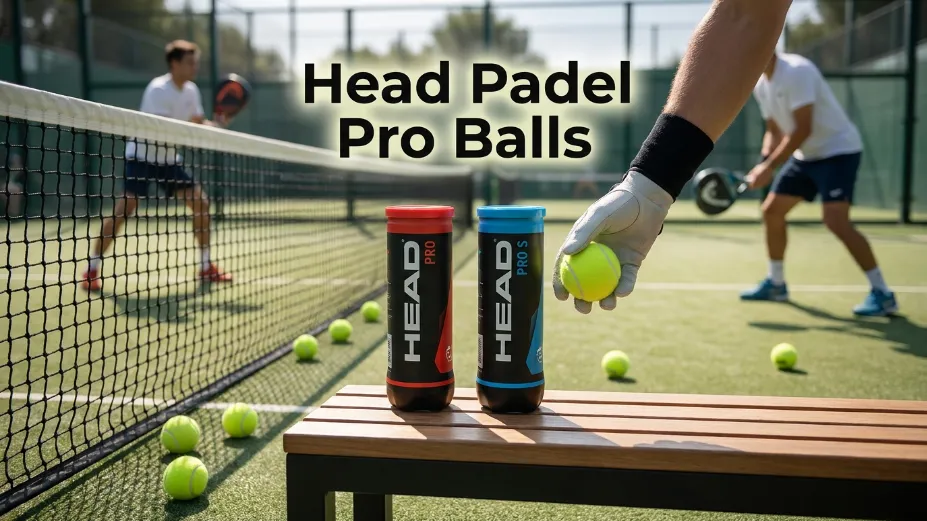
Selecting the right head padel pro balls is often the invisible dividing line between a frustratingly sluggish rally and a crisp, rewarding smash. For padel players across the UK, dealing with damp court conditions and low ambient temperatures isn’t just a seasonal nuance—it is a tactical challenge. Whilst most players blame their racket for a sudden loss of power, the real culprit is usually the pressure drop in their felt. The subtle distinction between the iconic HEAD Pro and its hyper-fast sibling, the Pro S, alters how the ball flies through the heavy British air.
If you have ever felt your clean strikes dying before reaching the glass, the solution lies not in your swing, but in understanding exactly which canister deserves a permanent spot in your kit bag.
HEAD Padel Ball Models
Core & pressure · Felt · UK conditions · Bounce & packaging
For players navigating the damp climate of the United Kingdom, the ideal choice hinges squarely on court setup and seasonal exposure. If you primarily book unheated outdoor or highly humid panoramic courts, the elevated velocity of the Pro S or Pro S+ variants is essential to counteract environmental air resistance. Conversely, indoor enthusiasts looking for ultimate touch and point construction will gain maximum value from the standard Pro and Pro+ series.
The Physics of Play: Padel vs. Tennis
To fully grasp why premium head pro padel balls perform uniquely on the court, it is vital to disassemble the underlying engineering separating padel from traditional lawn tennis. Many casual players assume the two sports share identical equipment, but this oversight accelerates gear degradation and increases joint stress. A comprehensive evaluation reveals deep structural differences:
- The Exterior Diameter: Official padel balls are engineered to a slightly tighter specification, maintaining a strict diameter range between 6.35 cm and 6.77 cm. Conversely, tennis balls feature a broader dimensional footprint, spanning from 6.54 cm up to 6.86 cm. This lower baseline volume directly influences how the ball sits on the racket face.
- Internal Atmospheric Pressure: This is the single most critical differentiator. Padel spheres are manufactured with an internal pressure environment of 10 psi to 11 psi. Tennis variations demand a significantly higher internal charge of roughly 14 psi. Dropping a tennis option onto a padel court leads to erratic, unmanageable ricochets off the glass.
- Felt Density and Texture: Because padel rackets are solid, perforated composite structures without elastic strings, the ball requires a thicker, more durable woven jacket. This specialized felt creates optimal friction against the carbon-fibre face, allowing high-level players to grab the ball and generate profound rotational spin during a bandeja padel strike.
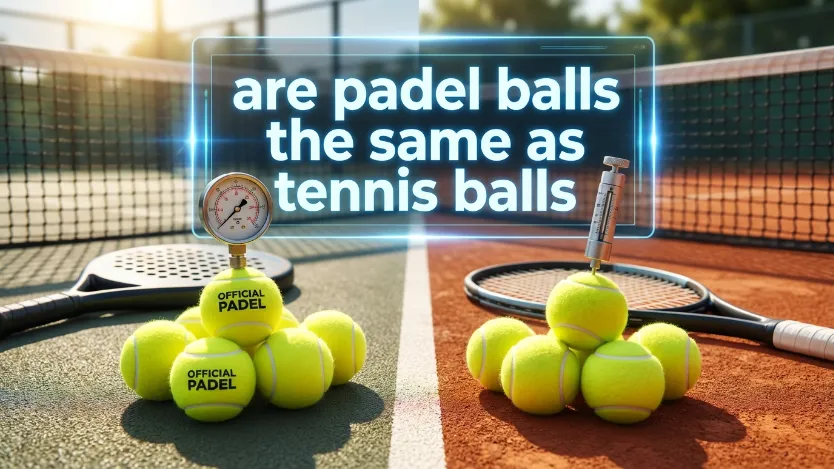
When analyzing how these metrics translate to actual playability, understanding are padel balls the same as tennis balls uncovers the structural science behind rebound vectors. The lower internal atmosphere of a designated padel ball dampens flight velocity. This engineering restraint shifts the game away from pure, unadulterated baseline force and steers it toward tactical positioning, geometry, and long, physical rallies within the enclosed glass arena.
Mechanical Study of the HEAD Padel Family (Pro vs. Pro S)
The global dominance of the HEAD lineup stems from a deliberate commercial binary: isolating pure control from hyper-velocity. By breaking down the structural design of these options, players can accurately match their ammunition to local atmospheric anomalies.
The Classical HEAD Padel Pro (The Control Standard)
The traditional HEAD Padel Pro model utilizes a flexible rubber core compound balanced by a highly calibrated inner atmospheric pressure. This specific design results in an elastic wall structure that deforms uniformly upon high-speed impacts. This deformity creates a forgiving feel, providing maximum sensory feedback to the player’s hand. It performs exceptionally well in dry environments or high-altitude venues (such as the specific HEAD Pro H/A versions built for environments 1,000 metres above sea level) where low atmospheric resistance naturally amplifies ball flight.
Optimising Speed: When to Choose head padel pro s balls on Wet British Courts
The introduction of the speed-centric head padel pro s balls revolutionized the sport across Northern Europe. This model features a notably firmer internal core compound alongside a heightened gas charge. By stiffening the rubber wall, HEAD engineers successfully minimised the kinetic energy absorbed by the ball during contact, ensuring an explosive rebound profile.
For the average British player, switching to this high-pressure variant is crucial when dealing with cold temperatures and damp courts. Cold air causes gas molecules inside a ball to contract, leading to a natural drop in internal pressure. The elevated internal charge of the Pro S model offsets this environmental deflation, maintaining rapid ball flight and crisp glass rebounds even in demanding climates.
Head-to-Head: Comparing the Flagship Canisters
When selecting your gear at a pro shop, understanding the real-world operational trade-offs between the classic line and the speed line will prevent costly purchasing mistakes. Below is a detailed breakdown of how these profiles contrast on the court.
- Flight Rebound and Velocity: The standard Pro prioritises a predictable, lower bounce path that requires precise tactical setup. The Pro S introduces a faster pace, making it much easier to execute a kick smash that clears the 4-metre back wall.
- Racket Face Contact Dynamics: The softer construction of the classic Pro extends the duration of contact against your racket face. This extended contact lets players manipulate spin angles with immense accuracy. The Pro S snaps off the face instantly, rewarding clean, aggressive striking.
- Climate Adaptability: The classic Pro excels in indoor environments or hot summer weather. The Pro S is purpose-built to cut through heavy, high-humidity outdoor air without feeling like a heavy block of lead.
When comparing these traits against alternative premium rackets, such as the Slazenger Panther Series vs HEAD Pro dynamics, the ball’s compression rate must align seamlessly with your racket’s core foam density. A soft ball paired with an ultra-soft foam can completely deaden your offensive output, whereas matching a high-pressure core with a rigid racket optimizes energy transfer.
The Next Gen Innovation: Technical Analysis of the “+” Series
To eliminate performance inconsistencies, HEAD recently introduced their cutting-edge Pro+ and Pro S+ generations. These updated configurations target the structural vulnerabilities of older models, introducing key improvements in material longevity and eco-conscious manufacturing.
The Advanced Rubber Core Formula
Older ball designs suffered from rapid gas loss because molecules gradually leaked through the porous structure of standard vulcanised rubber. The new “+” generation fixes this issue with an upgraded chemical compound that seals the inner chamber much more effectively. This structural barrier maintains optimal internal pressure for significantly longer periods, preventing the ball from going flat between matches.
Wall Thickness Customisation and Dwell Time
The core layouts of the Pro+ and Pro S+ versions have been redesigned with a clear structural divergence:
- The Pro+ Core Layout: Built with a thinner internal rubber wall. This structural reduction maximizes the ball’s physical deformation upon impact, significantly increasing Dwell Time (racket contact time) to offer premium touch and clinical drop-shot precision.
- The Pro S+ Core Layout: Engineered with a thicker, highly resilient rubber core. This extra mass acts like a compressed spring, maximizing energy retention and delivering explosive power for fast, offensive play.
Exclusive Padel Felt & The Rethink Initiative
To handle highly abrasive, sand-heavy synthetic turf, HEAD developed an exclusive woven felt. This material uses tightly interlocked synthetic and natural wool strands that resist fraying and fuzzing. Additionally, the HEAD Rethink Initiative has updated the packaging design. Modern canisters now use 30% to 35% pre-consumer recycled PET plastics, feature shorter label wraps, and use minimal ink to ensure the entire container is highly recyclable.
Value and Longevity: The Mechanics of head padel pro 3b balls Canisters
For regular club players, buying the standard head padel pro 3b balls triple-pack tube offers an ideal balance of cost and out-of-the-box consistency. The structural integrity of these pressurised canisters is essential; they keep the internal contents under a stable, pressurized environment until the seal is broken. This ensures the contents perform perfectly from the very first point.
However, once exposed to atmospheric pressure, these premium 3B canisters require careful care. The sudden pressure difference accelerates gas loss through the rubber walls. To maximize your investment, storing these canisters in dedicated repressurising tubes between matches can extend their playable lifespan by 3 to 5 times, maintaining that crisp, tournament-ready feel.
Structural Buckling Physics inside Repressurising Devices
While using pressurized storage containers (like the Pascal Box or Ball Rescuer) is highly recommended for maintaining ball longevity, many UK players on Reddit have reported structural failures where ball walls buckle or collapse inward during storage.
The Scientific Explanation of Structural Buckling
This structural collapse happens when a thin-walled ball (like the HEAD Pro+) is subjected to a sudden, high external pressure shock inside a storage device. This creates a rapid, unequal pressure difference ($\Delta P$). If this external force exceeds the mechanical resistance of the unpressurized rubber wall before gas can pass into the ball, the structure buckles inward.
Fick’s Law of Diffusion explains why gas moves relatively slowly across solid rubber polymers:
$$J = -D \frac{dC}{dx}$$
In this equation, $J$ represents the diffusion flux, $D$ is the specific diffusion coefficient of the rubber compound, and $dC/dx$ represents the concentration gradient across the wall thickness. Because gas movement takes time, a sudden increase in external pressure will instantly crush a flat ball before the internal air pressure can balance out.
The 2-Stage Step-by-Step Repressurising Protocol
To completely avoid structural buckling and preserve your gear, players should follow this precise pressure restoration routine:
- Stage 1 (Initial Equilibrium): Place your partially deflated balls into the storage chamber and apply a low pressure charge of 12 psi to 14 psi. Leave them sealed for 24 to 48 hours. This low setting allows gas to slowly pass through the rubber walls without crushing the structure.
- Stage 2 (Final Pressurisation): Once the internal structure has stabilized, raise the chamber pressure to the standard play range of 20 psi to 22 psi. This safely restores the core’s original stiffness and bounce without risking a structural collapse.
UK Court Environment, Felt Hydraulics, and Injury Prevention
The wet weather across the UK creates unique challenges that directly affect ball physics, player performance, and joint health.
Felt Hydraulics and Water Retention
When playing outdoors in typical British weather, the natural wool fibres in the felt quickly absorb condensation and morning dew from the turf. This water retention noticeably increases the ball’s overall weight and ruins its aerodynamic balance, making it feel heavy, sluggish, and unresponsive.
Biomechanical Stress and Lateral Epicondylitis
Playing with heavy, water-logged, or flat balls forces players to overcompensate with their muscles, swinging much harder than usual to get a decent bounce. Because modern padel rackets feature solid frames without flexible strings, these heavy impact vibrations travel straight up the handle into the wrist and forearm. Over time, this repetitive stress often leads to painful lateral epicondylitis, commonly known as Padel Elbow.
To manage these physical strains, selecting the right equipment is critical. Using targeted best padel rackets for tennis elbow alongside fresh, responsive HEAD padel balls helps absorb these harsh vibrations, protecting your joints from long-term strain.
The Seasonal UK Ball Prescription
To maintain peak performance and protect your body throughout the year, follow this seasonal equipment strategy:
- Autumn and Winter (Damp, Cold, Outdoor Courts): Use HEAD Padel Pro S+ balls. Their firmer cores and water-resistant felt treatments handle cold, damp conditions perfectly while protecting your arms from heavy impacts.
- Spring and Summer (Heated Indoors or Dry Outdoor Courts): Use HEAD Padel Pro+ balls. This model provides excellent control and touch, preventing the ball from bouncing unpredictably high when court temperatures rise.
Strategic Conclusion and Best Practices
Mastering the engineering and physics behind your equipment is essential for conquering the challenging British climate. Adjusting your gear choices based on seasonal shifts ensures optimal performance on the court.
For the best experience, implement these three practical rules: rotate your gear seasonally by choosing the Pro S+ line for winter and the Pro+ line for summer; invest in high-quality pressure storage tubes using a safe, two-stage inflation method; and change out your ball canisters every two to three intensive matches. This routine keeps your play sharp, maximizes your equipment investment, and protects your body from avoidable injuries.
Head Padel Pro Balls – FAQ
What is the main difference between HEAD Padel Pro and Pro S balls?
The standard HEAD Padel Pro focuses on control and touch with a softer core, making it ideal for warm or indoor environments. The Pro S (Speed) version features a firmer core and higher internal pressure, designed to deliver a faster bounce in cold or humid conditions.
How long do HEAD Padel Pro 3B canisters last before losing pressure?
In typical UK conditions, a fresh tube delivers peak performance for 2 to 3 intense matches. After opening, environmental exposure naturally drains the internal gas charge, though this can be managed using pressure storage tubes.
Why do my padel balls collapse inward when stored under pressure?
This happens due to structural buckling. When a flat ball is subjected to sudden, high external pressure, the outside force crushes the rubber wall before gas can diffuse inside. Using a gradual, two-stage inflation routine prevents this issue entirely.
Can I use standard lawn tennis options for a competitive padel match?
No. Tennis options carry significantly higher internal pressure (around 14 psi) and feature a larger diameter. Using them on a padel court leads to erratic bounces off the glass and subjects your arms to unnecessary physical strain.