The split-second difference between a match-winning bandeja and a painful slide into the glass often comes down to the millimetres of rubber beneath your feet. In the damp, unpredictable climate of the United Kingdom, choosing the wrong Padel shoe sole types isn’t just a tactical error—it’s a fast track to a ligament injury. Whether you’re grinding through a winter league on gritty outdoor sand or sprinting across a premium indoor Mondo turf, understanding how your grip interacts with the court surface is the most critical technical upgrade you can make this season.
The Essential Science of Padel Shoe Sole Types
Choosing between different padel shoe sole types isn’t just about brand preference; it’s about mechanical engineering. Padel involves 70% lateral movement and frequent 360-degree rotations. Unlike tennis, where you often run in long lines, padel requires short, explosive bursts. The outsole must manage the “Coefficient of Friction” between the rubber compound and the silica sand found on the turf.
Herringbone vs Omni Sole: The Great Debate
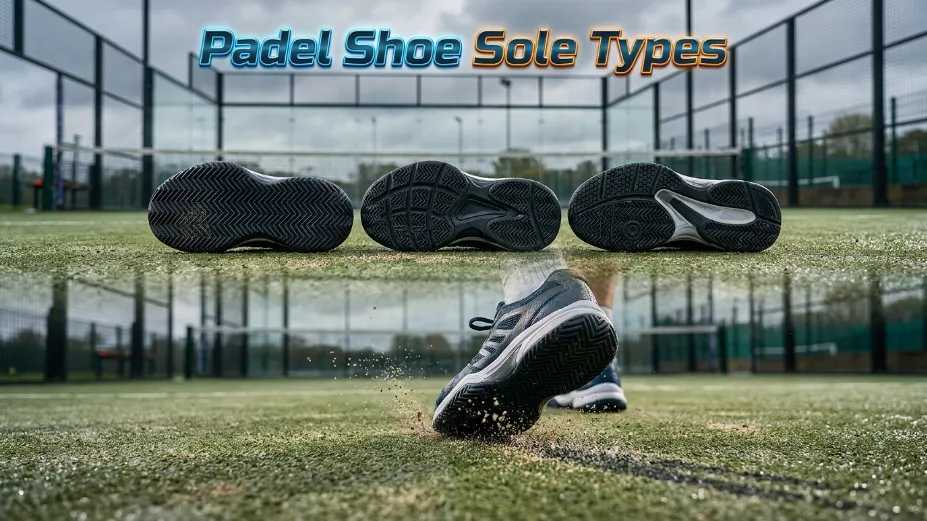
When comparing Herringbone vs Omni sole, you are essentially looking at two different ways to handle sand. The Herringbone sole, characterised by its deep zig-zag pattern, is designed to “bite” through layers of sand to reach the synthetic fibres beneath. This pattern acts as a channel, allowing sand to be displaced out of the grooves so the rubber can maintain contact with the ground.
The Omni sole (or “dots” sole) uses small, circular studs. This design provides maximum surface area on “clean” courts. However, in the UK, where many outdoor courts suffer from uneven sand distribution, Omni soles can often feel like “ice skates” because the dots sit on top of the sand rather than digging through it. Conversely, on a perfectly maintained indoor court, an Omni sole provides superior multidirectional agility.
- Herringbone Pros: Exceptional durability, best for sliding, and manages wet sand effectively.
- Omni Pros: Excellent “stop-start” traction on low-sand surfaces and lighter weight.
Specialised Performance: Padel Shoes for Mondo Turf
In recent years, premium clubs like Stratford Padel Club have upgraded to Mondo Supercourt XN turf. This is the official surface of the professional tour and is often called “curly grass.” Unlike traditional turf, Mondo turf traps the sand within its fibres, leaving the surface looking blue and “clean.”
Using a traditional, deep-grooved clay shoe on this surface can be counterproductive. Padel shoes for Mondo turf are engineered with shallower patterns or “Hybrid” outsoles. If a sole is too grippy on Mondo turf, your foot can “stick” during a rotation, which places immense rotational force on the ACL and meniscus. Models like the Head Motion Pro have been specifically tested in cooperation with Mondo to ensure a “controlled slide” that protects the joints while maintaining high-speed traction.
Biomechanics: Rotational Pivot Points in Padel Shoes
One of the most significant innovations in modern footwear is the inclusion of Rotational pivot points in padel shoes. These are usually circular rubber zones located under the ball of the foot (the medial forefoot). Biomechanical research indicates that these zones concentrate plantar pressure during a turn, allowing the foot to rotate more freely.
For UK players, this technology is vital. Because British courts often fluctuate between “sticky” (dry and clean) and “slippery” (wet and sandy), having a dedicated mechanical zone for rotation reduces the torque transferred to the knee. Brands like Asics padel shoes and Adidas padel shoes have integrated these “Pivot” circles into their high-end models to facilitate the transition from a defensive “back-to-the-glass” turn to an offensive sprint.
The Weather Factor: Best Grip for Wet Padel Courts
The British climate presents a unique challenge: the “mild and dank” condition that lasts for eight months of the year. Finding the best grip for wet padel courts is a priority for anyone playing outdoors. Humidity and rain cause silica sand to clump together, which can clog shallow soles and lead to dangerous slips.
Technical analysis shows that deep Herringbone patterns perform best in the wet because the flexing of the sole during movement helps “self-clean” the clumpy, wet sand. Additionally, cold temperatures in winter harden the rubber compounds in your soles. To maintain grip, look for shoes with lower-density rubber (softer compounds) or those specifically marketed for “All-Weather” or “AW” play, such as the latest ASICS AW25 collection. These materials remain pliable even when the temperature drops below 5 degrees Celsius.
Head-to-Head: Padel Shoes vs Tennis Clay Shoes
A common question in the UK padel community is whether you can simply use your old clay court tennis shoes. In a Head-to-Head comparison, the similarities are striking, but the differences are critical:
- Stability: Padel shoes feature reinforced sidewalls to handle the constant, aggressive lateral shifts. Tennis shoes are often designed for longer, linear runs.
- Midsole: Padel shoes often have a slightly higher heel drop and more “Reactive” cushioning (like Joma’s ReactiveBall) to absorb the impact of vertical jumps for smashes.
- Weight: Most Nike padel shoes and Babolat models are lighter and more flexible in the forefoot than their tennis counterparts to allow for the rapid “short-step” footwork required near the net.
Regional Requirements: UK Outdoor Padel Court Footwear
When selecting UK outdoor padel court footwear, durability is key. Outdoor courts are exposed to the elements, dust, and even algae growth on poorly maintained public tarmac surfaces. This abrasive environment destroys soft rubber quickly.
For players at clubs that use high-quality Head padel balls and well-maintained courts, a premium shoe with a Michelin or Vibram outsole (found in Babolat and Bullpadel models) offers the best longevity. However, if you are playing on “sand-pit” style outdoor courts, the depth of the tread is more important than the brand name. Always check the outsole before play; if the zig-zag pattern has faded in the centre, you have lost your primary braking mechanism.
The “Hidden” Gaps: Width and Lacing Systems
Beyond the sole, UK players often struggle with “The Width Issue.” Many major brands like Adidas and Asics use narrower “lasts” (shoe moulds). For those with wider feet, brands like K-Swiss, Nox, and Bullpadel offer more volume in the toe box, which prevents blisters during high-intensity matches. Furthermore, the BOA lacing system—a dial-based wire system found on some Head models—has become popular in the UK for its quick adjustments, though some players find it adds unnecessary weight compared to traditional laces.
Maintenance: Extending the Life of Your Soles
Silica sand is essentially sandpaper. If left in the grooves of your shoes, it will grind down the rubber every time you walk. To preserve your padel shoe sole types:
- Brush after play: Use a stiff brush to remove trapped sand from the Herringbone grooves.
- Avoid the Radiator: Never dry wet shoes on a radiator. The direct heat causes the glue to fail and the rubber soles to become brittle and crack. Air dry them naturally with newspaper inside.
- Rotate Pairs: If you play more than three times a week, having two pairs of Padel shoes allows the EVA cushioning foam to “recover” between sessions, extending the life of both pairs by up to 30%.
Frequently Asked Questions (FAQ)
Q: Can I use running shoes for Padel?
A: No. Running shoes lack lateral support and have soles designed for forward motion only. Using them on a padel court is a high risk for ankle sprains and slips.
Q: How often should I replace my padel shoes?
A: Regular players (2-3 times a week) should look to replace their shoes every 6-12 months, or sooner if the tread pattern becomes smooth.
Q: Why do my shoes squeak on indoor courts?
A: This is usually “slip-stick” friction caused by high-quality rubber gripping a clean synthetic surface. It’s actually a sign of good traction!
Q: Do I need different shoes for summer and winter?
A: In the UK, it is advisable. A deep Herringbone sole for damp/sandy winter play and a Hybrid or Omni sole for dry, clean summer courts is the ideal setup.
Q: What is the official LTA advice on footwear?
A: The LTA Padel Guide emphasises the importance of court-specific footwear to maintain the surface quality and ensure player safety through proper stability.
In conclusion, the performance of your padel shoe sole types is the foundation of your game. Now that you know which sole suits your local court, explore our top-rated picks for the best padel shoes 2026 to find your perfect match