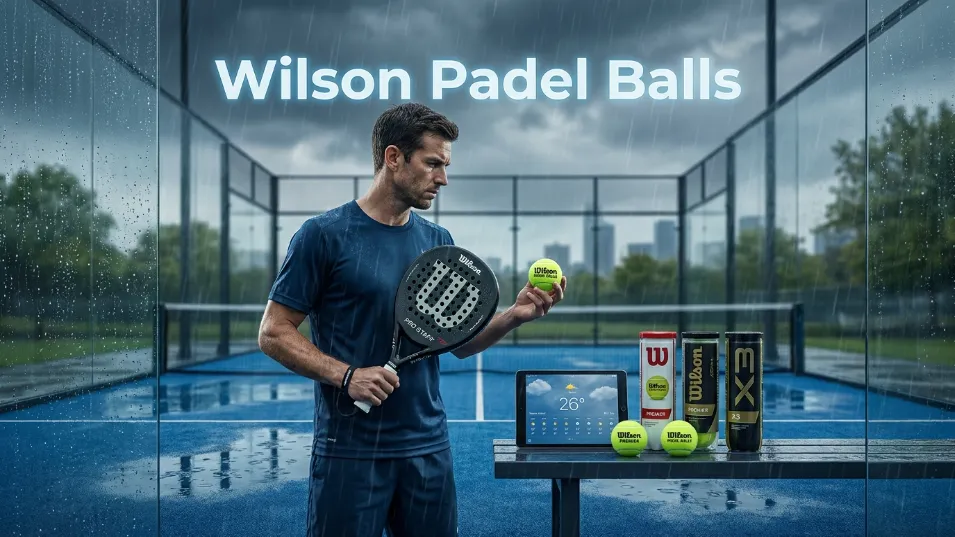
The sharp thwack against the glass. The deft drop shot that dies just millimetres over the net. While your racket usually steals the glory, the true dictator of a match’s pace is the sphere you’re striking. Before you book your next court, realise that settling for a dead, generic tin is quietly sabotaging your form. Investing in a fresh tube of wilson padel balls isn’t just a routine purchase; it’s the most straightforward upgrade you can make to guarantee consistent bounce, unmatched durability, and absolute control over every rally.
| Model | Primary Benefit | Pace / Speed | Durability | Best Court Type | Player Level | Pack Size |
|---|---|---|---|---|---|---|
| Wilson X3 Padel | Exceptional Value & Felt Life | Medium | High | All-Round / Gritty | Club / Intermediate | 3-Ball Can |
| Wilson X3 Speed | Cold Weather Response | Faster | High | Slow / Outdoor / UK Winter | Intermediate / Advanced | 3-Ball Can |
| Wilson Premier Padel | Pro-Level Control | Slower / Controlled | Professional | Fast / Indoor / Summer | Professional / Elite | 3-Ball Can |
| Wilson Premier Padel Speed | Maximum Rally Intensity | Fast & Lively | Professional | Sea Level / Humid / Cold | Competitive / Pro | 3-Ball Can |
Mastering the Court with wilson padel balls
When you step onto a court at padel courts in Birmingham or a coastal club in Brighton, the environmental variables—humidity, temperature, and sea-level air pressure—immediately begin to affect your equipment. Unlike generic options, wilson balls padel are engineered with a specific understanding of these dynamics. The core of a Wilson ball is not just a rubber shell; it is a high-density, pressure-optimised vessel designed to retain its internal 11 psi far longer than its competitors.
One aspect often overlooked by club players is the Dura-Weave felt. This isn’t just for show; the weave is tighter and more resilient, specifically to withstand the abrasive nature of sand-filled 4G surfaces common across the UK. Whether you are hitting a defensive bandeja or a powerful smash, the aerodynamic stability of these balls ensures that your technique—not the equipment—determines the outcome.
Padel vs Tennis: Why the Wilson Padel Rush 100 is the Bridge
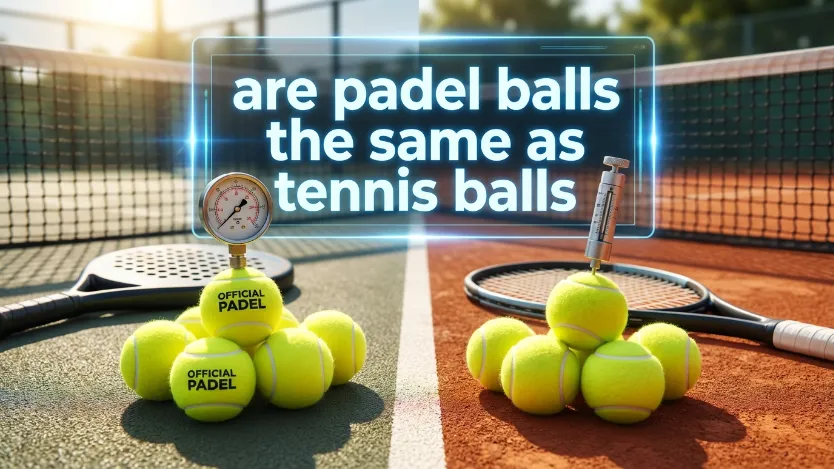
Many newcomers to the sport in the UK transition from tennis, often asking: Are padel balls the same as tennis balls? The technical answer is a firm no. While they look identical, a tennis ball is a high-pressure beast (14 psi) designed for a much larger court. Using a tennis ball on a padel court turns the game into a chaotic “smash-fest” where the ball flies off the glass uncontrollably.
The Wilson Padel Rush 100 serves as the perfect entry point for these converts. It mimics the “firm” feel of a tennis ball but adheres to the International Padel Federation (FIP) standards for diameter and pressure. This allows former tennis players to maintain their aggressive hitting style while learning the tactical nuances of the cage.
Why Choose the Wilson Padel X3 Ball?
If you are looking for the “workhorse” of the industry, the wilson padel x3 ball is the gold standard for club play. It was developed to provide a balance between the high-performance demands of a tournament and the economic reality of daily play.
The Secret of the Dura-Weave Felt
The wilson padel x3 ball features a proprietary felt that is “wrapped” rather than just glued. This prevents the “fluffing” effect that plagues cheaper alternatives. In the UK, where moisture is a constant companion, a “fluffy” ball becomes heavy, absorbing water and losing its aerodynamic properties. The X3 stays “lean” and fast, even after several sets on a damp outdoor court.
Wilson X3 vs. X3 Speed: The Thicker Felt Mystery
There is a common debate in UK forums regarding the X3 Speed. Counter-intuitively, some advanced players have noted that the “Speed” version actually feels slightly heavier on the racket. This is because Wilson often uses a slightly thicker felt on “Speed” models to give them more “bite” and stability when moving through the denser, colder air found at sea level. The goal isn’t just to make the ball fly faster—it’s to make it behave consistently when the conditions are trying to slow it down.
Professional Performance: wilson premier padel balls
In 2024, the landscape of professional padel shifted as Wilson became the official ball partner of the Premier Padel tour. This resulted in the birth of the wilson premier padel balls, a line that represents the pinnacle of ball technology.
- Wilson Premier Padel (Regular): Designed primarily for fast surfaces, high altitudes, or hot conditions. Its core is slightly “de-tuned” to provide more control, preventing the ball from flying out of the court (Por 3) too easily when the sun is out.
- Wilson Premier Padel Speed: This is the “secret weapon” for the UK. Because most UK clubs are at low altitude, the air is thicker. The wilson premier padel balls in the Speed variant have a core optimised for these “slower” conditions, ensuring the game remains fast, lively, and entertaining.
For players who have already invested in a high-end Wilson padel racket, using a low-quality ball is a disservice to the frame’s technology. The Premier series offers a “linear decay” in pressure, meaning the ball doesn’t go from “perfect” to “dead” in one match; it maintains a playable bounce for significantly longer.
Head-to-Head: wilson padel balls vs. The Challengers
In the UK market, the primary competition for Wilson comes from Head and Adidas. Here is how they stack up in real-world British conditions:
Wilson vs. Head (Head Pro S+)
The Head padel balls, specifically the Pro S+, are incredibly popular. However, a common grievance on Reddit and Quora is their “sudden death.” Head balls often provide a massive “pop” for the first 45 minutes but lose significant pressure by the end of a 90-minute session. Padel balls wilson are widely considered more robust, holding their shape and pressure for a second or even third match if stored correctly.
Wilson vs. Adidas (Speed RX)
The adidas Speed RX padel balls are known for being exceptionally hard and fast. While great for high-level smashing, they can be “elbow destroyers” in the British winter. The cold makes the rubber core of the Adidas ball very rigid. Wilson’s Premier Speed manages to maintain its liveliness without feeling like you are hitting a rock, making it a safer choice for those prone to tennis elbow.
UK Winter Survival: Managing Humidity and “Fluffing”
Playing outdoors in Manchester or Leeds in November requires a specific strategy. As the temperature drops, the air inside your wilson balls padel contracts, reducing the internal pressure.
To combat this, professional UK coaches suggest:
- Warm the balls: Keep the tin inside your house or a warm car, rather than a cold garage.
- Switch to “Speed” models: The wilson premier padel balls Speed version is literally designed for these 5°C to 10°C sessions.
- Dry your equipment: Use a towel to dry the balls between sets. Wilson’s Dura-Weave is moisture-resistant, but no ball is waterproof.
Economic Strategy: The Pressuriser Gap
A “missing angle” in many reviews is how well balls respond to re-pressurisation. Because Wilson Padel Balls use a higher quality of rubber and a more porous-resistant felt, they are the best candidates for devices like the Pascal Box or Ball Rescuer.
While a set of Head balls might “pop” or lose their felt under the high external pressure of a pressuriser, Wilson balls can often be “revived” to near-new condition. Regular players in the UK report getting 10 to 15 matches out of a single tube of wilson premier padel balls by using a pressuriser, making the higher initial price tag far more economical in the long run.
Before you commit to a bulk buy, check out our guide on how to choose a padel racket to ensure your entire setup is optimised for the balls you intend to play with.
Frequently Asked Questions About Wilson Padel Balls
1. How long do Wilson padel balls actually last?
For competitive play in the UK, a tube of wilson premier padel balls will last 3 to 4 matches (90 minutes each). For social play, they can last up to 6 matches before the bounce becomes noticeably inconsistent.
2. Is the Wilson X3 Speed ball better for indoor or outdoor courts?
The wilson padel x3 ball in the Speed variant is primarily designed for “slow” conditions. In the UK, this means outdoor courts or cold, unheated indoor centres. If you are playing in a warm, high-end indoor facility, the regular X3 may offer better control.
3. Why are Wilson balls more expensive than some competitors?
The cost reflects the Dura-Weave felt technology and the official Premier Padel endorsement. Wilson invests heavily in ensuring their balls don’t “fluff up” as quickly as budget brands, providing better value over time.
4. Can I use these balls for training in the rain?
While the felt is water-resistant, playing with wet balls will damage your Wilson padel racket and significantly increase the weight of the ball. It is always recommended to play on covered courts during the British winter.
The Sustainability Factor: Eco-Friendly Innovation
Finally, Wilson is leading the charge in reducing the environmental impact of the sport. The packaging for the wilson padel x3 ball and Premier series features an eco-friendly “overcap” that uses 50% less plastic. In a sport where millions of tins are opened and discarded annually, this commitment to sustainability is a key reason many UK clubs, such as The Padel Hub, are switching their bulk orders to Wilson.
For more information on the official standards, visit the LTA Padel Official Guide to see how ball specifications fit into the UK’s competitive framework. Selecting wilson padel balls isn’t just about the brand—it’s about choosing the engineering that respects the game as much as you do.