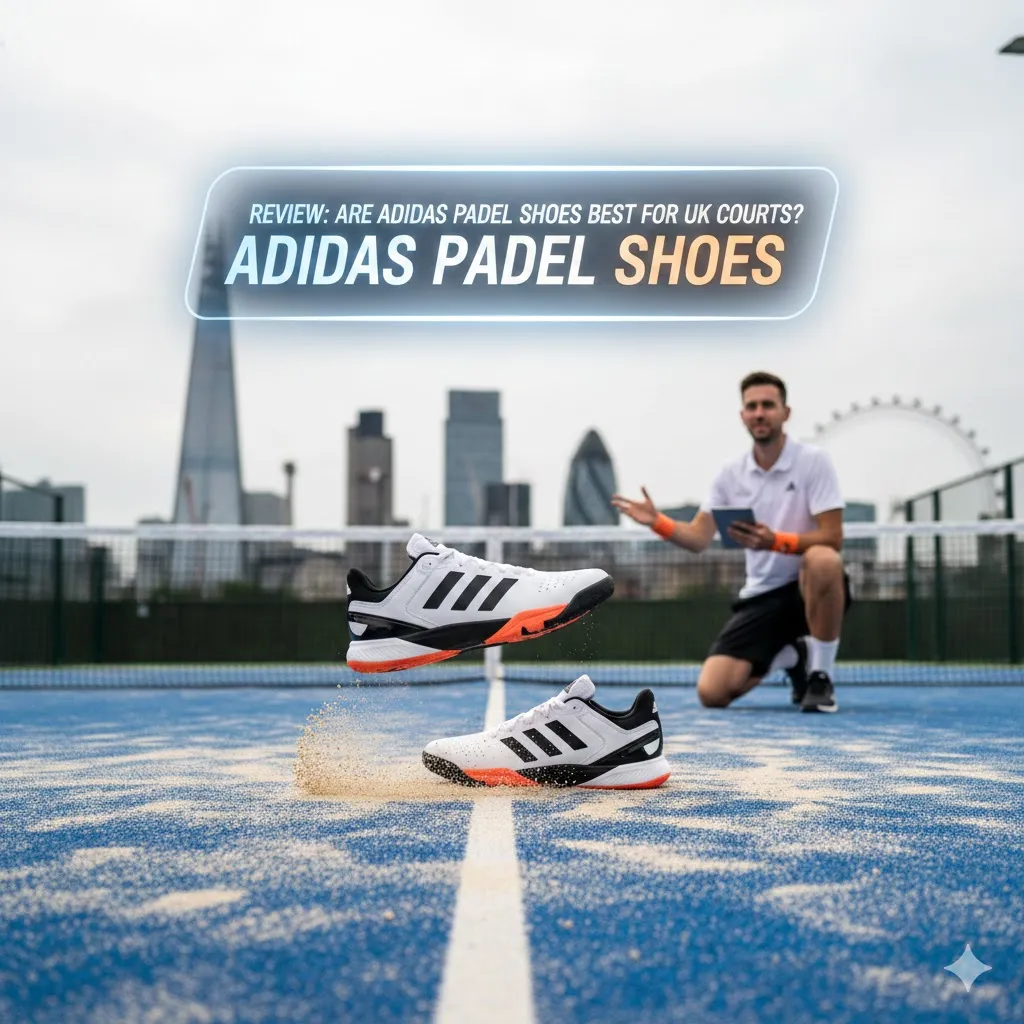
Picture this: It is a crisp evening at your local UK club. The glass is slightly dewy, the sand on the astroturf is clumped, and you are chasing down a lob. You plant your foot to push off, but instead of an explosive sprint, you slide. You lose the point, and perhaps risk a twisted ankle. This scenario is all too common for players wearing standard tennis trainers or running shoes.
In the fast-evolving world of UK Padel, footwear is arguably more critical than your racket. Among the top contenders dominating the courts this season are Adidas padel shoes. But with so many models available, how do you distinguish marketing fluff from genuine performance technology?
This comprehensive guide dives deep into the engineering behind the range, specifically analysing the adidas crazyquick padel shoes and their Boost counterparts. We will explore the “gap” details that product descriptions often miss—like performance on damp British courts, suitability for squash converts, and biomechanical support.
The Fundamental Question: Why Not Just Wear Tennis Shoes?
Many beginners assume that clay-court tennis shoes are identical to padel shoes. While they share similarities, the movement patterns in Padel are distinct. Tennis involves significant lateral (side-to-side) movement along the baseline. Padel, however, requires 360-degree rotation, short explosive sprints, and constant pivoting.
Adidas padel shoes are specifically engineered to handle:
- Rotational Traction: Pivot points in the sole to prevent knee ligament strain during turns.
- Vertical Impact: High cushioning for the constant jumping required in smashes (Bandejas and Viboras).
- Sand Interaction: Deep herringbone patterns designed to grip the sand-infilled artificial grass common in the UK.
For a broader look at how footwear impacts your game, check out our guide on proper padel shoes selection.
Deep Dive: The Adidas Crazyquick Padel Shoes
If your game relies on speed, agility, and rapid transitions from the back of the court to the net, the adidas crazyquick padel shoes are likely on your radar. But let’s look beyond the brochure. What exactly makes them “Crazyquick”?
1. The “Lightstrike” Chassis
Unlike the heavier Barricade range (built for stability and power), the Crazyquick series utilises a stripped-back chassis. This reduces the overall weight of the shoe significantly. For UK players transitioning from Squash—a sport that demands similar lightning-fast reflexes—this lightweight feel is crucial. It mimics the “barely there” sensation of squash shoes but adds the necessary side-wall protection for Padel’s heavier ball impact.
2. The Multi-Directional Sole
The standard padel shoes adidas produces often feature a classic herringbone. However, the Crazyquick incorporates a modified tread pattern. It is not just about grip; it is about “controlled slide.” On sandy courts, you need to slide slightly to reach a ball without your foot getting stuck (which causes injury). The Crazyquick offers the perfect balance between locking your foot down for a sprint and allowing a few centimetres of slide when stopping.
The Game Changer: Adidas Crazyquick Boost Padel Shoes
Here is where the technology gets interesting for the serious player. The adidas crazyquick boost padel shoes integrate the famous “Boost” foam, originally developed for marathon runners, into the midsole of a court shoe.
Why “Boost” Matters for Padel
Padel is a game of micro-movements. You are rarely running 50 metres; you are sprinting 3 metres, stopping, and sprinting back. Standard EVA foam (found in cheaper models) absorbs energy. Boost foam provides Energy Return.
When you plant your heel in a pair of adidas crazyquick boost padel shoes, the thousands of expanded thermoplastic polyurethane capsules compress and then instantly snap back to their original shape. This physically propels your foot into the next step. Over a 90-minute match, this reduces leg fatigue significantly, keeping your calves fresher for that third set tie-break.
Gap Analysis: Durability of the Boost Foam
A common question not often answered is: “Does the Boost foam collapse over time?” Unlike standard EVA which compresses and stays flat after 3-4 months of heavy play, Boost is incredibly resilient to temperature changes and repeated impact. For UK players playing in cold winter bubbles or hot summer outdoor courts, the cushioning consistency remains identical.
If you are investing in high-end shoes, it is worth pairing them with a high-quality Adidas padel racket to ensure your gear ecosystem is balanced for performance.
UK Specifics: Dealing with “The Elements”
Playing Padel in the United Kingdom presents unique challenges that Spanish manufacturers sometimes overlook. The primary issue? Moisture.
Performance on Damp Artificial Grass
It is a reality of UK play: the courts are often damp. A generic tennis shoe becomes an ice skate on wet artificial grass. The Adidas padel shoes (specifically the Crazyquick range) feature a rubber compound that maintains friction even when the surface tension is broken by water. While no shoe is 100% slip-proof on a soaked court, the deep channels in the Crazyquick sole disperse water effectively, allowing the herringbone ridges to find the sand beneath.
This is vital for safety. If you are unsure about the rules regarding court playability in bad weather, you can read more about official padel rules and regulations.
Sizing, Fit, and “Hidden” Features
Before you buy, you need to know how these fit. Adidas typically runs slightly narrower than brands like K-Swiss or Babolat. However, the Crazyquick mesh upper is more forgiving than the rigid plastic cages found on other models.
The Orthotic Question (A Critical Gap)
Many players suffer from plantar fasciitis or flat feet and use custom orthotics. A detail often missing from product pages is that the insoles in the adidas crazyquick boost padel shoes are removable (non-glued). This means you can easily swap them out for your medical orthotics without altering the fit or height of the heel cup—a massive advantage for older players.
Toe Drag Protection (Adituff)
Do you drag your trailing foot when you volley? This “toe drag” destroys shoes rapidly. Adidas reinforces the Crazyquick toe area with “Adituff” material. It is an abrasion-resistant layer specifically placed on the medial side of the toe box. This is essential for former tennis players who serve-and-volley, and even for those exploring the differences in movement between Pickleball vs Padel.
Maintenance: Protecting Your Investment
To get the most out of your investment, never leave your shoes in a hot car, as extreme heat can warp the glue. Also, try to brush the sand out of the tread after every match. Accumulated sand can harden and reduce the grip over time. A dedicated padel bag with a shoe compartment is excellent for keeping them ventilated and separate from your clean clothes.
For official guidance on court surfaces and footwear standards in Britain, you can consult the LTA Padel guidelines, which offer excellent advice for players of all levels.
Frequently Asked Questions
1. Are Adidas Crazyquick padel shoes suitable for wide feet?
Generally, Adidas fits slightly narrower than some competitors. However, the Crazyquick range features a flexible mesh upper that adapts better to wider feet than the rigid Barricade model. If you have exceptionally wide feet, we recommend going up half a size.
2. Can I use these shoes for Pickleball?
Yes. While designed for Padel, the lateral stability and grip required for Padel are very similar to Pickleball. The non-marking soles make them perfectly suitable for indoor Pickleball hard courts as well.
3. How often should I replace my padel shoes?
For a player playing 2-3 times a week on UK artificial grass (which is abrasive due to the sand), you should look to replace your shoes every 6 to 8 months. Once the herringbone tread pattern wears smooth, you risk injury.
4. What is the difference between the ‘Boost’ and non-Boost versions?
The ‘Boost’ version features Adidas’s premium energy-return foam in the midsole, offering superior shock absorption and comfort for joints. The standard version uses EVA foam, which is firmer and lighter but offers less rebound.
Conclusion
Choosing the right footwear is the quickest way to improve your confidence on the court. The Adidas padel shoes range, particularly the Crazyquick and Boost models, offers a blend of technology that suits the agile, modern player perfectly.
They address the specific needs of the UK market: grip on sandy/damp turf, stability for rotational movement, and durability against toe drag. Whether you are a squash convert looking for that familiar lightweight feel, or a tennis player needing more responsiveness, the adidas crazyquick padel shoes are a formidable choice.