Padel is a game of explosive lateral lunges and sudden pivots—a mechanical nightmare for even the most premium footwear. While a high-end racket might serve you for seasons, the interface between your feet and the synthetic turf has a definitive, often invisible, expiry date. Understanding how long do padel shoes last is no longer a matter of aesthetics; it is a critical calculation for maintaining peak on-court agility and protecting your joints from the unforgiving impact of a hardening midsole.
If you have noticed a slight lag in your recovery or a dull ache in your knees after a set at the club, your footwear’s structural integrity has likely already surrendered.
Pickleball Shoe Lifespan — By Player Profile
Cushioning · Frequency · Lifespan · Critical Wear Signs
Understanding Padel Shoe Longevity: The 100-Hour Rule
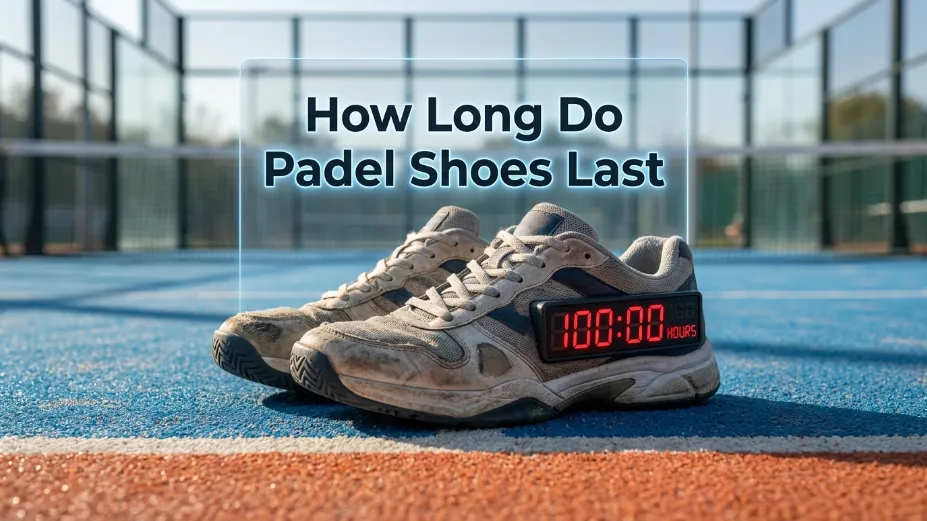
In the context of British racquet sports, longevity is often misunderstood. Unlike running shoes, which primarily handle linear impact, padel shoes are subjected to extreme shear forces. Research indicates that the high-density rubber outsoles and EVA midsoles maintain their peak functional properties for approximately 60 to 100 hours of active play. For a competitive player at a club like Rocket Padel Battersea, this could mean a replacement is necessary every three months.
The rate of degradation is accelerated by the specific “wear and tear” of the sport. Every time you perform a bandeja or a sharp recovery, the shock absorption in padel footwear is tested. The gas-filled cells within the EVA (Ethylene-vinyl acetate) foam are compressed under load. Over time, these cells fail to “rebound,” leading to a permanent loss of cushioning—a phenomenon known as “compression set.”
- Casual Players (1 session/week): Shoes may last 12–14 months.
- Frequent Players (3+ sessions/week): Expect a lifespan of 4–6 months.
- Heavy Players (>90kg): Material fatigue occurs 25% faster due to higher ground reaction forces.
Signs of Worn Out Padel Shoes: Identifying “Invisible” Death
One of the biggest information gaps for players is that a shoe can be “dead” even if the tread looks pristine. Identifying the signs of worn out padel shoes requires looking beyond the outsole. You must inspect the internal structure and the midsole’s reactive properties.
1. Midsole Compression (The “Horizontal Crease” Test)
Look at the side of your shoe’s white or coloured midsole. If you see deep, permanent horizontal wrinkles or creases, it is a definitive sign that the EVA foam has collapsed. At this stage, the shock absorption in padel footwear is functionally zero, and the impact of the hard court is being transferred directly to your shins and lower back.
2. Loss of Torsional Rigidity (The “Twist Test”)
A functional padel shoe must resist twisting to protect your midfoot during lateral lunges. To test this, hold the shoe by the heel and the toe and try to wring it like a towel. A new pair of Asics padel shoes will offer significant resistance. If the shoe twists effortlessly or “folds like a taco,” the internal shank has failed, leaving you vulnerable to midfoot sprains.
3. The Heel Counter Pinch
Pinch the very back of the shoe (the heel cup). In a supportive trainer, this area should be rigid and firm. If it collapses easily under finger pressure, it can no longer secure your heel during sudden pivots, which is a leading cause of ankle inversions at facilities like The Padel Hub Reading.
Shock Absorption in Padel Footwear: The Science of Impact
The primary purpose of a specialised court shoe is to manage shock absorption in padel footwear. Padel courts in the UK—ranging from sand-filled artificial grass to the latest “Pro” textured turf—are essentially thin carpets over concrete or tarmac. This makes the midsole foam the only barrier between you and a high-impact injury.
Most modern brands, including Adidas padel shoes, utilise EVA foam because it is lightweight and highly resilient. However, environmental factors in the UK, such as cold weather, can cause this foam to harden by up to 96% in sub-10°C temperatures. This turns your cushioned trainers into rigid platforms, significantly increasing the peak force on your joints. To combat this, elite-level shoes are now incorporating “Supercritical Foams” which are more temperature-stable and maintain their rebound properties for longer durations.
Preventing Padel Injuries with New Shoes
Investing in fresh footwear is the most effective strategy for preventing padel injuries with new shoes. Worn-out cushioning is a primary contributor to three major “Padel Ailments” seen by UK podiatrists:
- Plantar Fasciitis: A sharp pain in the heel caused by the repetitive “thumping” on the court after the midsole foam has flattened.
- Achilles Tendinopathy: Without proper heel elevation and support, the Achilles tendon is overstretched during explosive sprints.
- Patellar Tendonitis (Jumper’s Knee): Occurs when the shoe fails to absorb the vertical impact of landing from overhead smashes.
According to the LTA Padel Equipment Guide, using footwear designed specifically for the sport—rather than running shoes—is essential. Running shoes lack the lateral reinforcements and “outriggers” needed to prevent the foot from sliding off the footbed during a side-step, which is how most ankle sprains occur.
Padel Shoe Maintenance Tips for the UK Climate
While material fatigue is inevitable, following specific padel shoe maintenance tips can extend their functional life by 20–30%. In the damp British climate, moisture is your shoes’ greatest enemy.
- The 48-Hour Rotation: If you play frequently, alternate between two pairs. EVA foam requires 24 to 48 hours to fully “decompress” and return to its original shape. Playing on the same pair daily leads to permanent deformation much faster.
- Thermal-Safe Drying: Never place damp shoes on a radiator. High heat makes the rubber brittle and can melt the adhesives holding the sole together. Instead, remove the insoles and stuff the shoes with newspaper to dry naturally at room temperature.
- Sand Debris Management: The abrasive silica sand used on UK courts (like those at Padel Watford) acts like sandpaper. After every session, use a soft brush to remove sand from the mesh and the interior to prevent the fabric from tearing.
- Surface Sensitivity: Only wear your court shoes on the court. Walking on pavement or tarmac to get to the club will abrade the specialized rubber compound of the outsole in a matter of weeks.
Replacing EVA Foam in Shoes: Repair vs. Replacement
A common question among eco-conscious players is whether replacing EVA foam in shoes is possible through professional repair. In the UK, specialists like Lancashire Sports Repairs or Timpson can offer outsole “retreading” or “resoling” for certain models. However, there are significant caveats:
While the rubber outsole can be replaced, the internal EVA midsole—which provides the actual cushioning—is usually bonded to the upper in a way that makes replacement impossible. If your shoes feel “flat” or “dead,” a new outsole will only fix the grip, not the impact protection. In these cases, the only viable solution for replacing EVA foam in shoes is to upgrade the entire pair. For a high-performance option, you might consider Nike padel shoes, known for their durable foam compounds.
Alternatively, if the shoe structure is still sound but the cushioning feels slightly diminished, you can use orthotic insoles. High-end inserts from brands like Currex or Superfeet can replace the thin factory insole and provide an additional layer of high-density foam, effectively “refreshing” the shoe for a few more months.
How Long Do Padel Shoes Last – FAQ
Q: Can I use tennis shoes for padel?
A: Yes, but only if they have a clay-court (herringbone) sole. Hard-court tennis shoes often have too much grip for sand-filled padel courts, which can lead to knee injuries because your foot “gets stuck” during a pivot.
Q: Is it okay to wash padel shoes in a washing machine?
A: Absolutely not. The agitation and water immersion can break down the EVA foam and ruin the structural glues. Use a damp cloth and neutral soap for cleaning.
Q: How do I know if my shoes are too wide?
A: If your foot slides laterally inside the shoe during a side-step, they are too wide. This “internal slipping” leads to blisters and a higher risk of ankle rolls. If you have narrow feet, look at specific models like Decathlon padel shoes which often offer a snugger fit.
Q: Why do my shoes feel harder in winter?
A: EVA is a polymer that reacts to cold. In typical UK winter conditions, the foam loses its elasticity. Warm your shoes up at room temperature before your match to help “soften” the cushioning.
Conclusion: Prioritising Performance and Health
The question of how long do padel shoes last is ultimately a question of how much you value your joint health. While it is tempting to play in trainers until they literally fall apart, the technical “death” of the shoe occurs long before then. By monitoring the signs of worn out padel shoes—specifically midsole compression and torsional failure—you can stay one step ahead of the chronic injuries that plague many club players.
For the dedicated UK player, a proactive replacement strategy coupled with disciplined padel shoe maintenance tips is the best investment you can make. Whether you prefer the lightweight agility of Adidas or the stable comfort of Asics, remember that your footwear is the foundation of your game. Don’t wait for a slip or a strain to tell you it’s time for a new pair.