The UK is currently in the grip of a “Padel Fever.” From the bustling courts of Padium Canary Wharf to local community centres in the North, thousands of players are picking up rackets for the first time. However, a dangerous trend has emerged: players turning up in their standard gym trainers or running shoes. If you have ever felt your ankle roll during a sharp turn or slipped on a sandy surface, you already know that specialist padel shoes are not just a luxury—they are a safety requirement.
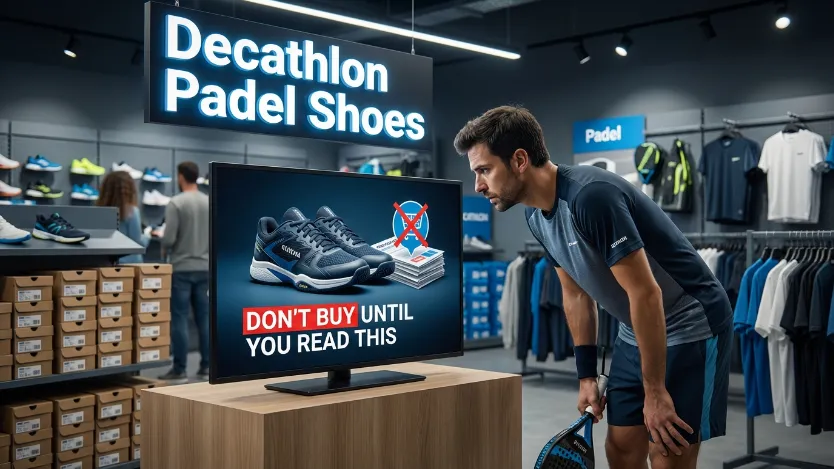
Enter Decathlon. Through their dedicated padel brand, Kuikma, the French retail giant has disrupted the British market by offering high-performance gear at a fraction of the cost of premium brands. But with so many models like the PS 500, PS 990, and the new Pro series, which one is right for the unique conditions of British outdoor courts? This guide dives deep into decathlon padel shoes, revealing the technical secrets that even the big competitors often overlook.
Decathlon Padel Shoes Comparison: Model Breakdown
To help you navigate the padel shoes decathlon offers, we have compiled a snapshot of their current UK lineup based on player frequency and technical specifications.
The Cultural Dominance of Decathlon Padel Shoes in the UK
In many UK padel clubs, you will notice a distinct pattern: half the players are using Asics padel shoes costing £130, while the other half are wearing decathlon padel tennis shoes that cost less than a single lesson with a pro coach. Decathlon has successfully moved away from the “supermarket brand” image by sponsoring world-class players like Maxi Sánchez and Lucia Sainz.
For the British player, the appeal of decathlon padel shoes is twofold: accessibility and technical honesty. While many brands hide their manufacturing secrets behind jargon, Kuikma is transparent about its use of EVA densities and rubber compounds. This makes them a “no-brainer” for those who want to invest their budget into Kuikma padel rackets or club memberships instead of overpaying for footwear logos.
Engineering the “Perfect” Step: PS 990 Dynamic vs PS 990 Stability
When looking for padel shoes decathlon enthusiasts often get stuck between the two flagship PS 990 models. These are not just different colours; they are engineered for two entirely different player biotypes.
1. The PS 990 Dynamic: For the Agile “Net-Rusher”
If your game is built on speed, quick volleys, and defensive recovery, the Dynamic model is your best bet. At approximately 335g, it is exceptionally lightweight. The upper is made of a breathable mesh that allows for better heat dissipation—a vital feature when playing in the rare but intense British summer heat or humid indoor centres.
2. The PS 990 Stability: For the Power Player
If you are a heavier player (85kg+) or someone who suffers from frequent ankle tweaks, the Stability model is superior. It incorporates KPU (thermoset polyurethane) reinforcements across the sides to prevent the shoe from deforming during heavy lateral lunges. This model is often compared to the Adidas Crazyquick shoes in terms of its ability to lock the foot in place, providing a grounded feel that is essential for powerful smashes.
The UK Climate Factor: Performance on Damp and Sandy Courts
A unique challenge for UK players is the sand-filled artificial grass (Mondo or similar) used in outdoor clubs. When combined with the British drizzle, these courts can become incredibly slippery. This is where decathlon padel shoes truly shine with their Dual Grip technology.
- The “Clay” Pattern: Deeper grooves in a herringbone pattern “bite” through the sand to find grip on the underlying carpet.
- Controlled Slide: Unlike standard trainers that either stick too much or slide uncontrollably, Kuikma’s outsole is designed for a “calculated slide,” reducing the torque on your knees.
- Moisture Management: Outdoor UK courts are often damp. The Rublast rubber compound used by Decathlon maintains a higher coefficient of friction in moist conditions than the foam-heavy soles of cheap gym trainers.
For those playing in Scotland or Northern England, where courts are almost always “tacky” or “damp,” choosing a shoe with a 100% herringbone sole is often more effective than a mixed “Omni” sole. This allows for better sand clearance and prevents the “clogging” that leads to falls.
Biomechanics: Why Your Running Trainers are a Risk
Many beginners at clubs like Rocket Padel Beckton make the mistake of using running shoes. Biomechanically, this is a disaster. Running shoes are designed for forward motion and have high midsoles that elevate your centre of gravity. In a sport like padel, which requires 80% lateral (sideways) movement, this elevation increases the leverage on your ankle joint during a turn, making an inversion injury (a “sprained ankle”) much more likely.
Decathlon padel shoes use a lower “drop” (the height difference between heel and toe) and reinforced side-walls. This keeps your foot closer to the ground, providing the stability needed to pivot without fear. Furthermore, the removable insoles in models like the PS Pro are a massive advantage for UK players who use custom orthotics for conditions like Plantar Fasciitis. You can easily swap the factory foam for medical-grade support without compromising the fit.
The Sizing Enigma: Getting the Fit Right in the UK
One of the most frequent questions on UK padel forums is: “Do Decathlon shoes run small?” The answer is complex. Decathlon uses European (EU) sizing as their primary standard, and the conversion to UK sizes can sometimes be off by half a centimetre.
- The Thumb-Width Rule: Always leave roughly 1cm (half a thumb’s width) of space between your longest toe and the front of the shoe. In padel, you are constantly braking; if your fit is too snug, you will end up with “Padel Toe”—painful bruised nails.
- The Afternoon Fitting: Your feet expand during a match due to blood flow and heat. Always try on your decathlon padel tennis shoes in the afternoon or after a light workout to ensure they aren’t too tight.
- Wide Feet Concerns: While brands like Babolat are notoriously narrow, the Kuikma PS Pro Maxi Sánchez edition has been praised by the UK community for having a slightly wider toe-box, making it a better fit for the “Hobbit feet” many of us Brits possess.
Maintenance: How to Make Your £60 Investment Last a Year
Given the abrasive nature of the sand on UK courts, your outsoles act like they are being rubbed with sandpaper every match. To maximise the lifespan of your specialist padel shoes, follow these steps:
- The Washing Machine Warning: Never put your padel shoes in the washing machine. The heat ruins the adhesives and, more importantly, breaks down the EVA foam in the midsole. Once that foam loses its “spring,” your knees will start to absorb the impact instead.
- Brush the Sand: After every session, use a soft brush to remove sand from the grooves. Leaving sand in the sole causes it to act like a grinder, wearing down the rubber faster.
- Dry Naturally: If you play an outdoor match in the rain, do not put your shoes on a radiator. This makes the materials brittle. Instead, stuff them with newspaper and let them air-dry in a well-ventilated room.
Decathlon offers a 2-year warranty on their Kuikma branded products in the UK. This is an industry-leading promise that covers manufacturing defects. If your sole starts to delaminate or the eyelets rip prematurely, you are often entitled to a replacement, which provides significant peace of mind for heavy users.
Conclusion: The Verdict for UK Club Players
If you are playing padel once or twice a week at a local club, decathlon padel shoes like the PS 990 series offer the best value-to-performance ratio on the market. You get the stability, grip, and injury protection of a premium shoe without the “luxury tax.” While elite players might still prefer the absolute lightness of a Babolat Jet Premura or the supreme cushioning of the Asics Gel Resolution, for 90% of the UK’s growing player base, Decathlon is the smartest choice.
Remember: your racket helps you win the point, but your shoes help you win the game by keeping you on the court and out of the physio’s office. For further advice on starting your journey, check out the LTA Padel guidance for UK clubs and court locations.
Decathlon Padel Shoes – Frequently Asked Questions (FAQ)
1. Can I use Decathlon “All-Court” tennis shoes for padel?
While you can, it is not ideal. “All-court” shoes are designed for hard surfaces and lack the deep herringbone grooves needed to clear sand. You will find yourself slipping more often, especially on outdoor UK courts. It is always safer to buy padel-specific shoes or “Clay” tennis shoes.
2. Are Kuikma shoes suitable for people with flat feet?
Yes. The higher-end models like the PS 990 and PS Pro have excellent torsional stability (preventing the shoe from twisting) and removable insoles. This allows you to insert your own custom-made orthotic supports for maximum comfort.
3. How often should I replace my decathlon padel shoes?
For a regular player (playing 2–3 times a week), the cushioning usually begins to degrade after 6 to 8 months. Even if the sole looks fine, the internal foam “bottoms out,” which can lead to knee and back pain. If you start feeling “heavy” on court, it’s time for a new pair.
4. Why do my padel shoes smell after playing in the UK winter?
UK courts are often damp. If moisture gets trapped in the synthetic mesh and doesn’t dry properly, bacteria grow. Always remove your insoles after a match and avoid leaving your shoes in a closed padel backpack overnight.
5. Is there a difference between Men’s and Women’s Decathlon padel shoes?
Beyond the colourways, the women’s models are built on a narrower “last” (the foot mould) and are generally lighter. However, technical features like the Dual Grip sole remain the same across both genders.