If you have walked past your local leisure centre or tennis club recently, you have likely noticed a change. The tennis courts are shrinking, glass walls are going up, and the sound of the game has shifted from a soft thwack to a loud pop. The UK is currently in the grip of a racket sports revolution, but for many, the confusion remains.
In the rapidly heating battle of pickleball vs padel, which sport should you actually commit your time, money, and sweat to? It is the most common question we hear at The Padel Gang UK.
While both sports are fun, social, and easier to learn than tennis, they cater to very different preferences, budgets, and fitness goals. Whether you are looking for a high-intensity workout or a social game that is easy on the knees, this guide breaks down everything you need to know about the padel tennis vs pickleball debate specifically for players in the United Kingdom.
The Core Dilemma: Choosing Between Padel and Pickleball
Before we discuss equipment costs or court fees, we need to address the gameplay experience. Both sports claim to be “easy to learn,” but the reality on the court is quite different.
What is the main difference for beginners?
Pickleball is often described as “table tennis standing on a court.” It is played on a badminton-sized court with a low net. The game is incredibly accessible; you can pick up a paddle and have a decent rally within 15 minutes. If you are completely new to the concept and want a deep dive into the basics, you can read more about what is pickleball to understand the foundations.
Padel, on the other hand, is “tennis with walls.” It requires a bit more tactical awareness because the ball can bounce off the glass walls behind you and remain in play. This adds a layer of 3D strategy that does not exist in pickleball.
Is Padel harder to learn than Pickleball?
Technically, yes. While both are easier than traditional tennis, Padel has a slightly steeper learning curve due to the walls. Learning to let the ball pass you, hit the glass, and then strike it requires spatial awareness. Pickleball is more intuitive—you see the ball, you hit the ball. However, mastering the “soft game” (dinking) in pickleball takes significant practice.
Padel vs Pickleball fitness level: Which provides a better workout?
If your goal is burning calories, Padel generally wins. The rallies in Padel are longer and faster, and while the court is small, the explosive movement required to defend shots off the walls keeps your heart rate high. Pickleball, particularly in doubles, involves less running but demands sharp reflexes and core stability.
Is Padel or Pickleball better for players with joint or knee issues?
This is a crucial consideration for many older players. Generally, pickleball is easier on the body because the court is smaller (less ground to cover) and the underarm serve removes the overhead strain common in tennis.
However, Padel is almost exclusively played on artificial turf with sand infill, which offers more shock absorption than the hard acrylic surfaces often used for pickleball. If you struggle with impact injuries, the softer Padel surface might be friendlier, despite the extra running.
The UK Context: Costs, Accessibility, and Weather
Living in the UK means we have to be practical. The weather is unpredictable, and club memberships can be pricey. Here is how the pickleball vs padel comparison stacks up economically and logistically.
Why is Padel considered more expensive than Pickleball in the UK?
Padel is often perceived as the more “premium” option, and for good reason. Building a Padel court requires heavy construction: steel beams, tempered glass walls, and specific groundworks. This high capital cost translates to higher court rental fees, often ranging from £20 to £40 per hour in London and major cities.
Pickleball, conversely, is the chameleon of racket sports. It can be played on a badminton court (found in every leisure centre from Manchester to Bristol) or a hard tennis court with a portable net. The low barrier to entry keeps costs down, often costing just a few pounds for a session at a local community centre.
Can you play Pickleball and Padel outdoors in UK weather?
This is where the equipment physics—specifically padel ball vs pickleball aerodynamics—matters immensely.
- Pickleball: The ball is a light plastic perforated wiffle ball. Even a mild British breeze can wreak havoc on its flight path, making outdoor play frustrating in typical UK weather.
- Padel: The ball is heavier and pressurized (like a tennis ball). It cuts through the wind much better. Furthermore, many Padel courts in the UK are built with canopies or are fully indoor to protect the glass walls from moisture, making it a more reliable year-round option.
Do I need a club membership?
Padel in the UK often operates on a “Pay & Play” model via apps like Playtomic, though many exclusive clubs are springing up. Pickleball is far more grassroots; you are more likely to find a “turn up and play” session at a local leisure centre without needing a membership. For the latest updates on where to play, check our Padel News & Guides section.
Equipment & Mechanics: Ball, Racket, and Court
To truly understand the difference, we must look at the tools of the trade. The query of padel tennis vs pickleball often comes down to the feel of the bat and ball.
Padel ball vs Pickleball: Why do they feel differently?
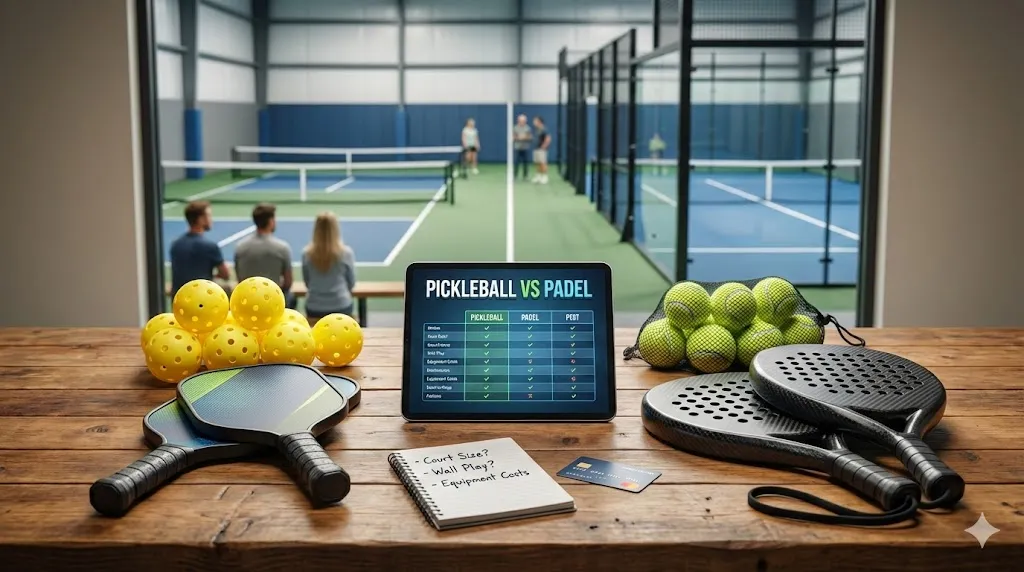
The padel ball looks almost identical to a tennis ball but is slightly smaller and has less pressure. It bounces with a satisfying thud and allows for spin and power. The pickleball is hard plastic with 26 to 40 holes. It does not compress when hit, resulting in a distinct “pop” sound and a bounce that sits up, waiting to be smashed.
Can I use a Padel racket to play Pickleball?
No. The equipment is fundamentally different:
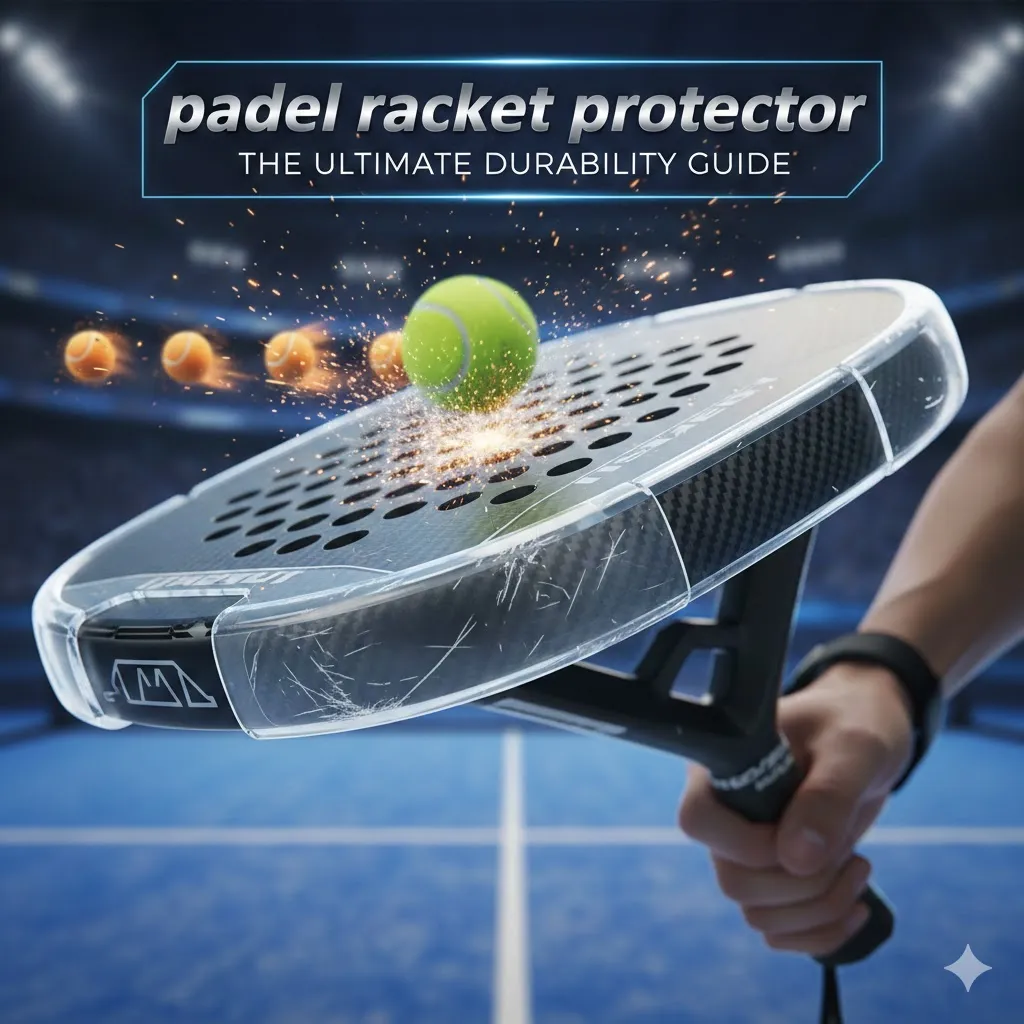
- Padel Racket: Solid face (usually carbon fibre or fibreglass) with perforations, thick profile (38mm), and a short handle. It absorbs impact.
- Pickleball Paddle: Solid, smooth face (often graphite or composite), very thin, and flat. It feels more like a large table tennis bat.
Why are Padel courts enclosed?
The glass walls in Padel are active parts of the court. You can smash the ball against your own glass to get it over the net, or let the opponent’s shot hit the back glass before returning it. Pickleball courts are open lines, meaning if the ball passes you, the point is over.
The Social & Cultural Vibe
Finally, the atmosphere differs. Padel vs pickleball culture in the UK is evolving distinct personalities.
- The Padel Vibe: Often described as “cool” and trendy. It is growing fast in corporate circles and tennis clubs. It is very social (always played as doubles), and it is common to grab a drink at the club bar afterwards.
- The Pickleball Vibe: incredibly inclusive and friendly. The community is famous for welcoming players of all ages, from teenagers to retirees. It feels less like a competitive club and more like a community gathering.
Summary Comparison Table
| Feature | Padel | Pickleball |
|---|---|---|
| Court Type | Enclosed with glass/mesh walls | Open court (Badminton size) |
| Ball Type | Pressurized rubber (bouncy) | Perforated hard plastic (light) |
| UK Cost | Moderate to High (£££) | Low to Moderate (£) |
| Difficulty | Moderate (Technical walls) | Low (Easy entry) |
| Calories/Hour | Approx. 500-700 | Approx. 300-500 |
Conclusion: Which One Should You Play?
The battle of pickleball vs padel does not have a single winner—it depends on what you want from your racket sport experience.
Choose Padel if: You enjoy team tactics, want a high-intensity workout, do not mind paying a bit more for court time, and enjoy the technical challenge of playing off the walls.
Choose Pickleball if: You want a low-cost, accessible game that is easy on the joints, enjoy a relaxed social atmosphere, or want to play in local sports halls without needing specialized facilities.
Whichever you choose, getting active is the main goal. For official rules and more details on getting started with Padel specifically, the Lawn Tennis Association (LTA) Padel Guide is an excellent resource.
Frequently Asked Questions
Is Padel faster than Pickleball?
generally, yes. The pressurized ball in Padel travels faster than the plastic Pickleball, and the gameplay involves more sprinting and explosive movements.
Can I play singles in Padel or Pickleball?
Pickleball has a very popular singles format. Padel is almost exclusively a doubles game; singles courts exist but are rare in the UK.
Which sport is growing faster in the UK?
Both are exploding, but Padel is seeing massive infrastructure investment (dedicated clubs), while Pickleball is seeing massive player growth due to the ease of setting up nets in existing halls.
Is the scoring the same?
No. Padel uses tennis scoring (15, 30, 40, Game). Pickleball uses a unique numbering system (e.g., 11-0-1) where you only score points on your serve.
You May Also Like