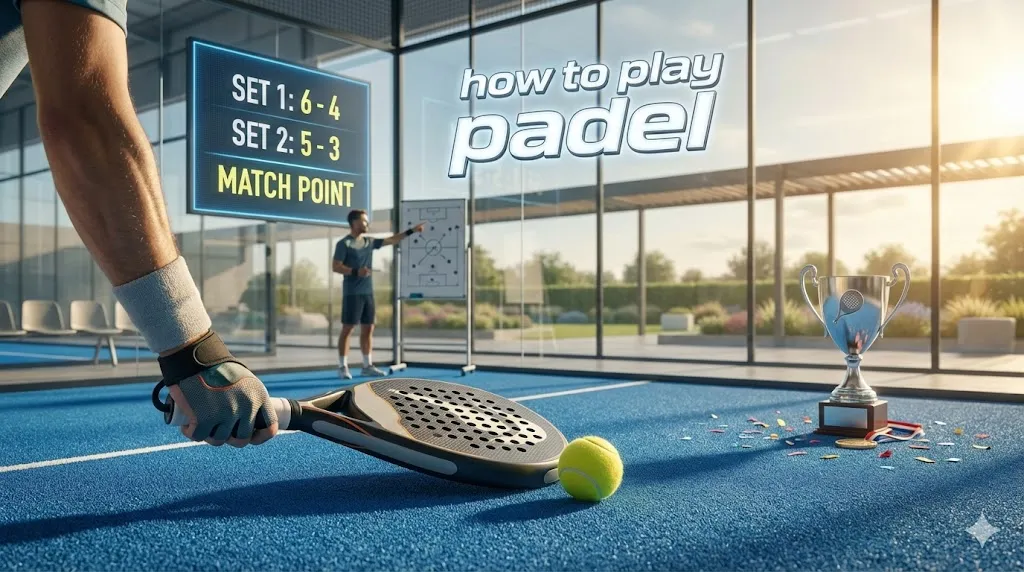
Padel is officially the fastest-growing sport in the UK, popping up in leisure centres and clubs from London to Leeds. It is often described as the perfect blend of tennis and squash, but with a social element that is unmatched. If you have recently stepped onto the court or are planning your first match, you might be wondering exactly how to play padel effectively.
While the game is famous for being easy to pick up, the walls and fencing introduce tricky scenarios that can confuse even experienced racquet sport players. In this comprehensive guide, we will cover everything from basic scoring to the specific rules regarding the glass and wire fencing, ensuring you are ready for your next match.
Before diving into the complex mechanics, it is helpful to understand the core philosophy of the sport. You can read more about the origins and definition in our guide on what is Padel.
The Basics: Court, Scoring & Format
One of the first things beginners ask when searching for how to play padel tennis is about the format. Unlike tennis, Padel is almost exclusively played as doubles. While singles courts exist, they are rare in the UK, and the game is designed for four players.
Scoring: The Golden Point
The scoring system is identical to tennis: 15, 30, 40, and Game. Sets are usually played to six games, with a tie-break at 6-6. However, there is a key difference common in UK club tournaments known as the “Golden Point”:
- If the score reaches Deuce (40-40), a single deciding point is played.
- The receiving team chooses which side (left or right) the server must serve to.
- The team that wins this point wins the game.
The Court Lines
A common misconception is that the lines on the court define the playing area during a rally. In Padel, the lines are only used for serving. Once the ball is in play, you can hit the ball anywhere in the opponent’s court, regardless of the lines.
Mastering the Serve (The Most Common Mistakes)
The serve is where most disputes happen among beginners. If you are looking up padel how to play specifically to fix your serve, here are the non-negotiable rules:
1. The “Underarm” Rule
All serves must be hit at or below waist height. If you make contact with the ball above your waist, it is a fault. This prevents the powerful overhead serves seen in tennis, keeping the game tactical rather than power-based.
2. The Bounce
You must drop the ball and let it bounce on the ground behind the service line before hitting it. You cannot hit the ball on the volley for a serve.
3. The Wire Fence Rule
This is a crucial rule that catches many players out. If your serve lands in the opponent’s correct service box but then bounces up and hits the wire fencing (the metal mesh), it is a FAULT.
- Serve hits Glass: IN (Play continues).
- Serve hits Fence: OUT (Fault).
4. The “Air Shot”
If you toss the ball to serve and miss it completely, trying to hit it, it counts as a fault. Unlike tennis, where you can catch the toss and try again, in Padel, a swing and a miss is a strike.
Playing the Walls: Glass vs. Fence Rules
The walls are your friends, but the fence is your enemy. Understanding the difference is key to mastering the game. For a deep dive into technicalities, check our detailed comprehensive Padel rules.
When Can You Hit the Glass?
- Your own glass: You CAN hit the ball against the glass walls on your own side of the court to get the ball over the net. This is often used when the ball is behind you.
- Opponent’s glass: You CANNOT hit the ball directly against the opponent’s glass. The ball must always bounce on the ground first before hitting their fence or glass.
The Fence (Mesh) Rules
The wire fencing behaves differently from the glass:
- Your own fence: You CANNOT hit the ball against the wire fence on your own side to return it. If the ball hits your own fence, you lose the point.
- Erratic Bounces: If the ball bounces on the ground and then hits the fence, play continues. The fence often causes “erratic bounces,” making it a strategic target for experienced players.
Advanced Scenarios & Tricky Rules
As you progress, you will encounter situations that aren’t covered in basic how to.play padel tutorials.
The Net Post
If you hit a sharp angle and the ball hits the net post (the metal post holding the net) and then lands in the opponent’s court, is it in? Yes. The net post is considered part of the net structure. However, if it hits the post and bounces out, it is out.
Off-Court Play
You may have seen professionals running through the doors to hit the ball back into the court. In the UK, this is only allowed on courts specifically designed with a “safety zone” outside. In most local clubs, the rule is usually that if the ball bounces out of the court (over 4 metres), the point is won by the striker.
Friendly Fire
What happens if you accidentally hit your partner with the ball? Unfortunately, you lose the point immediately. You cannot rebound the ball off your teammate!
Equipment & Conditions (UK Specifics)
Playing in the United Kingdom presents unique challenges, primarily due to the weather and court surfaces.
Can you play Padel in the rain?
Yes, Padel is played outdoors year-round in the UK. However, rain changes the game significantly:
- Heavy Ball: The felt on the ball absorbs water, making it heavier and slower.
- Slippery Glass: The ball will not bounce off the wet glass; it will slide down straight to the floor. Tactics must shift to avoid the glass during rain.
Do I need specific shoes?
Most UK courts use sand-filled artificial grass. Standard running trainers are dangerous here as you will slip. You need Padel or Tennis shoes with a Herringbone sole (zig-zag pattern) which provides the necessary grip on sandy turf.
Rackets
You cannot use a tennis racket. Padel bats are solid foam with holes and no strings. They are shorter and easier to control.
Getting Started in the UK
Ready to jump in? The UK Padel community is incredibly welcoming.
Finding Games
Many clubs run “Americano” or “Mexicano” tournaments. These are social mixers where you switch partners every few games, making them perfect for solo players looking to meet others. You can find registered courts via the official UK Padel association (LTA).
The Grip
Before you step on the court, try to adopt the Continental Grip (like holding a hammer). This allows you to hit forehands, backhands, and overheads without changing your hand position, which is vital in such a fast-paced game.
Whether you prefer reading a blog or you have downloaded a how to play padel tennis pdf, the best way to learn is by doing. Book a court, grab three friends, and enjoy the game!
Frequently Asked Questions
1. Can I serve overarm in Padel?
No. The rules strictly state that impact must be made at or below waist height. Overarm serves are considered a fault.
2. Is Padel easier than Tennis?
Generally, yes. The racket is closer to the hand (shorter handle), and the serve is underarm, making it much easier for beginners to start rallying immediately compared to tennis.
3. Can I hit the ball against the glass on the opponent’s side?
No, this is “Out”. You must hit the ground on their side first. If the ball hits their glass or fence directly without bouncing, you lose the point.
4. How long is a Padel match?
A standard match is usually the best of 3 sets, which typically takes between 60 to 90 minutes depending on the level of play and the occurrence of “Golden Points”.
You May Also Like