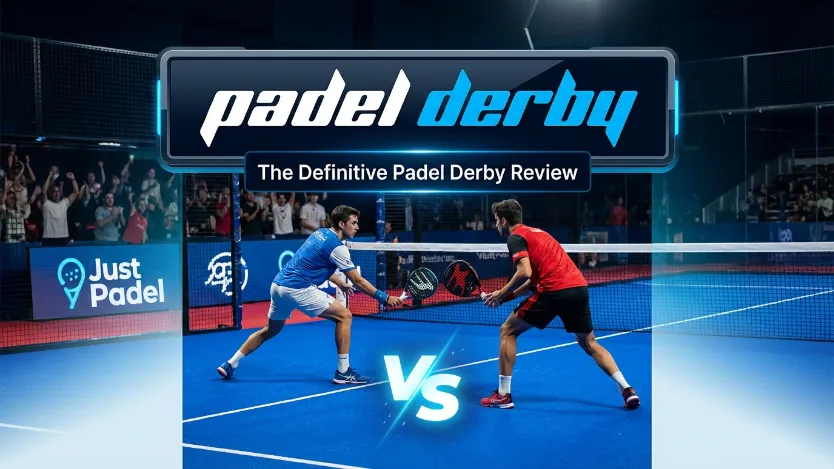
padel derby-Step into any of the high-ceilinged warehouses or repurposed urban spaces across the East Midlands, and you will immediately hear the rhythmic, hollow “thwack” of a ball hitting glass—the unmistakable soundtrack of the padel derby revolution. While tennis has long been the summer staple of British sport, padel has exploded into a year-round phenomenon, with the city of Derby positioning itself as a primary national hub. From the high-tech courts of the city centre to the suburban clubs, the infrastructure is evolving at a lightning pace.
However, for the dedicated player or the curious newcomer, there is more to this sport than just finding a court. To truly master the local landscape, one must navigate a complex web of rebranding, geographical confusion with Liverpool venues, and the specific material science of the gear required to survive the British climate. This guide explores the “missing angles” that generic derby padel reviews often overlook—from the thermodynamics of the ball to the specific logistics of city centre parking.
The Cultural Dominance of Padel Derby in the UK
The dominance of the padel derby scene isn’t merely a result of the sport’s global popularity; it is a result of strategic urban investment. In a city where manufacturing and engineering are part of the DNA, it is perhaps fitting that the most advanced indoor centres in the UK have found a home here. The derby padel community has moved beyond casual “pay and play” into a sophisticated ecosystem of competitive leagues and LTA-sanctioned tournaments.
A significant part of this growth was spearheaded by the venue formerly known as we are padel – derby. Located in Pride Park, this massive facility set the “Goldilocks” standard for the industry—providing enough courts to ensure availability during peak hours while maintaining a social atmosphere that traditional tennis clubs often lack. This standardization has led to a state where Derby is now a destination city for players from across the country, often travelling from as far as London to experience the high-density facilities available here.
Engineering the “Perfect” Point: Facilities and Specifications
The performance of any match is dictated by the infrastructure. Unlike the basic tarmac or clay of outdoor tennis, padel requires panoramic glass walls and monofilament textured turf. In Derby, the competition between clubs has pushed engineering standards to their limit. To ensure they meet LTA approved standards, the top venues adhere to a strict facility profile:
- Court Density: Facilities like Just Padel (formerly We Are Padel) offer 11 indoor double courts, reducing the “dead time” between bookings.
- Lighting: 200W LED floodlighting systems that eliminate shadows, crucial for tracking high-velocity lobs in indoor environments.
- Surface Science: The use of STX Supercourt turf, which offers more consistent “pop” and reduces the risk of joint injuries.
- Recording Tech: S3 Padel’s “Camera Courts” allow players to scan a QR code to receive high-definition match highlights directly to their phones.
When choosing where to play, it is vital to distinguish between these high-end indoor hubs and the outdoor alternatives. For a deeper look at how the environment changes your strategy, check our guide on official padel rules.
Thermodynamics: The West Derby Confusion and the 50°F Threshold
One of the most persistent “missing angles” in online searches is the geographical mix-up between Derby in the East Midlands and **ignite padel west derby**. The latter is located on Queens Drive in Liverpool, a premier site with 6 outdoor panoramic courts. While Ignite offers a world-class experience, many local Derby residents mistakenly book slots in Liverpool, leading to a 100-mile logistical nightmare.
Beyond the geography, players must understand the thermodynamics of the game. Padel balls are highly sensitive to temperature. The internal pressure of a ball depends on the ambient air temperature, leading to two distinct performance issues:
1. The “Heavy Ball” Effect (Below 10°C)
At outdoor venues like the Derbyshire Tennis Centre, the winter air causes the gas inside the ball to contract. The ball becomes “heavy” and loses its bounce. This is why many players in the UK choose to play at indoor centres during the winter months. If you are playing outdoors, you may need a faster ball like the Head Pro S to compensate for the lack of atmospheric help.
2. The Indoor “Popper” (Above 20°C)
Conversely, inside the climate-controlled halls of we are padel – derby, the balls stay “hot.” The pressure remains high, making it easier to smash the ball out of the court (the “x3” or “x4” shot). Understanding these thresholds is essential for match preparation. For more on ball physics, read our comparison on are padel balls the same as tennis balls.
The “Invisible Failure”: Racket Decay and Material Fatigue
A critical gap in the market’s understanding of padel gear is the rate of structural decay in rackets. Unlike tennis rackets that can last years with a simple restringing, padel rackets are made of EVA (Ethylene Vinyl Acetate) foam cores. These cores lose roughly 15% of their elasticity for every 20 hours of high-impact play.
By the sixth month of regular play, a racket may develop “dead spots”—areas where the foam has compressed and no longer returns energy to the ball. This is often an “invisible failure” because the carbon fibre face looks perfectly fine. Ambitious players in the Derby leagues often switch their rackets every season to ensure they maintain maximum “pop.” If you are starting out, investing in affordable padel rackets is a smart move before committing to the £300 professional models.
The Amazon Problem: Spotting Fake High-End Rackets
Due to the massive demand in the UK, counterfeit rackets from brands like Bullpadel and Nox have become a rampant issue. Fakes are often made with cheap glass fibre and low-grade foam, which can lead to “padel elbow” due to poor vibration dampening.
The Authenticity Checklist:
- The Hologram Test: Genuine Bullpadel Vertex 05 or Nox AT10 rackets feature serialized holograms that can be verified on the manufacturer’s website.
- The Weight Accuracy: Professional rackets are balanced to the gram. If a racket advertised at 365g arrives at 380g, it is likely a counterfeit using inferior, heavier materials.
- The Grip Finish: Genuine brands use high-quality embossed grips. Fakes often have smooth, plasticky wraps that offer zero sweat absorption.
Head-to-Head: S3 Padel Derby vs. Just Padel Derby
The padel derby market is currently a battle of two giants. Here is how they stack up for the 2026 season:
- S3 Padel (Derbion): The flagship venue in the Old Eagle Market. It offers 10 premium indoor courts and is the ultimate “social hub.” It features a licensed bar, co-working spaces, and shuffleboard. It is perfect for those who want to mix fitness with networking.
- Just Padel (Pride Park): Formerly we are padel – derby, this site remains the workhorse of the local community. With 11 courts and a dedicated Play Park for kids, it is the superior choice for families. It also boasts the largest free parking area of any local club.
- Derbyshire Tennis Centre: The choice for pure value. At just £10 per hour, it is the best place to practice your professional padel coaching drills without breaking the bank.
Beginner Gear: The Footwear and Singles Dilemma
Many new players enter the court wearing regular running trainers. This is a recipe for injury. Padel requires lateral support and specific herringbone (clay) soles to grip the sand-filled turf. Without the best padel shoes, you risk rolling your ankle during the quick changes of direction required in a rally.
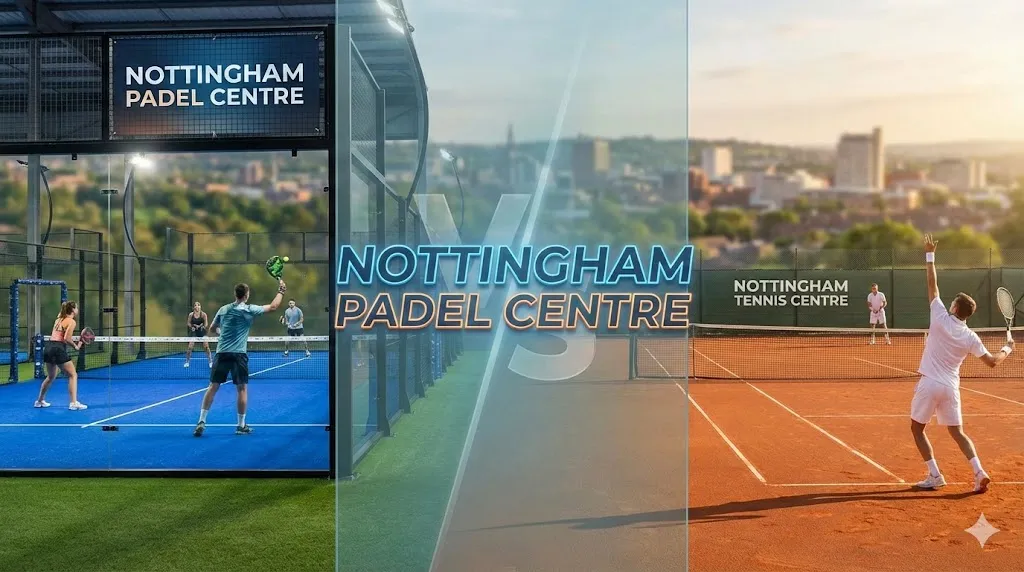
Another “missing angle” is the availability of singles courts. Padel is traditionally a 2v2 sport, but many players in Derby want to practice 1v1 to improve their fitness. While S3 Padel and Just Padel focus almost entirely on doubles, those looking for a solo challenge might need to travel to Nottingham Padel Centre or Destino Padel, which offers dedicated 1v1 courts. You can learn more about this in our guide on playing padel singles.
Internal Cracking: The “Aha!” Moment for Players
Advanced players have learned to identify a failing racket before it actually breaks. Most carbon fibre rackets develop hairline micro-fractures around the holes first. These fractures weaken the structural integrity, leading to a vibrating sensation in the handle upon impact. If you find your arm feeling unusually tired after a session at we are padel – derby, stop and inspect your racket face under a bright light. Even if the crack is barely visible, the dampening properties are compromised.
Expert Tips for Maintenance and Storage
To get the most out of your derby padel investment, follow these professional maintenance tips:
- The Thermal Bag Rule: Never leave your racket in a cold car. Extreme cold can cause the EVA foam to become brittle and crack. Always use a thermally-lined padel bag.
- The “Three-Game” Ball Check: Padel balls lose pressure the moment the tube is opened. If a ball can be compressed significantly with your thumb, it’s time for a fresh set.
- The Overgrip Strategy: Change your overgrip every 4 sessions. A fresh, tacky grip allows you to hold the racket loosely, which is essential for the “flick” required in a Bandeja shot.
padel derby- Frequently Asked Questions (FAQ)
Is Ignite Padel West Derby actually in Derby?
No. Ignite Padel West Derby is located in Liverpool (L13 0AG). It is a common point of confusion for those searching for padel derby. For venues within the city of Derby, you should look for S3 Padel or Just Padel.
What happened to “We Are Padel – Derby”?
The venue was rebranded and is now known as Just Padel Derby. It is located at Pride Park and remains one of the largest indoor padel centres in the UK, featuring 11 high-quality courts.
Do I need to be a member to play in Derby?
Most major venues in Derby operate on a “Pay and Play” basis via the Playtomic app. While memberships are available and offer discounts on court fees, they are not mandatory for casual sessions.
How much does it cost to hire a racket?
At S3 Padel and Just Padel, racket hire typically costs between £2.50 and £5 per session. Many venues will provide basic rackets for free during introductory coaching sessions.
Can I play padel in the rain in Derby?
Most Derby venues are indoor, so weather is not an issue. However, if you play at the Derbyshire Tennis Centre‘s outdoor court, play is possible in light rain, but the glass walls become very slippery, which significantly changes the bounce mechanics.
Conclusion: The Verdict on the Derby Scene
The padel derby landscape is the most exciting it has ever been. With the flagship S3 Padel centre transforming the city centre and Just Padel providing a massive social hub at Pride Park, players are spoilt for choice. However, as the sport matures, so must our understanding of our gear. By recognising the signs of racket decay, avoiding the geographical confusion with ignite padel west derby, and investing in the correct footwear, you can ensure that your performance on the court matches the world-class facilities available in this city.
Whether you are entering your first local league or just booking a social “mix-in” session, remember that padel is as much about the community as it is about the score. Treat the sport with the technical respect it deserves, and your game will thank you.