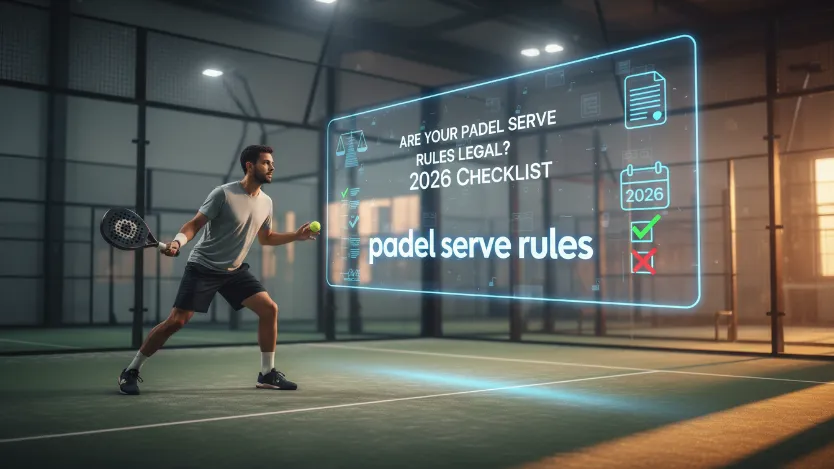
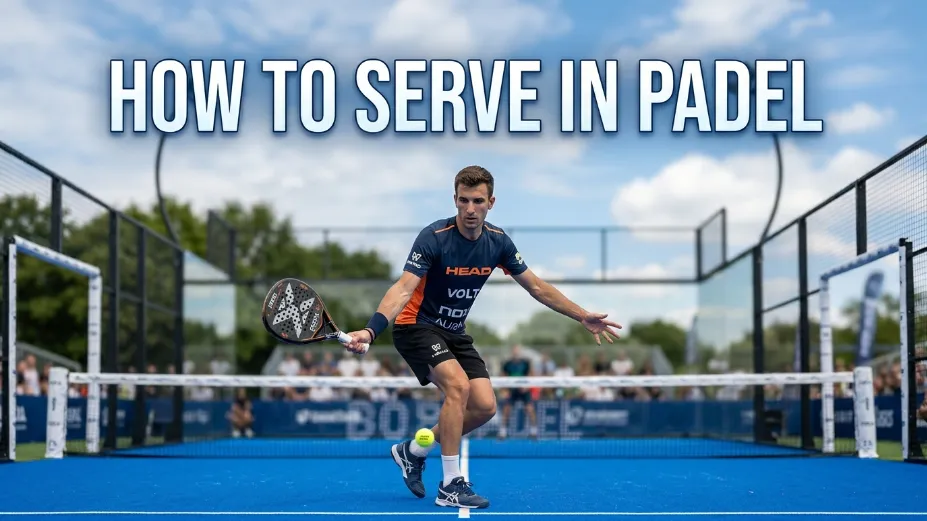
Every points-focused padel rally in the UK starts with a single, highly regulated stroke, yet most players treat it as a mere formality rather than a tactical weapon. If your opening shot is nothing more than a casual tap to get the ball rolling, you are handing your opponents an immediate advantage on the court. Master the mechanics of how to serve in padel, and you transform a mandatory starting hit into a devastating, low-bouncing delivery that forces errors before the rally even heats up. Whether you want to align with the official LTA guidelines or inject professional-grade slice into your game, refining this underarm technique is your fastest route to dominating the court.
Pickleball Serve — 5-Phase Technical Guide
Technical Rule · Core Objective · Common UK Fault to Avoid
For UK club players aiming to control points right from their opening sequence, the optimal strategy across British facilities requires a deep mechanical understanding of ball placement and transition timing. Sourcing prime venues like The Padel Hub Reading or Rocket Padel Battersea provides premium indoor courts with consistent glass rebounds that help maximise the drop-and-strike effect. Ultimately, selecting high-quality courts with premium un-sanded turf ensures your footwear retains complete traction as you push forward to conquer the net.
Comprehensive FIP & LTA Guidelines: The Official how to serve in padel rules
The technical foundation of a lawful opening point rests entirely on compliance with the international regulations set by the International Padel Federation (FIP) and enforced locally by the Lawn Tennis Association (LTA). Failing to understand these operational parameters leads to immediate point loss or the wastage of your second serve allocation. To play competitively in any sanctioned LTA padel tournaments, players must standardise their mechanical habits behind the baseline.
The Starting Position and Feet Restrictions
The rules dictate that the server must stand completely behind the baseline, within the imaginary lateral boundaries of the centre line extension and the side glass wall. You cannot begin the motion from the wrong quadrant or cross the lines prematurely.
- The Contact Grounding: At the precise millisecond of racket contact, at least one foot must maintain direct physical contact with the synthetic turf. Walking, running, or jumping into the serve is strictly illegal.
- The Foot Fault Penalty: If any part of your shoes touches the baseline before your racket strikes the ball, a foot fault is called. This cancels the attempt and forces you to use your second alternative attempt.
The Drop and Bounce Regulation
Unlike tennis, where the ball is flung high into the air, the underarm execution requires a controlled drop. The player must release the ball from their non-dominant hand and let it hit the court floor exactly once behind the baseline. You are forbidden from hitting the ball mid-air on the volley during a serve sequence, and you cannot actively push or spin the ball downward during the drop mechanism; it must fall purely under natural gravitational force.
Exposing the Technical Angle: The Anatomical Waist Definition
The most debated element across UK competitive groups is the regulation demanding that contact occur at or below waist height. A widespread missing angle across mainstream e-commerce and media resources is defining where the “waist” actually sits. Most amateur players instinctively measure this against their navel or the lower ribcage, which leads to frequent arguments during matches without an official chair umpire.
The official international protocol defines the waist anatomically as the iliac crest—the highest point of your skeletal hip bone. This structural boundary is entirely fixed, regardless of how high or low a player hitches their apparel. To guarantee compliance, your entire striking arc must pass clearly below this hip bone threshold, protecting your delivery from technical objections.
Building a Consistent Foundation: how to serve in padel for beginners
When starting your journey, trying to generate high velocity or extreme cut will only lead to costly double faults. The core objective for recreational or early club-level participants is to guarantee depth, mechanical repeatability, and structured placement that gives your partnership enough time to transition safely away from the back walls.
Mastering the Continental Grip
Before launching your swing, you must hold your tool correctly. The single most vital platform for a reliable underarm execution is using the traditional Continental grip padel methodology, also widely recognised across UK clubs as the “hammer grip.”
- How to Form the Grip: Align the V-shape formed by your thumb and index finger directly over the top-left bevel of your handle. This position allows your wrist to retain complete, unhindered mechanical fluidity.
- Why it Matters: Using an incorrect western or eastern tennis grip locks your wrist joint, making it nearly impossible to smoothly transition between flat safety serves and technical spin variants later in your progression.
The Drop-and-Strike Mechanism
To avoid hitting deep errors or sending the ball directly into the net cord, beginners must adopt a structured routine. Extend your non-dominant arm out straight at shoulder height, holding the ball gently between your fingertips. Let it drop naturally without tossing it upward.
As the ball rebounds off the carpet, wait for it to reach the peak of its bounce before executing a clean, flat forward strike. Many novice players make the mistake of tracking the ball too low, hitting it near their knees. Striking at knee level reduces your clearance angle over the net, whereas striking at the absolute peak of the bounce (just below the hip) provides an optimal, descending trajectory into the opponent’s side.
Securing the Second Serve Protocol
If your first attempt misses the box, your secondary execution must be completely risk-averse. Focus on a flat, spinless strike directed straight into the middle of the receiving box. Prioritise consistency by using a smooth, abbreviated backswing. Using an entry-level, forgiving racquet like the one evaluated in our comprehensive Slazenger Challenge No 1 padel racket review helps generate excellent control, ensuring you avoid handing away unforced points via double faults.
Advanced Spin and Placement: how to serve in padel like a pro
Once your consistency is locked down, you must evolve the opening stroke into a tactical weapon. Tournament-grade players manipulate ball rotation, pace, and placement to severely restrict the receiver’s swing path, keeping the opposing duo pinned deep behind their defensive line.
The Masterclass Slice Technique
To deliver a professional-grade slice serve, your racket path must transition from a high take-back down to a low finish. Prepare the face at head height behind your dominant shoulder, keeping the frame open.
As the ball reaches its bounce apex, sweep the face sharply from high to low, “cutting” underneath the ball’s core. This heavy backspin and sidespin matrix significantly alters the flight profile. Instead of bounding up high off the turf, the ball stays exceptionally low, sliding rapidly across the court surface and forcing the opponent to dramatically bend their knees to dig it out.
Tactical Targets: Where to Direct the Attack
Pro-level serving relies on targeting three specific operational zones on the court:
- The Side Glass: The premier target across all advanced play. Aim your sliced delivery to drop deep in the box, striking the side glass panel just a few inches above the floor. The heavy spin causes the ball to die instantly upon hitting the glass, dropping toward the carpet with zero rebound space.
- The Centre Line (The ‘T’): Use this placement to keep the receiver honest. If your opponent pre-emptively positions themselves wide to protect against the side glass, firing a fast, flat delivery down the centre line catches them off-balance, exposing their backhand wing.
- The Body Strike: Firing the ball directly at the receiver’s hip restricts their physical extension. It prevents them from taking a clean, unhindered swing, forcing an awkward, rushed return directly back toward your incoming volleyer at the net.
The Velocity vs. Timing Paradox
A fatal mistake made by intermediate players is executing their serve at 100% maximum power. In this sport, hyper-fast ball speed is actually counterproductive. If you smash the ball with immense velocity, it rebounds quickly off the back walls, giving you zero time to run forward and capture the net.
Pros intentionally use medium-to-fast pacing coupled with heavy spin. This design keeps the ball deep and low while granting you those vital extra split-seconds to sprint forward, track the incoming ball, and establish a dominant, balanced volleying presence before the returner can react.
The Elite Underarm Variation: Mastering the Backhand Serve
The backhand serve has grown rapidly across professional tours as a highly effective tactical variation. While most traditional training manuals focus exclusively on forehand delivery, introducing a structured backhand execution provides unique mechanical advantages that disrupt the returner’s defensive rhythm.
Why Use the Backhand Serve?
The primary tactical value of the backhand serve lies in its natural biomechanical cutting path. Due to the human body’s anatomical structure, pulling the arm across the torso from a backhand position allows the racket face to slide effortlessly beneath the ball. This motion naturally generates a heavier, more aggressive down-slice than a forehand swing, causing the ball to hug the carpet even lower after hitting the side glass walls.
Furthermore, it completely breaks the visual predictability of your serving routine. Because receivers spend the vast majority of their club sessions tracking forehand flight paths, a sudden switch to a backhand release radically alters the ball’s angle of approach and spin deviation, forcing mistakes.
The Mechanical Drawbacks and Vision Challenges
Despite its heavy spin advantages, the backhand variation carries clear physical risks. The biggest drawback is the restriction of your peripheral vision. Because you must adopt a full sideways stance to pull the racket back over your opposite shoulder, you are forced to look at your target across your dominant shoulder joint.
This tracking limitation makes it significantly harder to read the receiver’s real-time subtle movements before impact. Additionally, dropping the ball steadily with your non-dominant hand across your body requires a highly refined level of spatial awareness to avoid accidental illegal contacts above the iliac crest.
Step-by-Step Backhand Execution
- The Stance: Stand completely sideways to the net, aligning your dominant shoulder directly toward the cross-court receiving box.
- The Take-Back: Raise your racket frame up to chest height, pulling it back over your non-dominant hip with an open face.
- The Drop: Extend your non-dominant hand across your torso, releasing the ball precisely inside the baseline channel.
- The Strike: Sweep the frame forward and downward, hitting the ball slightly in front of your lead hip at the peak of the bounce to impart heavy backspin.
- The Follow-Through: Extend the arm fully toward the target before immediately launching into your forward transition sprint.
Tactical Transitions: Winning the Net Kitchen Line
An exceptional opening stroke is utterly useless if you fail to manage the transition phase immediately after impact. The team that successfully captures and holds the net positions controls approximately 85% of all winning points in advanced club play. Your serve is simply the vehicle that allows you to drive forward into an aggressive volley position.
The Transition Zone Trap
The area of turf situated between the baseline and the first two metres of the net is known across professional coaching groups as “no man’s land” or the “transition zone.” If you serve poorly or linger too long near the baseline, a deep return will land directly at your feet while you are caught in mid-motion. You must treat this zone as a dangerous hazard, sprinting through it dynamically without stopping to ensure you reach the stable safety of the net line.
Serving Formations: Standard vs. Australian
Your forward running path depends completely on the tactical formation chosen by your partnership before the point starts:
- The Standard Formation: In this traditional setup, the server’s partner is already positioned up at the net on the opposite side of the court. The server stands midway between the centre line and the side glass. Once the ball is struck, the server sprints directly forward in a straight line to cover their half of the net kitchen, creating a balanced defensive screen.
- The Australian Formation: This specialized strategy is widely implemented when partners prefer to play exclusively on one fixed side (left or right) throughout an entire set. Here, the net partner stands on the same side as the server. The server must position themselves extremely close to the centre line. The moment contact is made, the server must execute an intense, high-speed diagonal sprint to cover the entirely vacant side of the court before the receiver can strike a down-the-line winner.
The LTA “Get to the Net” Transition Drill
To build the necessary cardiovascular endurance and muscle memory required for efficient court coverage, British coaches regularly implement the official LTA transition drill. This exercise uses precise court coordinates to standardise player movement speeds.
Drill Setup: Place a physical marker (such as a training cone or flat disk) near the net on your designated playing side. Align the marker horizontally with the second vertical post of the side wire fence cage. Vertically, position the marker at a distance exactly equivalent to the length of one standard adult padel racket away from the centre net strap.
The Execution Protocol: The serving player stands behind the baseline, delivers a deep, sliced cross-court ball, and immediately launches into a full forward sprint. The objective is to reach the marker and establish a completely stationary, balanced split-step before their practice partner on the opposite side can strike the return ball. Complete 5 consecutive repetitions with high physical intensity to build elite transition mechanics.
Head-to-Head: Padel Serve Tactics vs. Traditional Tennis Serving
To truly understand the tactical nature of the underarm execution, players must discard the mechanical biases inherited from traditional tennis. The structural boundaries and rule limitations of the two racquet sports create entirely contrasting tactical frameworks.
Padel Underarm vs Tennis Overhead Serve
Side-by-Side Performance Metric Comparison
Resolving Court Disputes: Navigating the Complex Edge Cases
In competitive local leagues and recreational club matches played without an official chair umpire, complex ball deflections off the court’s surrounding framework are a frequent source of heated arguments. To maintain sportsmanship, players must understand how the official rulebook handles unique edge cases.
The Net Cord “Let” Regulations
When a served ball clips the top of the net cord before landing in the correct diagonal service box, its status is determined entirely by where it hits next:
- Net-to-Glass (Let): If the ball touches the net cord, lands inside the proper service box, and then bounces to hit any part of the glass walls, it is officially a Let. The point is replayed with no penalty to the server.
- Net-to-Fence (Fault): If the ball clips the net, lands cleanly inside the box, but bounces directly into the side metal wire fence cage, it is a Fault. The server loses that attempt immediately. This is because the metal wire fence is legally deemed an illegal surface during the initial serve sequence.
- The Double Bounce Let: If the ball clips the net, lands in the correct box, and bounces twice on the carpet turf before touching the metal fence, it is ruled a Let. The point must be replayed.
The Glass-to-Fence Seam/Edge Dilemma
One of the most frustrating scenarios occurs when a beautifully placed ball lands deep in the service box and strikes the exact vertical joint or crack where the glass panel meets the metal wire fence structure.
On legacy court designs featuring prominent protruding metal brackets or ledges, the old rule states that if the ball rebounds at a clean diagonal angle toward the receiver, it is legal and live. If it flies sharply outward or backward toward the net, it is a fault.
Under the updated international structural regulations, modern court installations feature completely flat, seamless internal profiles. If the ball strikes a flat seam and takes a completely unpredictable, low dead bounce without touching any exposed internal metal brackets, the serve is technically 100% legal. However, across UK club culture and recreational matches tracking millisecond contact is impossible without cameras. Therefore, players generally follow standard etiquette and agree to play a friendly Let to ensure fair play.
The Spin-Back Exception: Reaching Over the Net Plane
The general rules of the sport strictly state that you cannot cross the plane of the net with your body or your racket to hit a ball; doing so results in an immediate loss of the point. However, there is one highly advanced, technical exception to this rule that remains a massive information gap among club players.
If your opponent returns a ball with extreme, professional-grade backspin (or if a massive gust of wind catches the ball), and it bounces on your side of the court but then spins backwards completely over the net plane into the opponent’s side, you are legally permitted to reach over the net to strike the ball down.
To execute this exception legally, you must hit the ball mid-air before it drops to the opponent’s carpet. Crucially, your body, your clothing, and your racket frame must never touch the net mesh or posts during or after the swing. If you successfully touch the ball under these conditions, you win the point instantly.
Frequently Asked Questions (FAQ)
Can I legally serve using a backhand motion in official LTA club matches?
Yes, absolutely. The backhand serve is fully sanctioned under international FIP and LTA rules, provided that you follow all standard positional requirements: both feet must remain behind the baseline, you must execute a natural gravitational drop, and the impact point must remain strictly below your anatomical hip bone (iliac crest).
What happens if the ball hits the post that supports the net during a serve?
If a served ball strikes the central net post, the net winding mechanisms, or the outer metal framing directly, it is immediately declared a service fault. The outer posts are considered permanent court fixtures outside the live field of play during a serve sequence, meaning you must proceed to your second serve allocation.
Is it legal to drop the ball from above my shoulder when preparing to serve?
Yes, you can drop the ball from any height you choose, including above your head. The rules only regulate the height of the *impact point*. No matter how high you drop the ball from, the racket must make physical contact with the ball at or below your hip bone line to ensure the delivery remains legal.