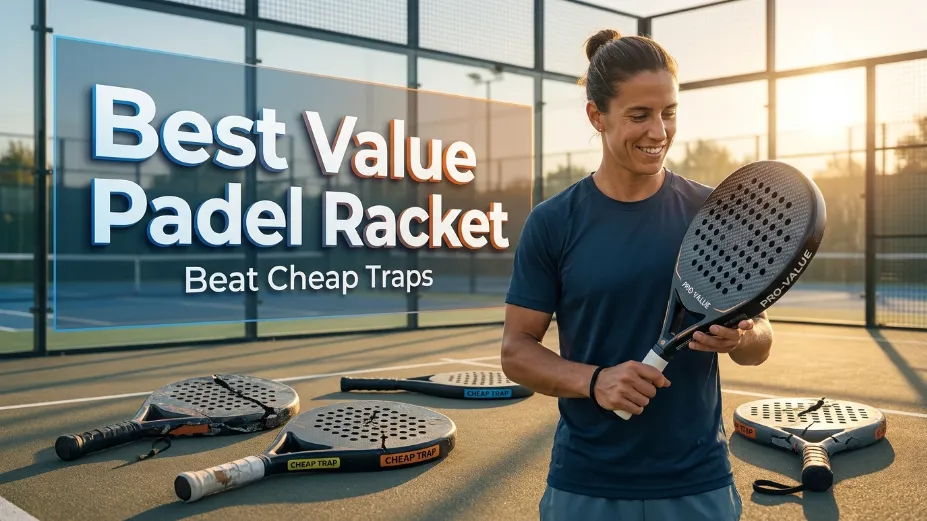
Padel isn’t just the fastest-growing sport across the UK; it’s also remarkably efficient at emptying bank accounts if you aren’t careful. Walking onto the court with a £300 premium carbon weapon certainly looks the part, but if your unforced errors consistently outnumber your winners, that hefty price tag won’t save your game. Finding the best value padel racket is never about hunting down the cheapest piece of fiberglass on the clearance rack. Instead, it’s a calculated tactical decision to balance structural durability, sweet-spot forgiveness, and a price point that actually leaves room for court fees.
Whether you are transitioning from tennis or upgrading your intermediate setup, maximising your return on investment changes how you play. Let’s bypass the marketing noise and look at the raw data that truly defines on-court value.
Best Value Padel Rackets UK
Verified Rates & UK Specs · 2026
For players seeking the ultimate balance of climate resilience, joint protection, and long-term durability on British courts, the UK-engineered PDX Rayo (£74.95) represents the top tier of functional value. If your budget is strictly constrained and you wish to escape recurring club hire fees, the Kuikma PR Comfort Soft (£39.99) is an incredibly friendly defensive starter option. For intermediate players looking to transition into aggressive overhead play without crossing the £100 threshold, hunting down out-of-season flagship bargains such as the Dunlop Aerostar (£89.99) is an absolute masterclass in tactical purchasing.
What Makes a Pala the Best Value for Money Padel Racket?
To identify the absolute best value for money padel racket, you must look past shiny cosmetics and evaluate the mechanical core of the pala. In the modern UK market, true value lies at the intersection of material longevity and physical protection. Many players make the mistake of choosing a cheap padel racket constructed from low-density glass fibre and cheap structural fillers, only to find the core dead and the face soft within months of weekly match play. High-value engineering requires a robust hybrid composition—such as integrating high-grade carbon in the frame to prevent structural twists, coupled with a flexible, forgiving face that dampens harsh impact vibrations.
When searching for the ultimate best budget padel racket, pay close attention to the following engineering metrics:
- Carbon Fiber Reinforcement: A pure fibreglass frame suffers from heavy torsional twist during high-velocity impacts. The best value models utilise a carbon-reinforced frame (ranging from 30% to 100% carbon) to ensure stability, precision, and longevity, allowing you to invest in a carbon fibre padel racket frame that easily outlasts cheaper alternatives.
- EVA Foam Core Density: Cheap, unbranded foam quickly undergoes cell collapse, which ruins the “sweet spot” and creates dead zones. Premium value rackets use elastomeric EVA foam (such as medium-density Black EVA or Soft EVA) that retains its elastic memory over hundreds of hours of play.
- Joint-Safety Engineering: A racket is only as good as the protection it offers your arm. Excessive weight or top-heavy balances put immense strain on your tendons. Prioritise a lighter, evenly-balanced round or teardrop frame to avoid the painful sideline curse of tennis elbow. This is particularly crucial for developing players and players selecting a womens padel racket that prioritises manoeuvrability.
Why the UK Climate Ruines Standard Mediterranean Padel Rackets
A hidden trap that most UK padel players are completely unaware of is the structural climate gap. The vast majority of legacy padel brands are rooted in Spain, Italy, and South America, where equipment is engineered to perform optimally in hot, dry climates exceeding 30°C. In the typical British climate, characterized by cool temperatures (ranging from 10°C to 20°C), high humidity, and damp court surfaces, these Mediterranean rackets undergo dramatic structural changes. The cold ambient air causes standard EVA rubber cores to contract and harden. A racket that felt beautifully soft and responsive in Spain suddenly behaves like a rigid wooden plank on a chilly evening in Birmingham or London.
Furthermore, moisture is the sworn enemy of clean ball contact. In humid UK conditions, a microscopic film of water quickly condenses on smooth racket faces. When you strike a heavy, damp padel ball, it simply slips off a smooth face, causing mistimed lobs and eradicating your ability to apply slice. To combat this environmental hazard, the best value padel rackets designed with UK localisation—such as the PDX Rayo—incorporate textured, sandblasted, or rough-finished faces. These micro-structures bite into the damp ball, dispersing moisture and allowing you to maintain tactical spin even in typical British downpours.
Sourcing Your Gear: Best Value Padel Racket UK Sourcing & Shipping
When looking to secure the best value padel racket uk players must navigate localized shipping fees, custom tariffs, and delivery times. Buying directly from European or Spanish warehouses often appears cheaper initially, but hidden post-Brexit import duties and extended delivery delays frequently turn a “bargain” into a logistical nightmare. Sourcing from domestic UK stockists ensures rapid standard delivery (usually 2-3 working days) and hassle-free returns under UK consumer protection laws. Trusted domestic specialists offer price-match promises and local support, making the search for padel rackets uk both financially secure and incredibly swift.
- PDX Padel (UK): Dispatched directly from London warehouses with complimentary shipping, standard 14-day try-and-return guarantees, and a 6-month structural warranty on models like the Rayo and Aurora.
- PDH Sports (UK): Highly trusted Derbyshire-based retailer offering free standard UK delivery on orders over £40, with next-day and Saturday shipping options available for late-week emergencies.
- Decathlon UK: Boasting physical retail stores nationwide with direct click-and-collect capabilities, allowing players to feel the balance and weight in-hand before committing.
Head-to-Head: Battle of the UK Budget Titans
To help you decide which pala matches your specific on-court style, let us compare the top contenders in a direct, technical head-to-head analysis. We look at the PDX Rayo, the Wilson Match Point, and the Kuikma PR Hybrid Carbon.
PDX Rayo vs. Wilson Match Point
The PDX Rayo (£74.95) and the Wilson Match Point (£59.99) are both round, control-oriented rackets designed with a soft EVA core, but their on-court feel is quite distinct. The Wilson Match Point utilises a full fibreglass weave face, which provides an exceptionally soft, cushion-like trampoline effect on contact. It is highly forgiving, making it incredibly comfortable for raw beginners. However, it lacks carbon structural support in the frame, meaning aggressive players will notice structural twisting and a distinct loss of power as they transition into intermediate play.
The PDX Rayo, conversely, features a carbon-reinforced frame (30% carbon, 70% fibreglass) that provides a much firmer, more stable platform. While maintaining a soft EVA core for joint protection, the Rayo provides far better structural stiffness, translating to cleaner volleys and a significantly longer mechanical lifespan. If you want a plush, ultra-forgiving feel, the Wilson is a bargain; but if you seek a durable platform to support your development over 18 months, the PDX Rayo takes the crown.
Kuikma PR Hybrid Carbon vs. Dunlop Aerostar
This is a clash of high-spec intermediate power. The Kuikma PR Hybrid Carbon Coki Nieto (£109.99) is a hybrid-shaped, 12K carbon powerhouse featuring a built-in elastomeric “Shock Block” handle that reduces arm-damaging vibrations by up to 38% under laboratory testing. It is a highly stable, medium-touch racket that balances precise placement with serious offensive capability. It is built for all-court versatility, suited to players who love constructing patient rallies before striking.
The Dunlop Aerostar (£89.99, heavily discounted from £250.00) is a pure diamond, head-heavy beast designed for aggressive, left-side players who live for the smash. With its textured carbon face and high sweet spot, the Aerostar delivers a massive pop of power. However, it is far less forgiving than the Kuikma; if you strike the ball off-centre, the shock goes straight to your forearm. The Dunlop is an unbeatable price-to-performance option for natural athletes and power-seekers, while the Kuikma is the safer, more precise all-court companion.
The Missing Angles: What Traditional Padel Reviews Ignore
Most commercial review sites look strictly at out-of-the-box performance and aesthetic appeal. However, as an elite player, you must understand the subtle, long-term technical factors that dictate the true cost of ownership of a padel racket best value option:
1. Molecular Fatigue (The “Dead Core” Trap)
A padel racket does not need to crack to be completely unusable. Inside the face lies the EVA core, which is composed of microscopic closed-cell gas bubbles. Every single high-velocity impact, especially aggressive overhead smashes, compresses these tiny gas cells. Over time, these cells undergo structural collapse and lose their elastic memory. This molecular fatigue ruins the racket’s rebound properties long before a crack appears on the outer shell. You will notice your shots suddenly feel “mushy” and lack depth, forcing you to swing harder, which rapidly fatigues your shoulder.
2. Sizing Your Lifespan in Playing Hours, Not Months
Marketing departments love to claim their rackets will “last a season or two.” The reality of polymer science is that padel rackets have a lifespan measured strictly in playing hours. A beginner-to-intermediate soft-foam racket provides roughly 150 to 200 hours of peak physical performance. If you are a dedicated player stepping onto the court 3 to 4 times a week, you will hit your racket’s mechanical limit within 6 months. Advanced hard-hitters can compress a soft core to death in under 50 to 80 hours. Always measure your gear investment against your weekly playing volume.
3. The “Car Boot Trap” and Thermal Shock
Leaving your padel bag permanently in the boot of your car is the fastest way to destroy your investment. In the UK, cold, damp nights followed by humid daytime temperature shifts create massive “thermal shock.” The cold makes the inner EVA core brittle and rigid, while heat expands the epoxy resins bonding the carbon sheets. This rapid cycling causes microscopic delamination, pulling the face materials away from the inner foam. A £200 racket left in a cold winter car boot can suffer structural failure and crack on a basic warm-up volley.
4. The Seasonal Racket Rotation Strategy
Due to the stark contrast between hot British summer days and freezing winter nights, advanced UK players use a “seasonal rotation.” Since cold temperatures naturally harden racket cores, playing with a stiff carbon racket in winter makes the game incredibly heavy and risks joint damage. Wise players keep a softer, fibreglass-faced racket with soft EVA for the winter months to maintain comfort and ball exit, reserving their rigid, high-performance carbon weapons for the fast, dry conditions of summer.
Structural Analysis: Carbon Fibre vs. Fibreglass Face
Understanding the molecular properties of the racket’s face is crucial to securing the best value padel rackets. The face material acts as the direct transmitter of energy between your swing and the ball, defining the exact level of control and comfort you experience on court.
Fibreglass Faces: Fibreglass is highly elastic, flexible, and comfortable. Because it flexes deeply upon impact, it creates a “soft touch” and absorbs the heavy vibration of the ball. This elastic flex provides an effortless “ball output” (bounce), making it incredibly easy for beginners to clear defensive lobs from the back of the court. However, fibreglass is heavier, less precise, and far more prone to cracking under high-impact smashes. It is the dominant material in entry-level rackets.
Carbon Fibre Faces: Carbon fibre is incredibly rigid, lightweight, and mechanically tough. It resists deformation under high impact, translating 100% of your swing speed directly into ball velocity for precise, clinical placement and powerful smashes. A high-quality carbon face is significantly more durable and retains its crisp playing properties for years. The trade-off is a much stiffer feel; carbon fibre transmits vibration directly up your arm, meaning any off-centre hit feels harsh and unforgiving. It requires developed technique to handle safely, which is why hybrid faces are the premium value sweet spot.
The Smart Buyer’s Playbook: How to Choose Your Ideal Pala
Before you tap “add to basket” on any online padel store, follow this systematic checklist to ensure you are buying a racket that matches your anatomical and tactical needs:
- Match Shape to Skill Level: If you are a beginner or a defensive player prioritising consistency, strictly opt for a round shape with an oversized sweet spot. This provides maximum error forgiveness. Intermediate all-rounders should target teardrop frames for balanced versatility, while only advanced, attack-minded players should choose diamond shapes. Refer to our extensive guides for a deeper dive into the best padel rackets for beginners or the best padel rackets for intermediate setups.
- Keep Weight under Control: Biomechanical studies show that a weight range of 350g to 365g is the safest and most efficient zone for recreational and intermediate players. Avoid anything exceeding 370g unless you have exceptional forearm strength, as the heavy swing weight will lead to wrist fatigue and joint soreness.
- Demand Carbon Frame Reinforcement: Always verify that the frame uses a twin-tube carbon structure, even if the face itself is fibreglass. This keeps the racket structurally intact against accidental wall and floor collisions.
- Insist on a Trial or Demo Programme: Never buy blind if you can avoid it. Many top-tier UK clubs and online stores offer “demo/rental” schemes where you can test different models for a small fee that is credited toward your eventual purchase. Trying a racket for 2-3 sessions is the ultimate way to eliminate buyer’s remorse. For official advice on playing structures and techniques, consult the LTA Official Padel Guide to align your equipment choice with proper development pathways.
Proactive Preservation: Maximising Your Investment
Once you have secured your ideal value racket, you must protect it from premature wear. Implement these essential preservation protocols to extend your racket’s life:
- Utilise a Thermal Racket Bag: Never let your racket sit in freezing cold or scorching heat. A high-quality insulated thermal bag is a non-negotiable accessory that shields the delicate EVA foam core from destructive temperature fluctuations.
- Apply an Adhesive Edge Protector: A lightweight polyurethane guard tape applied to the top frame is your primary defence against accidental wall scrapes and glass collisions. Replacing this cheap protector every few months saves your expensive carbon frame from hairline cracks.
- Avoid Wet Weather Play: British weather is notoriously damp, but playing in a steady downpour is catastrophic for padel rackets. Wet balls absorb water and become extremely heavy, turning into “stones” that put immense pressure on your racket’s face, fracturing the internal foam and severely straining your wrist and elbow joints.
Frequently Asked Questions (UK Padel Buyer’s Edition)
1. How long does a budget padel racket last before losing its properties?
On average, a mid-range or budget racket will last between 150 and 200 hours of active play before the EVA foam core begins to lose its elasticity (known as molecular fatigue). For aggressive players who smash frequently, this lifespan drops closer to 50–80 hours, regardless of whether the outer frame remains crack-free.
2. Why does the UK winter climate affect my padel racket?
Cold winter temperatures cause the EVA foam and epoxy resins inside your padel racket to harden, making the hitting surface exceptionally stiff and unforgiving. This increases the transmission of shock waves to your arm, which significantly increases the risk of developing tennis elbow unless you switch to a softer-faced racket or a polyethylene core during the colder months.
3. Is it safe to buy a second-hand padel racket in the UK?
Buying second-hand rackets is highly risky because a racket can have a completely decayed, dead core while appearing perfectly intact on the outside. Unless you personally know the owner and can guarantee the racket was stored in a thermal bag and never left in a cold car boot, it is far safer to buy last year’s discounted flagship models.
4. What is the “Car Boot Trap” in racket storage?
The car boot trap refers to leaving your padel bag inside a parked vehicle where temperatures fluctuate wildly. In the UK, overnight cold freezes the core and makes it brittle, while summer heat softens the bonding resins, leading to rapid, permanent delamination of the racket face and core.