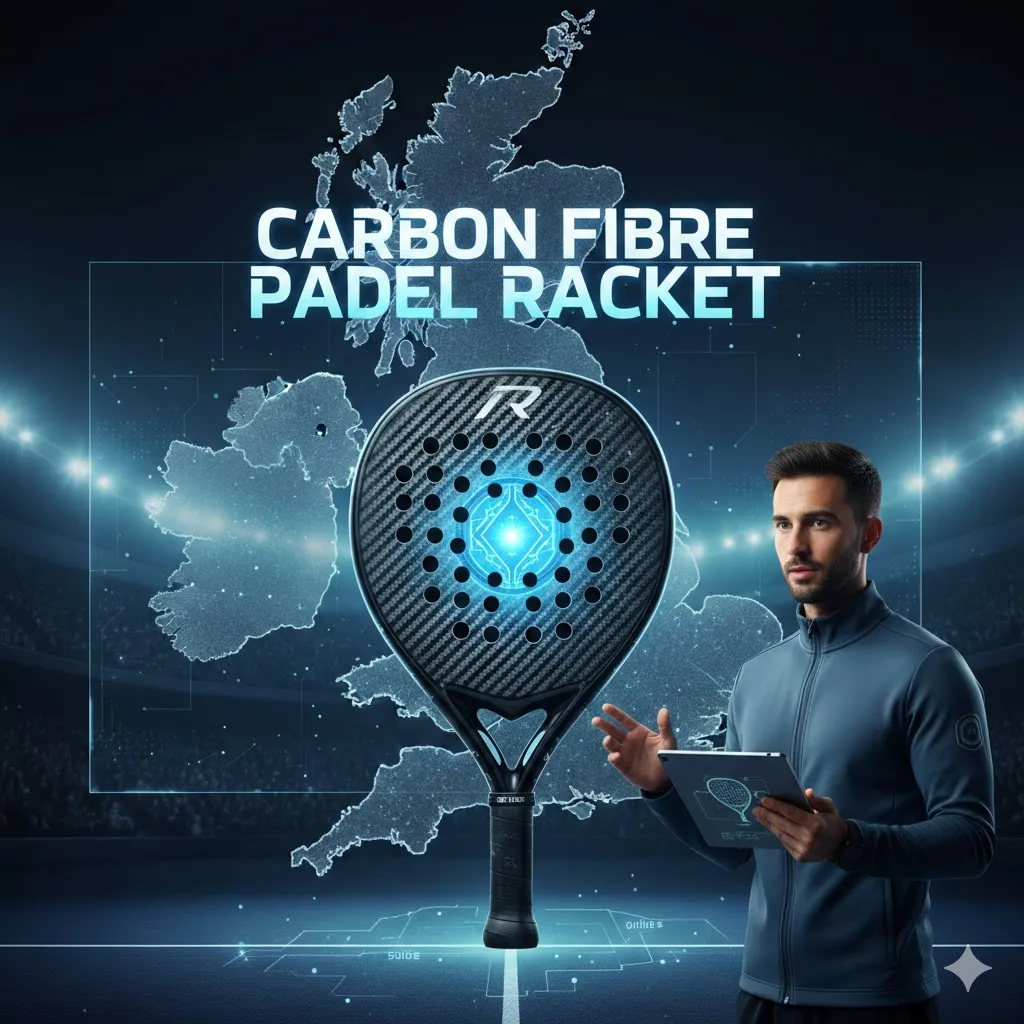
The explosive growth of padel across the United Kingdom has transformed local tennis clubs and dedicated indoor centres into bustling hubs of competitive energy. As players transition from casual weekend games to competitive local leagues, the demand for high-performance equipment has never been higher. If you want to elevate your game, investing in a high-quality carbon fibre padel racket is arguably the most crucial step you can take. In this comprehensive guide, we will decode the complex world of carbon weaves, analyse court performance, and dive deep into some of the most sought-after models on the market today.
Decoding Carbon Fibre Weaves: 3K vs 12K vs 18K
When shopping for premium carbon padel rackets, you will constantly encounter the letter ‘K’ (e.g., 3K, 12K, 18K). This simply refers to the number of carbon filaments in a single “tow” or weave. For instance, a 3K weave contains 3,000 individual carbon filaments bundled together, whereas an 18K weave contains 18,000.
What is the exact difference between 3K, 12K, and 18K carbon fibre in padel rackets?
The primary difference lies in the material’s stiffness, durability, and responsiveness on the court. A 3K carbon weave is generally more flexible and forgiving. It provides a distinct “trampoline effect,” meaning the ball absorbs into the face of the racket and rebounds with effortless speed. On the other end of the spectrum, 18K carbon is highly dense and exceptionally rigid. It offers very little trampoline effect, meaning all the power must be generated by the player’s arm. However, this rigidity translates to unparalleled pinpoint precision and devastating power for advanced players executing aggressive smashes.
Can beginners actually benefit from advanced-grade carbon weaves?
A common misconception in the UK padel community is that higher ‘K’ numbers automatically mean a “better” racket for everyone. If you are relatively new to the sport, an 18K racket will likely feel too stiff, leading to a lack of ball control and potential arm fatigue. Beginners and early intermediates should exclusively start with basic 3K options or even hybrid models. If you are just starting your journey, we highly recommend checking out our guide on choosing the best padel racket for beginners to ensure you build proper technique without fighting against a rigid frame.
The Rise of Hybrid Carbon Layups
Are there measurable physical advantages to combining multiple grades of carbon fibre? Absolutely. Many top-tier manufacturers are now mixing 3K and 12K weaves within a single frame. This engineered structural variation allows the racket to remain stiff in the central sweet spot for aggressive volleys, while retaining flexibility towards the outer edges to forgive off-centre hits.
Court Performance: Texture, Spin, and Dampening
The material composition of your racket dictates more than just power; it fundamentally alters how you interact with the ball.
How does surface finish affect ball grip and spin?
Modern players rely heavily on spin to keep the ball low off the glass walls. A frosted, sand-paper-like finish or a 3D-moulded textured carbon surface creates significantly more friction upon impact than a traditional glossy finish. When the padel racket carbon fibre face grips the fuzzy exterior of the padel ball, it imparts massive slice (bandeja) or topspin (smash). Glossy finishes, while highly durable and aesthetically pleasing, tend to let the ball slide slightly off the face, making aggressive spin generation more reliant on pure wrist technique.
Does full carbon fibre offer superior vibration dampening?
Yes and no. Carbon fibre is naturally highly conductive to kinetic energy. Without an internal dampening core (like soft EVA foam), a pure carbon racket would send harsh shockwaves straight up your arm. However, when paired with high-quality foam, carbon fibre is incredibly efficient at stabilising the racket face upon impact. Compared to a standard fibreglass alternative—which is softer but more prone to structural twisting (torsion) upon off-centre impacts—carbon fibre remains rigid, dramatically reducing the micro-vibrations that lead to “tennis elbow.”
Weight Distribution and Defensive Play
The weight distribution of specific carbon layup patterns heavily influences defensive counter-punching. A racket with extra carbon layering in the bridge (the area just above the handle) lowers the balance point. This makes the racket feel significantly lighter and more manoeuvrable, allowing players to react with lightning speed during fast-paced net exchanges.
Spotlight on the Wilson Carbon Force Padel Racket
When discussing the pinnacle of racket engineering, we must take a deep, comprehensive dive into the wilson carbon force padel racket line. Wilson, a titan in the racket sports industry, has poured decades of aerodynamic research and material science into this specific range, making it a subject of intense curiosity and passion for dedicated padel players.
The Anatomy of the Wilson Carbon Force
The wilson carbon force padel racket is not just a single racket; it is a meticulously engineered franchise designed to bridge the gap between intermediate control and professional-grade power. The standard Carbon Force features a tear-drop (water-drop) shape. This hybrid geometry places the sweet spot slightly higher than a round racket but lower than a diamond shape, offering a sublime balance of raw aggressive power and defensive manoeuvrability.
What truly sets the wilson carbon force padel racket apart is its unique carbon face construction paired with Wilson’s proprietary Soft EVA foam core. This combination is a masterclass in contrasting materials. The stiff carbon exterior provides the crisp, responsive feedback that advanced players crave, while the soft internal core absorbs the brutal impact of heavy smashes, providing a plush, comfortable feel that is rarely found in high-end rackets.
Is the Wilson Carbon Force LT too soft for an aggressive player?
The “LT” (Light) version of the Carbon Force is highly debated in clubhouses across the UK. Weighing significantly less than its standard counterpart, the LT is designed for maximum agility. However, aggressive players progressing beyond the beginner stage often wonder if it lacks “punch.” The answer is nuanced. While you won’t generate the same heavy, crushing smashes (por tres) as you would with a heavier diamond racket, the LT allows for incredible racket-head speed.
For players whose aggressive game relies on fast volleys, sharp angles, and rapid counter-attacks rather than brute force, the LT is a lethal weapon. If you are looking to step up your game, exploring the best padel racket for intermediate players will show why lightweight carbon frames are often the smartest choice.
Long-Term Skill Development: Wilson vs. Stiffer Alternatives
How does the Wilson Carbon Force range compare to much stiffer full-carbon alternatives? Stiffer rackets (like 18K diamond shapes) are unforgiving; if your technique is flawed, your shot will fail. The wilson carbon force padel racket, with its slightly more forgiving sweet spot and medium-soft core, acts as the perfect transitional tool. It allows ambitious players to hit with high intensity while masking minor technical errors. It is highly recommended to explore the broader range of Wilson padel rackets to see how this specific model sits within their premium hierarchy.
Longevity, Climate, and Customisation
Investing in top-tier equipment means you must also invest in its care. Carbon fibre is incredibly strong, but it is not invincible.
The Impact of Heat and Humidity
How do extreme heat and humid climates affect your racket? In the UK, players frequently leave their rackets in the boot of their car. On a hot summer day, the internal temperature of a car can soar. This extreme heat softens the EVA core and degrades the epoxy resins holding the carbon fibre layers together. Over time, the racket will lose its pop, and the face may even delaminate or crack during a heavy smash. To protect your investment, always store your racket in a thermally insulated padel bag when not on the court.
Customisation: Can you spray paint a carbon racket?
The DIY trend is growing, but caution is advised. Can you safely spray paint or customise the surface of a carbon fibre padel racket? Technically, yes, but practically, it is a massive risk. Adding layers of spray paint significantly alters the weight and the carefully engineered balance point of the racket. Furthermore, standard paint will fill in the textured grooves of the carbon face, completely ruining your ability to generate spin. More importantly, modifying the racket’s surface may breach the equipment standards outlined in the official LTA padel guidelines, rendering the racket unsuitable for competitive play in the UK.
Frequently Asked Questions (FAQs)
Q: How long should a carbon fibre padel racket last?
A: For an amateur player playing 2-3 times a week, a high-quality carbon racket should last between 12 to 18 months before the internal foam begins to lose its elasticity and structural integrity.
Q: Are all black padel rackets made of carbon fibre?
A: No. Many entry-level rackets are painted black or feature a faux-carbon aesthetic over a standard fibreglass frame. Always check the manufacturer’s specifications to ensure genuine carbon construction.
Q: Why does my carbon racket sound hollow compared to my old fibreglass one?
A: Carbon fibre is significantly more rigid. The “hollow” or high-pitched “ping” sound is perfectly normal; it is simply the acoustic resonance of the tight carbon weave interacting with the ball at high velocity.
Conclusion
Choosing the right equipment is a transformative step in any player’s journey. A high-quality carbon fibre padel racket offers unparalleled durability, precision, and power. Whether you are seeking the forgiving touch of a 3K weave, or analysing every angle of the legendary wilson carbon force padel racket to match your aggressive ambitions, understanding the materials behind the sport gives you a distinct advantage. Remember to protect your gear from extreme temperatures, avoid illegal customisations, and most importantly, choose a racket that complements your current skill level as you continue to dominate the courts across the UK.