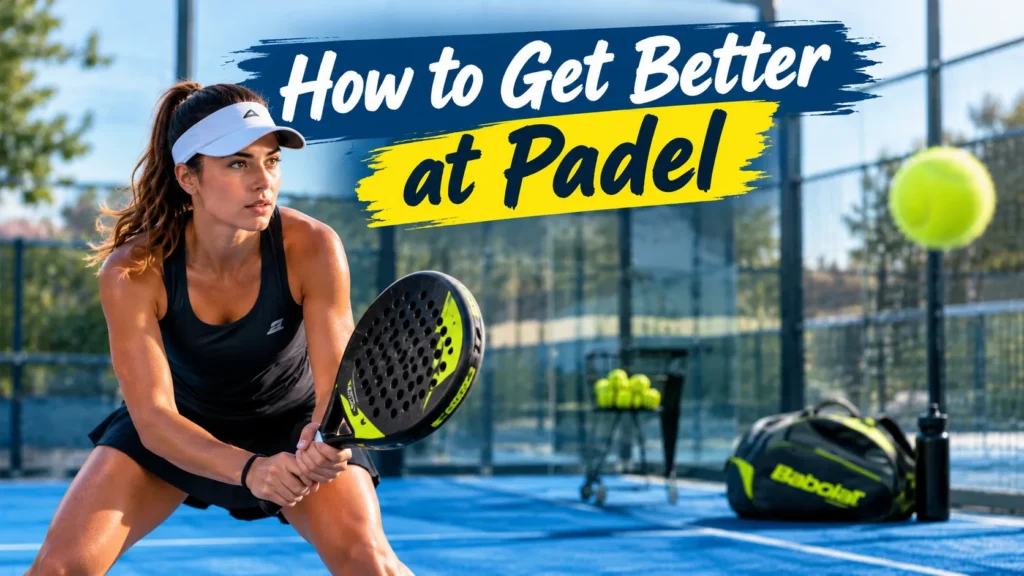
Walk into any packed padel club from Shoreditch to Didsbury on a chilly Tuesday evening, and you will witness a silent epidemic of ego. Players are hammering tennis-style smashes straight into the glass, convinced that raw power is the ultimate currency of the court, only to watch the ball die tamely against the back wall while their opponents calmly claim the net.
True mastery in the UK’s rapidly evolving padel ecosystem demands a complete psychological and mechanical rewiring. If your Playtomic rating has flatlined despite endless weekend matches and you are genuinely serious about how to get better at padel, you need to stop fighting the cage and start orchestrating the geometry of the bounce.
Padel Player Tiers
Technical focus · Tactical objective · Weekly court frequency
Comprehensive Guide: how to get better at padel tennis
The transition into padel presents unique biomechanical and tactical hurdles, especially for those accustomed to traditional racket sports. The rapid expansion of the club scene across the United Kingdom has highlighted a severe “intermediate plateau” where players stagnate because they rely on tennis instincts. Understanding the precise nuances of court positioning and shot selection is paramount to maintaining technical execution and elevating your official rating.
Decoding the Assessment Landscape: Playtomic vs. LTA
Navigating the UK assessment landscape requires a clear understanding of the mechanical differences between algorithmic community ratings and official national frameworks. The Playtomic ELO system is highly volatile and heavily dependent on a “reliability percentage.” Playing exclusively within a closed group of friends creates an isolated rating bubble. To achieve a genuine 3.0 or 4.0 ranking, players must compete against a diverse pool of unknown opponents.
Conversely, the official framework established by the LTA Padel Guidance provides a rigid, non-algorithmic baseline from 1.0 to 7.0. While Playtomic serves as an excellent matchmaking tool, players serious about structured progression should benchmark their skills against the LTA criteria, where a 5.0 indicates an advanced tournament competitor, rather than a mere casual winner.
Tactical Paradigm Shifts: The Offensive Lob and Chiquita
The most profound shift required to master the game is reconceptualising the lob. In traditional tennis, a lob is a desperate defensive manoeuvre. In padel, it is the primary offensive weapon used to dictate play, push opponents to the back glass, and seize control of the net.
- Mastering the Chiquita: This soft, dipping shot aimed at the advancing opponent’s feet is highly effective but frequently misplayed. It must only be executed when there is sufficient spatial distance between the opponent and the net. Following a successful chiquita, players must execute a precise split-step into the transition zone to assess the return trajectory.
- Dismantling Back-Dwellers: Against opponents who refuse to leave the baseline, hitting continuous lobs is a strategic failure. Instead, utilise heavily sliced bajadas and soft bandejas that die upon hitting the rear glass, forcing the defenders into uncomfortable forward sprints.
- Embracing the Glass: Advanced players do not strike the ball early. They step in, track the trajectory, and allow the structural glass to absorb the ball’s kinetic energy before playing a controlled, balanced return.
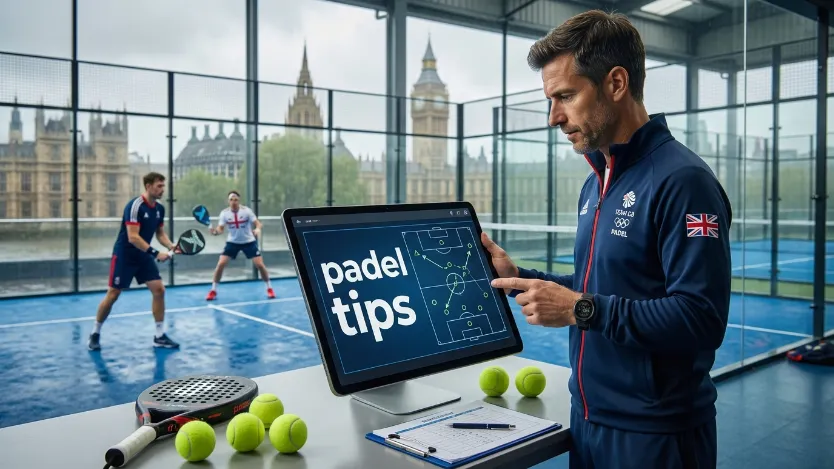
To deepen your understanding of these specific shot mechanics, exploring our dedicated insights on padel tips is highly recommended.
Head-to-Head: The Aggressive Smash vs. The Tactical Bandeja
For players trying to choose between ending the point with a powerful overhead smash or a calculated bandeja, the choice comes down to statistical reality versus ego. Both strokes command respect, but they approach court dominance from completely opposing angles.
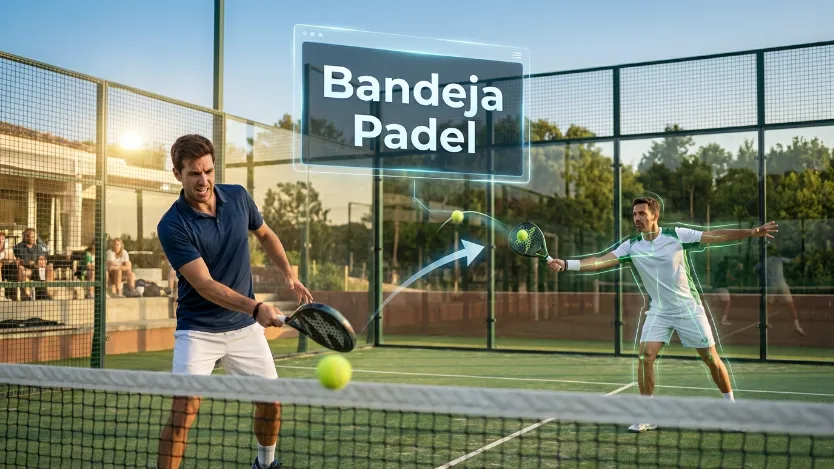
- Execution and Risk: The smash requires perfect positioning, immense shoulder kinematics, and a high point of contact to successfully clear the 3-metre back wall. The bandeja, conversely, is a defensive overhead played with slice to keep the bounce low, prioritising the maintenance of the net position over an immediate point victory.
- Statistical Effectiveness: Data analysis reveals that over 60% of points in professional and advanced amateur matches are decided by unforced errors rather than direct winners. The bandeja ensures absolute consistency, whereas the smash frequently results in an unforced error or a devastating counter-attack if not executed perfectly.
- Energy Conservation: Repeatedly executing maximum-power smashes accelerates physical fatigue and increases the risk of rotator cuff strain. The fluid, controlled mechanics of the bandeja allow players to maintain high-intensity rallies throughout a gruelling three-set match.
To perfect this crucial overhead transition, review our comprehensive breakdown on executing the bandeja padel stroke to ensure your mechanics align with elite tactical standards.
Adapting to the British Climate: Winter Padel Physics
The environmental realities of the UK club scene introduce variables rarely seen in mainland Europe. During the winter months, plummeting temperatures and high humidity drastically alter the internal pressure of the ball, rendering it dense and unresponsive. Furthermore, playing on wet outdoor structural glass requires a complete abandonment of aerial tactics; the ball will violently skid downward rather than rebound.
Adapting your footwear is equally critical on damp, sand-filled synthetic turf. A premium herringbone or omni-court tread pattern is non-negotiable for maintaining rotational stability. Ensure your physical foundation is secure by exploring the definitive options in our padel shoes technical directory.
Frequently Asked Questions (FAQ)
Why do my Playtomic matches fluctuate so wildly in difficulty despite playing at the same level?
The algorithm’s reliability index requires a vast data set. If your opponents primarily play within isolated, private groups, their ratings are artificially insulated. A 3.0 rating generated from 5 matches is vastly different from a 3.0 rating solidified over 150 diverse matches.
Is it biomechanically safe to use standard tennis trainers on a UK padel court?
No. Standard hard-court tennis shoes lack the specific pivot points and deep herringbone tread required for the abrasive, sand-dressed turf used across the UK. This lack of tailored traction significantly increases the risk of lateral ankle rolls and knee strain during aggressive deceleration.
How should I adjust my grip thickness to improve shot control?
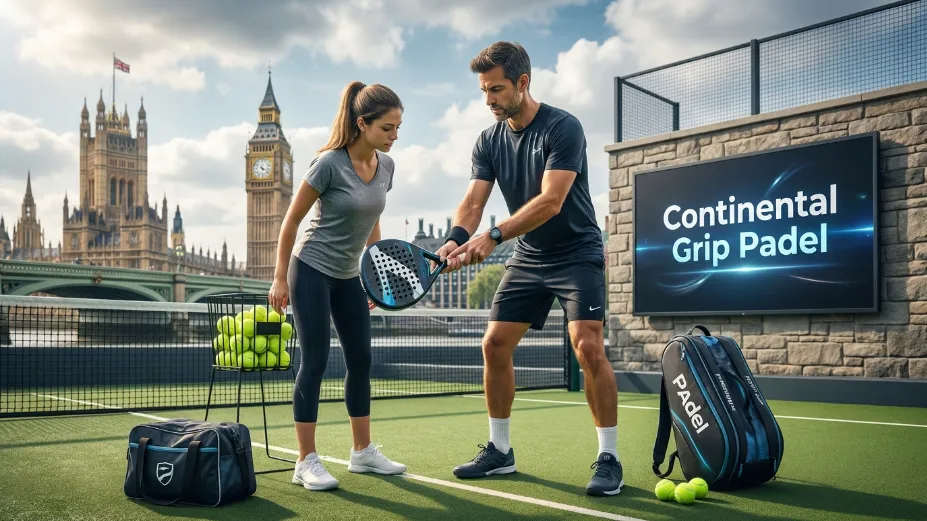
Unlike tennis, rackets come with a standard base grip. It is imperative to overlap protective white overgrips until you achieve a handle thickness that allows a one-finger gap between your fingertips and the base of your palm. This structural adjustment prevents excessive squeezing and dampens severe impact vibrations.