The sport of padel is experiencing unprecedented growth across the UK. Yet, while most players spend hours deliberating over the perfect racket, they often overlook the most critical component of their biomechanical performance and safety: their footwear. Finding the best padel shoes is not merely about matching your club’s aesthetics; it is about finding a functional tool engineered to withstand the brutal lateral forces, sudden decelerations, and constant pivoting that define the modern game.
For UK players, the challenge is uniquely complex. We are not just battling our opponents; we are battling the damp British weather, varied artificial turf conditions, and a market dominated by narrow European shoe moulds. Whether you are transitioning from tennis or looking to upgrade your current padel shoes, understanding the engineering beneath your feet is vital.
This comprehensive guide dives deep into the biomechanics of padel footwear, addressing the nuances that mainstream retailers often ignore. We will explore the physical realities of playing on wet UK courts, the anatomical truth behind finding the optimal fit, and present the definitive choices for the best padel shoes 2026 has to offer.
Top Contenders: The best padel shoes for men in 2026
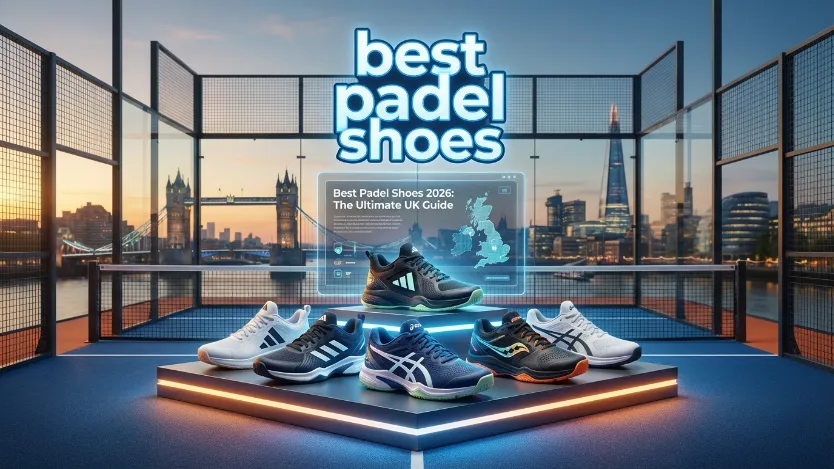
The 2026 landscape is highly segmented. To find the best padel shoes for men, you must match the shoe’s engineering to your specific physical build and playing style. Here is the definitive breakdown of the top performers this year:
1. The Ultimate Stability Shields
Designed for heavier players or those with a history of ankle rolls, these shoes prioritise structural integrity over absolute lightness.
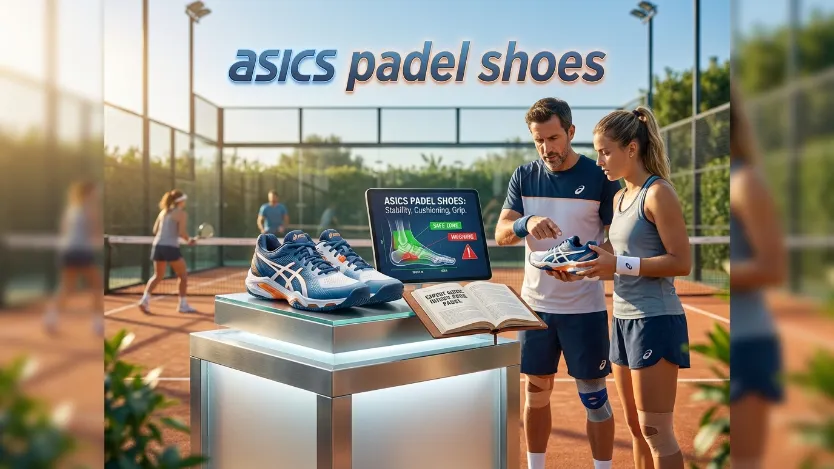
- ASICS Gel-Resolution X: The undisputed king of lockdown. Featuring an extended Dynawall resin cage, it physically prevents the foot from spilling over the sole during extreme lateral slides. It requires a break-in period but offers unmatched durability.
- Bullpadel Hack Vibram 25: Combining a remarkably spacious interior with a rugged Vibram-engineered outsole. It is bulky but acts as a tank on the court, perfect for aggressive defenders.
2. The High-Speed Agility Engines
Built for the dynamic, net-rushing player who demands minimal weight and maximum responsiveness.
- Babolat Jet Premura 3: The 2026 iteration made a brilliant engineering choice: adding 12 grams of weight compared to the V2 to incorporate the new Blast Pad technology. This provides vastly superior forefoot retention. Woven with Matryx MICRO Kevlar, it remains phenomenally breathable and light.
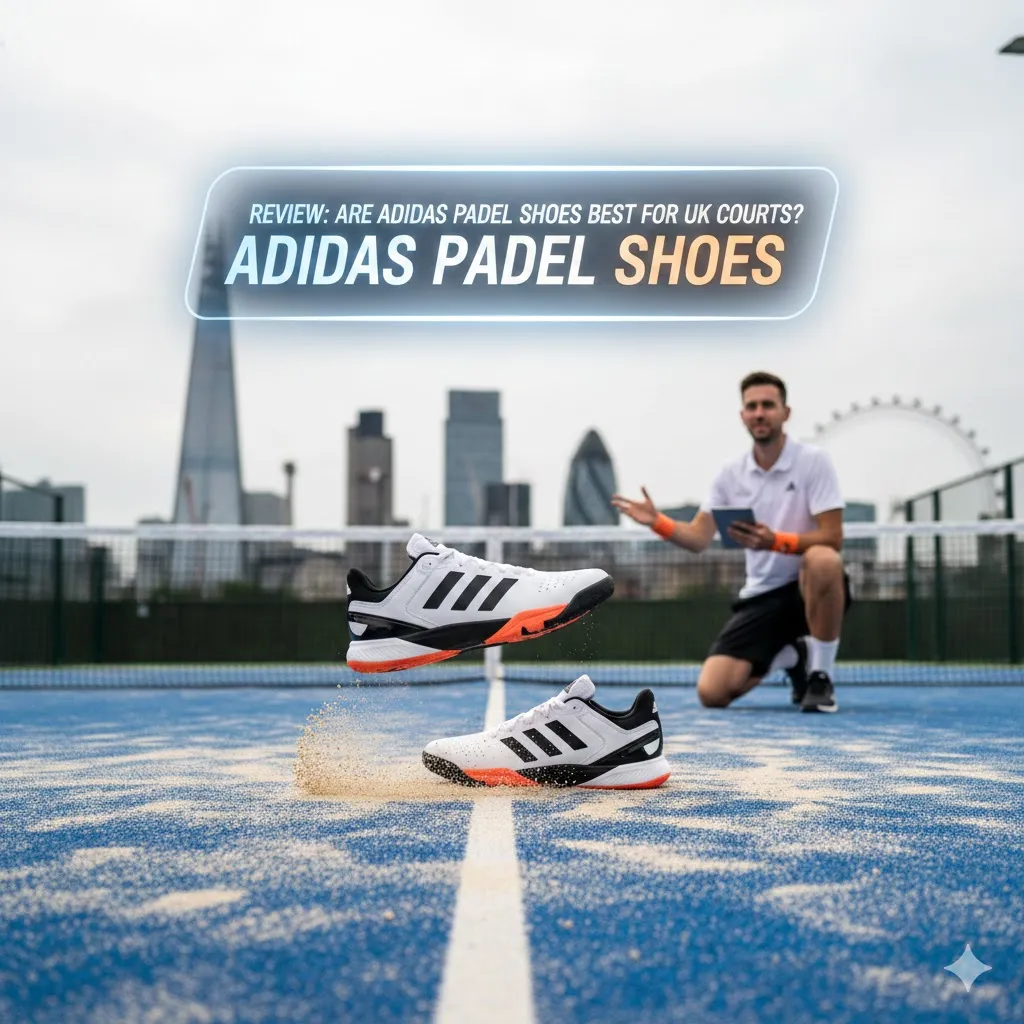
- adidas crazyquick padel shoes: A revelation for 2026. The Boost variant offers plush, responsive cushioning, while the Slingframe upper ensures your foot doesn’t slide over the footbed during rapid directional changes. It is a premium choice across the adidas padel shoes range.
3. Joint Comfort and Orthopaedic Care
For players suffering from knee or lower back pain, impact dispersion is the highest priority.
- Munich Atomik: Features X-Lite midsole technology and dedicated anti-shock heel inserts. It is heavily engineered to protect joints during repetitive heavy landings, making it a favourite for coaches and daily players.
Wear and Tear Economics: The True Lifespan of Padel Footwear
A common grievance among UK players is the perceived short lifespan of premium padel shoes. However, players often judge a shoe’s health entirely by the rubber outsole. This leads to a dangerous misconception.
The concept of “Midsole Death”: The internal foam core of your shoe (EVA, TPU, or Gel) has a finite lifespan. In a highly abrasive, heavy-impact sport like padel, the micro-cellular structure of the midsole compresses and loses its elastic memory long before the outer rubber goes completely bald. For a player hitting the court 2 to 3 times a week, “midsole death” occurs around the 6 to 8-month mark.
When the midsole dies, it stops absorbing kinetic shock. That shock is instantly transferred to your shins, knees, and lower back. Unexplained joint pain is the primary indicator that your shoes need replacing, regardless of how pristine the upper mesh or the Herringbone tread might look. To combat outsole wear, look for brands partnering with tyre manufacturers (like Babolat with Michelin, or Bullpadel with Vibram) for superior rubber compounds.
Environmental Mechanics: Adapting to UK Court Surfaces and Weather
The geographical and climatic realities of the United Kingdom place highly specific demands on athletic footwear. Unlike the sun-baked courts of Spain, UK padel infrastructure relies heavily on outdoor or canopy-covered courts. This exposes the playing surface to morning dew, frequent rain showers, and fluctuating temperatures. Consequently, the interaction between water, sand, and artificial grass drastically alters court physics.
Damp Sand vs. Mondo WPT Turf (The Hooking Risk)
Most standard outdoor courts in the UK utilise a sand-dressed artificial turf. When dry, the sand acts as a layer of micro-bearings, allowing for controlled slides. However, when wet, water binds the sand particles and lubricates the synthetic fibres, creating a severe aquaplaning risk during aggressive lunges. For these conditions, a deep Herringbone (Clay) sole remains the gold standard. The deep zig-zag grooves efficiently channel moisture and sand away from the contact patch, preventing uncontrolled slipping.
Conversely, a critical biomechanical hazard emerges on modern, indoor “Mondo” WPT (World Padel Tour) turf. These premium carpets, increasingly installed in high-end UK clubs, have minimal visible surface sand. If you wear an aggressive, deep-tread clay shoe on a pristine Mondo carpet, you risk a phenomenon known as “hooking.” The shoe bites into the carpet too aggressively, stopping the foot dead while the knee continues to rotate. This abrupt deceleration transfers massive torsional force directly to the knee ligaments, drastically increasing the risk of ACL tears or severe ankle inversions. For these indoor courts, an Omni sole (dotted pattern) or a modern Hybrid sole featuring a rotational pivot disc is essential for safe play.
The Anatomical Dilemma: Finding the best padel shoes for wide feet
One of the most glaring gaps in padel retail advice is anatomical suitability. Historically, the padel market has been dominated by Mediterranean brands building their footwear on narrow lasts. When players with broader feet search for the best padel shoes for wide feet, they are often given terrible advice: “Just size up.”
Why sizing up is a biomechanical disaster: Buying a shoe that is too long just to get extra width fundamentally misaligns the shoe’s flex point with your foot’s natural flex point (the metatarsophalangeal joint). This leads to severe heel slippage, devastating friction blisters, and a catastrophic loss of proprioception (court feel), which significantly heightens the risk of rolling an ankle.
Instead of sizing up, UK players need true wide-fit architectures (2E to 4E equivalents). In 2026, the standout performers for wide feet include:
- K-Swiss Hypercourt Express 2: Renowned for its generous toe box and plush midfoot volume, this shoe allows toes to splay naturally without compromising heel lockdown.
- Mizuno Wave Enforce Tour: An exceptional alternative that provides incredible lateral stability while accommodating flatter, wider foot shapes seamlessly.
- New Balance FuelCell 796v4: Continuing their legacy in wide-fit athletic footwear, New Balance offers genuine wide options that translate perfectly to padel courts.
Furthermore, a growing sub-sect of players is seeking “zero-drop” or minimalist shoes to lower their centre of gravity. While true barefoot brands don’t make padel-specific outsoles, models like the Reebok Nano Court are being adapted by players wanting a wider toe box and flat heel, though you must accept a harsh trade-off in joint amortisation on concrete-backed courts.
Deep Dive: For a technical breakdown of 2E widths and square toe box shapes, read our full guide on Padel shoes for wide feet here.
Core Technologies: Cushioning, Stability, and the Windlass Mechanism
The engineering of the best shoes for padel requires a masterful balance of contradictory forces. The shoe must be torsionally rigid to prevent your ankle from collapsing outward during lateral braking, yet highly flexible in the forefoot.
This forefoot flexibility engages the Windlass Mechanism—the natural tightening of the plantar fascia when the toes bend upwards. If a shoe is too stiff in the toe box, you are forced to run flat-footed, which destroys your explosive acceleration towards the net and places immense strain on your Achilles tendon.
Midsole technology has also evolved. Standard EVA foam is being replaced by high-energy return polymers. Proprietary foams, such as TPU-based Boost or ASICS FlyteFoam, do not just absorb the brutal impact of landing a smash; they actively return kinetic energy, keeping your legs feeling fresher during a gruelling three-set match.
Padel vs. Tennis and Running Shoes: A Warning
Can you just use trainers you already own? The short answer is: absolutely not if they are running shoes. Running shoes are biomechanically engineered exclusively for unidirectional (forward) motion. They feature high heel stacks, plush, unstable foam, and unstructured mesh uppers. Attempting a lateral padel lunge in running shoes is the fastest route to a severe ankle sprain, as the soft sidewalls will simply collapse under shear stress.
Clay court tennis shoes are a different story. Because both sports demand grip on loose particulate surfaces, a clay tennis shoe is a highly functional and safe substitute for outdoor UK padel courts. However, dedicated padel shoes generally offer enhanced forefoot flexibility for vertical jumps and specific rotational pivot points to protect the knees, reflecting the nuanced differences in the padel rules and court movement.
You can find a detailed article about padel shoes vs. tennis shoes.
For official regulations regarding court dimensions and surface standards that influence footwear design, you can consult the LTA Padel FAQs.
Related: How Long Do Padel Shoes Last? The 100-Hour Rule
Frequently Asked Questions (UK Padel Market)
Do padel shoes stretch or “break in” over time?
Unlike traditional leather boots, modern elite padel shoes are constructed from synthetic polymers (TPU, PU, and Kevlar weaves) specifically designed not to stretch. Structural cages like the ASICS Dynawall are engineered to resist lateral deformation. If a padel shoe aggressively crushes your toes or midfoot straight out of the box, it will likely continue to do so. Only the internal foam will slightly mould to your footbed.
Can I put my muddy padel shoes in the washing machine after a wet UK winter game?
This is a costly mistake. The heat and mechanical agitation of a standard UK washing machine will degrade the industrial adhesives holding the sole to the upper. Worse, hot water permanently destroys the shock-absorbing properties of EVA and Boost foams, and warps the rigid TPU lateral stability cages. Always let mud dry naturally away from radiators, brush off the sand, and wipe the upper with a damp cloth.
What is the best padel shoe strategy for heavier players (90kg+)?
Heavier players generate exponentially more kinetic force on landing and braking. Ultra-lightweight “speed” shoes will suffer rapid midsole compression under this weight. Players over 90kg should bypass ultra-light models and invest directly in maximum-stability, high-cushioning chassis. The ASICS Gel Resolution X, Adidas Crazyquick Boost, and Bullpadel Hack Vibram possess the dense structural integrity required to support heavier frames safely.
Why do I keep tearing holes on the inside of my big toe?
This is known as “medial toe drag.” During low volleys, serves, or aggressive lunges, players naturally drag the top-inside of their trailing foot across the abrasive artificial turf. If you are a chronic toe-dragger, look for shoes with heavy thermoplastic polyurethane (TPU) toe guards, such as Adidas Adituff or ASICS PGUARD, to prevent the upper mesh from shredding within weeks.
Conclusion
Selecting the optimal padel footwear in 2026 goes far beyond picking a colour that matches your kit or choosing the brand of your favourite padel rackets UK players endorse. It requires a pragmatic assessment of your foot’s anatomy, your history of joint health, and the specific UK court surfaces you play on most frequently.
For those with wide feet, abandoning narrow European lasts in favour of K-Swiss or Mizuno is a game-changer. For those battling damp outdoor courts, prioritising a deep Herringbone tread is non-negotiable. Above all, learning to listen to your joints to identify “midsole death”—rather than just looking at the rubber tread—will keep you injury-free, agile, and dominating the net for years to come.