The padel revolution has officially taken Britain by storm. From bustling London sports clubs to local community centres, the distinctive pop of the racket is everywhere you turn. But if you’re struggling to book a game, or you’re simply curious about the infrastructure behind this booming trend, you’re probably asking one crucial question: how many padel courts in uk right now? Whether you’re a seasoned player looking for new venues or an investor eyeing the next big opportunity, let’s dive into the explosive numbers behind the UK’s fastest-growing sport.
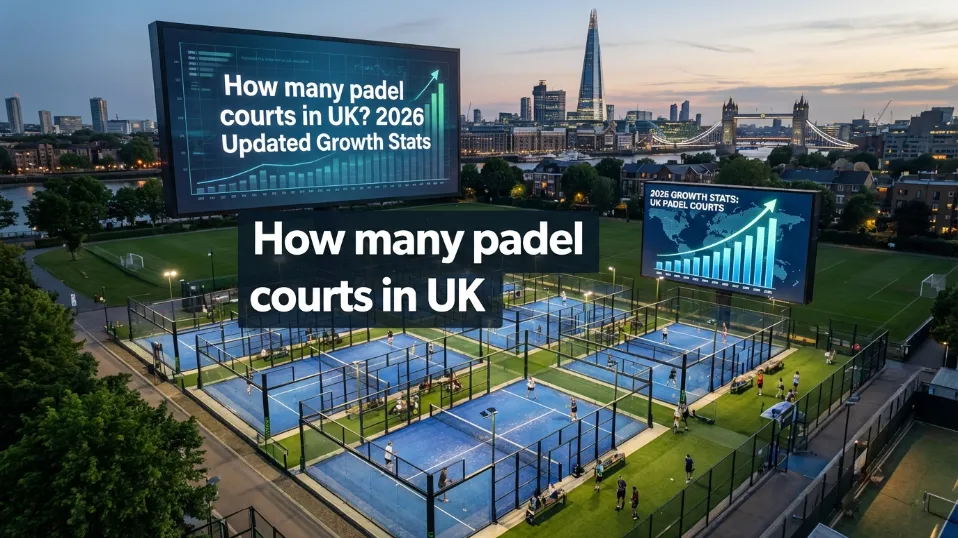
As of April 2026, there are currently 1,553 padel courts in the UK distributed across 559 unique venues. This figure represents a monumental shift in the British sporting landscape, as the infrastructure has more than doubled since the end of 2024, when the count stood at just 870 courts. This rapid expansion, monitored closely by the Lawn Tennis Association (LTA), confirms that padel is no longer a niche curiosity but a primary pillar of the UK’s leisure sector.
how many padel courts are there in the uk
To understand the geographic spread of this phenomenon, we must look at how the 1,553 courts are distributed across the home nations. While England remains the powerhouse of padel development, Scotland and Wales are seeing strategic growth in metropolitan hubs to meet local demand. Below is the regional breakdown of how many padel tennis courts in the uk as of the latest 2026 dataset:
| Region / Nation | Number of Courts (2026 Est.) | Primary Venue Type |
|---|---|---|
| London & South East | 460+ | Premium Commercial Centres |
| Midlands | 195+ | Hybrid Tennis/Padel Clubs |
| South West | 210+ | Public Leisure Centres |
| North of England | 310+ | Industrial Warehouse Conversions |
| Scotland | 145+ | Fully Enclosed Indoor Centres |
| Wales | 95+ | Community & Club Hubs |
| Northern Ireland | 70+ | Emerging Private Developments |
This data highlights a clear trend: London continues to dominate the market share, yet the North of England and Scotland are experiencing the fastest rate of new openings, particularly in the form of massive indoor facilities that bypass the constraints of the British climate. If you are looking to start your journey, understanding the padel tennis court size and layout is essential before stepping onto these high-tech surfaces.
Major Cities Spotlight: London, Manchester, and Birmingham
While regional stats give us the “bird’s eye view,” the real action is happening in the UK’s industrial and financial hearts. Manchester and Birmingham have emerged as the “Padel Capitals of the North,” leveraging their abundance of empty industrial units to create year-round playing environments.
| City | Estimated Court Count | Key Growth Driver |
|---|---|---|
| London | 320 | High-end corporate wellness and luxury clubs |
| Manchester | 115 | Warehouse conversions and social sport culture |
| Birmingham | 140 | Centralised “mega-clubs” with 10+ courts |
In Birmingham, some venues are reporting an 87% occupancy rate, generating over £1.3 million per annum from court bookings alone. This high demand is why many players are now looking into padel school programmes to improve their skills and compete in local city leagues.
The Growth Curve: 2024 vs 2026 Analysis
The speed of the UK Padel boom is best illustrated by comparing the 2024 year-end figures with current 2026 projections. In 2024, the UK reached 870 courts. By mid-2025, it hit the 1,000-court milestone ahead of schedule. As we move through 2026, the growth rate is nearly 78% year-on-year.
- 2019: 68 courts (The infancy stage).
- 2021: 150 courts (Post-pandemic surge).
- 2023: 350 courts (Investor confidence takes hold).
- 2024: 870 courts (The explosion starts).
- 2025/2026: 1,553+ courts (Market maturity and national coverage).
The LTA and private investors have poured over £18 million into infrastructure. However, the most significant shift isn’t just the quantity, but the Return on Investment (ROI). On the footprint of one traditional tennis court, developers can fit three padel courts, effectively tripling the revenue potential of the same land area.
Indoor vs. Outdoor: Navigating the British Weather
A crucial detail for any UK player is the distinction between Indoor and Outdoor courts. Due to the unpredictable British weather, the “Indoor” model has become the gold standard for commercial viability. Currently, approximately 45% of UK courts are indoor or covered, while 55% remain open-air.
Why Indoor Courts are Winning
Outdoor courts face a significant “drop-off” during the winter months, with occupancy rates often falling below 30% during rainy weeks. Conversely, indoor facilities maintain consistent 70-90% occupancy year-round. This has led to the rise of “Canopy Courts”—outdoor courts with high-tensile roof structures that provide protection from rain while maintaining a ventilated, outdoor feel.
The “Missing Gaps”: What Competitors Don’t Tell You
While most articles focus on the glory of growth, there are three critical “missing gaps” in the UK padel market that players and investors often overlook: Booking Bots, Planning Refusals, and the Single Court Dilemma.
1. The Rise of the Booking Bots
In London and Manchester, demand is so high that players have begun using automated booking bots to snag peak-time slots (5 PM – 8 PM) the millisecond they go live on apps like Playtomic or Padel Mates. This has created a “digital arms race,” forcing many clubs to implement “no-bot” policies and manual verification to ensure fair access for the community.
2. Planning Permission: The “Gunshot” Noise Problem
The biggest hurdle to reaching 2,000 courts isn’t money—it’s noise. Padel rackets produce a sharp, staccato sound that has been likened to “gunfire” by residents in quiet areas like Bath and Wiltshire. This has led to numerous planning application rejections. Developers now must invest heavily in acoustic reports and 3-metre-high glazed glass walls to satisfy local councils.
3. The Commercial Viability of a single padel court
Most clubs focus on doubles (20m x 10m), but there is a growing niche for the single padel court (20m x 6m). While these are cheaper to build and perfect for 1-on-1 coaching, they often underperform during peak hours because they only accommodate two paying players instead of four. Smart clubs are using them as “fillers” for odd-shaped spaces or dedicated padel rules training areas.
Digital Courtside: Booking Apps and Culture
The UK padel scene is deeply integrated with mobile technology. Choosing the right platform is vital for venue owners. While Playtomic is the global leader, Padel Mates is gaining traction in the UK due to its lower commission rates and better data ownership for club owners. For a player, the “addictive” nature of the Playtomic rating system is what keeps them coming back to the court to “level up.”
If you’re unsure about what equipment to bring to these venues, learning how to choose a padel racket is the first step. High-end courts often see players sporting the latest Babolat Technical Viper, though many clubs offer rental rackets for beginners.
Future Projections: 2027 and Beyond
Industry analysts forecast that the UK has the potential for 7,000 to 8,000 courts in the long term, matching the density seen in nations like Spain and Sweden. By the end of 2026, the goal is to hit 2,000 courts, supported by more LTA padel tournaments and increased media visibility. To stay updated on the latest professional guidelines, check the official LTA Padel guidance.
How many padel courts in UK: Frequently Asked Questions
As of April 2026, there are 1,553 active padel courts across 559 venues in the United Kingdom.
London leads the nation with approximately 320 courts, followed by Birmingham and Manchester which are rapidly expanding through industrial warehouse conversions.
During off-peak hours, availability is generally good. However, peak times (evenings and weekends) are often booked out weeks in advance, especially in major cities like London and Bristol.
Roughly 45% of UK courts are now indoor or covered to protect against the weather, with 55% remaining as outdoor facilities.
A typical court booking costs between £20 and £45 per hour, depending on the location and whether the venue is a private club or a public centre.
The UK padel boom is a testament to the sport’s accessibility and social appeal. As the infrastructure continues to grow, the 1,553 courts we see today are likely just the foundation for a much larger sporting revolution.