The perfect padel match isn’t won on the court; it’s decided the moment you choose where to buy your gear. With the sport exploding across the UK, finding a dedicated padel racket shop that offers genuine premium brands, expert advice, and British warranty support can feel like chasing a structural boast that’s bound to hit the glass. Whether you are hunting for a high-balance carbon beast to dominate your local London court or looking for a specialist hub near you to test a control racket before committing, settling for a generic high-street sports retailer won’t cut it.
Best Padel Shops — United Kingdom
Location · Showroom · Speciality · Top Brands · 2026
For players demanding immediate physical testing, sensory validation of swing weight, and tailored grip measurements, visiting a brick-and-mortar storefront like VKS Rackets in Ealing or booking an analytical session on the smart test court at padel in Derby stands as the absolute gold standard. Conversely, if your primary buying factor is competitive pricing combined with a guarantee of next-day delivery across mainland UK, large-scale digital warehouses provide the most reliable fulfillment path. Balancing these localized channels ensures you evade counterfeit batches while matching your technical requirements to verified British track records.
Mapping the UK Padel Retail & Experiential Ecosystem
The High-Volume E-Commerce Specialists
The baseline of the British padel supply chain relies heavily on digital distribution centers optimized for rapid operational dispatch. Large-scale operations such as PadelHQ, operating under Flywalk Ltd from Romsey, Hampshire, have completely redefined consumer expectations by holding 100% of their online catalog locally within climate-regulated physical units. This level of systemic operational management eliminates the long transit delays associated with international dropshipping from Mediterranean hubs.
By bypassing third-party fulfillment chains, these specialized domestic hubs process orders in real time to offer reliable next-day delivery windows throughout the UK mainland. Furthermore, they bridge the digital-physical divide by providing structured Click & Collect hours for regional players. This operational framework caters specifically to buyers who know exactly how to choose a padel racket based on pure factory specifications and seek swift, friction-free transactions without logistical bottlenecks.
The Vital Role of London’s Physical Specialty Stores
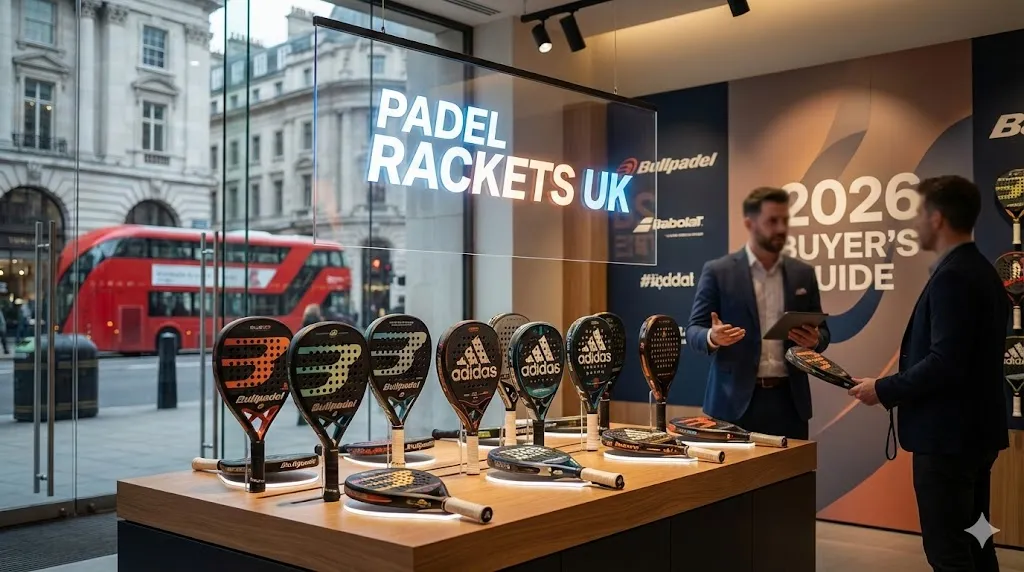
Despite the undeniable convenience of digital checkouts, physical retail remains an irreplaceable component for technical asset acquisition. Specialty storefronts across Greater London preserve a critical link in player performance metrics by allowing players to interact bodily with diverse mold architectures. When players scour regional search queries for specialized padel racket shops, they are fundamentally looking for spaces that offer personal evaluation rather than flat catalog renders.
A prime example is VKS Rackets located in Ealing, West London. This location provides structured, one-on-one professional consultations where individuals can test the structural thickness, ergonomics, and authentic balance points of premium frames. Rather than guessing structural performance online, players can utilize the store’s integrated indoor hitting wall to feel exactly how shock waves transfer through the handle. Similarly, Rackets Kingdom in Teddington maintains a massive structural inventory of over 2,500 rackets, providing hands-on size customization and custom handle profiling that cannot be replicated through an online checkout screen.
The Premium Hybrid Club Model
As the commercial market expands, the line separating pure retail environments from performance training centers has completely dissolved. Top-tier sports facilities have recognized that players want to test top-of-the-line gear in real match conditions rather than just swinging a frame inside a small shop. This evolution has birthed the hybrid pro-shop system, where premium clubs act as official retail test spaces.
Venues like Rocket Padel Battersea (which opened with 4 panoramic indoor courts and a premium pro shop) alongside its expansive sister site at Rocket Padel Ilford (housing 12 high-specification panoramic courts) allow players to rent, test, and purchase the latest high-performance frames mid-match. This setup gives consumers an ideal scenario to try gear directly on the court, ensuring that the selected racket performs perfectly during high-intensity defensive lobs and aggressive overheads before any financial commitment is finalized.
Try Before You Buy: Comparative Analysis of UK Demo Programmes
The Mail-Order Home Demo Scheme
To service players located outside major metropolitan hubs, specialist distributors have developed mail-order demo architectures that deliver test products straight to consumers’ doorsteps. The operational framework pioneered by Padel Shack in Brantham, Manningtree, allows players across mainland Britain to borrow up to two premium frames for a dedicated seven-day evaluation period. This system offers a convenient way to test gear on your own local courts under typical, everyday playing conditions.
From a financial standpoint, this logistical model functions through strict protective parameters:
- Upfront Security Deposit: The buyer pays the full retail value of the selected rackets as a refundable holding bond to protect against structural loss or damage.
- Administrative Processing Fees: A nominal, non-refundable administrative charge is levied, structured symmetrically at £5.00 for in-store arrangements and £8.00 for digital requests.
- Logistical Shipping Freight: A flat £7.00 courier fee handles tracked delivery.
- Late Return Penalties: To ensure high asset rotation, strict late fees fixed at £5.00 per week are deducted from the security bond if the equipment is held past the agreed return window.
Custom Showroom Courts & Smart Ball Feeders
For players searching for an immediate, data-driven alternative to mail-order waiting lists, searching for a tech-enabled padel racket shop near me leads directly to the next phase of retail engineering. Progressive retailers have abandoned standard store aisles to build custom, indoor testing environments designed specifically to measure equipment performance parameters using tracking technology.
A prime example of this analytical approach is PDH Sports in Derby, who partnered with court manufacturer Portico Sport to build a dedicated indoor demo court right within their retail complex. Instead of guessing how a frame behaves under load, buyers book focused 30-minute test sessions powered by automated Dragonet ball-feeding machines. This setup allows players to hit repetitive, identical shots to analyze variations in structural output across different carbon densities under the eye of technical consultants. The booking fee is fully credited against any same-day purchase, creating an efficient and scientifically sound purchasing journey.
Mobile Club-Night Demo Activations
The final operational pillar of the UK demo ecosystem shifts the logistical burden away from the consumer entirely via mobile pro-shop fleets. Companies like Smash Racket Pro in Manchester manage customized vehicles packed with complete product portfolios from leading international manufacturers. These mobile units travel directly to regional sports facilities, delivering elite testing experiences right to established playing communities.
These mobile sessions are completely free for host clubs and provide members with a low-pressure environment to test premium gear on their home courts alongside coach analysis. To encourage on-the-spot orders, these community sessions typically offer a direct 10% promotional discount on retail orders. This outreach strategy serves as a core resource for grassroots clubs across the North West, connecting passionate regional players with top-tier product lines without requiring long travel times to physical city showrooms.
The Winter Playbook: Polymer Physics of Racket Cores under UK Weather
Macromolecular Behaviour of EVA vs. Soft Foam in Cold Climates
One of the most critical structural gaps in standard retail advice is the failure to analyze how local weather conditions alter the chemical and mechanical properties of padel equipment. The unique British climate—characterized by long periods where outdoor playing temperatures drop well below 10°C—directly interferes with the molecular structure of the internal core of your racket. The core material, typically made of Ethylene Vinyl Acetate (EVA) or polyurethane-based Soft Foam, behaves radically differently depending on the ambient temperature.
From a scientific standpoint, drop in temperature forces the polymer chains within standard high-density EVA foam to contract and tighten. This structural contraction dramatically hardens the internal material, transforming what is usually a responsive, shock-absorbing core into a stiff, unforgiving surface. This structural stiffening shrinks the functional sweet spot of the frame, severely reducing the trampoline effect and altering the dynamic response of the racket face upon ball impact.
Biomechanical Ramifications: The Path to Tennis Elbow
Playing with a temperature-hardened EVA core during damp British winters introduces severe biomechanical risks that go far beyond a mere loss of ball control. When a heavy, moisture-laden padel ball collides with an unyielding, cold-stiffened racket face, the core loses its capacity to absorb kinetic energy. Instead of being dissipated within the core’s cellular structure, high-frequency vibrational shock waves travel instantly up the structural handle, through the grip, and directly into the player’s arm.
This continuous physical shock places severe mechanical stress on the extensor carpi radialis brevis tendon, leading directly to lateral epicondylitis—commonly known as tennis elbow. To mitigate these risks during winter play, British players must shift to low-density Soft Foam cores or specialized polyurethane formulations. These highly flexible materials retain their cellular elasticity even in sub-10°C environments, serving as a protective mechanical buffer that shields the player’s joints from chronic stress. If you suffer from arm strain, it is critical to select from the best padel rackets for tennis elbow to ensure your gear matches local seasonal changes.
Managing Heavy Balls and Wet Glass
The difficulties of outdoor play in the UK are further complicated by high atmospheric humidity, which alters ball dynamics and court responses. Standard synthetic felt covers absorb airborne moisture rapidly, significantly increasing the ball’s overall weight and slowing down its rebound speed. When these heavy balls hit wet glass walls, they lose their spin grip and skid low and fast, forcing players into deep, awkward defensive positions.
To combat these heavy winter conditions, players should switch to high-performance, pressurized ball models featuring water-resistant synthetic fibers, such as Bullpadel Premium Pro lines. Additionally, using airtight storage pressurisers is essential for preserving structural integrity, as these devices prevent inner core pressure loss between winter matches and save players from having to replace dead balls constantly.
Footwear Biomechanics: Decoupling Court Surfaces and Joint Injuries
Traditional Sandy Turf vs. Modern “Mondo” Court Technologies
Selecting the right footwear for playing in the UK requires a clear understanding of the mechanical differences between older, traditional court layouts and modern indoor surfaces. The British landscape is filled with a mix of outdoor courts that use traditional artificial grass covered with a thick layer of loose silica sand, alongside modern, premium indoor facilities that use low-sand, textured Mondo turf systems.
The presence or absence of loose silica sand completely alters the friction dynamics between your shoe’s outsole and the court surface. Traditional sandy courts require an outsole design that can cut through loose surface grains to find traction on the underlying synthetic fibers, whereas low-sand Mondo courts rely on direct rubber-to-fiber contact, demanding a completely different approach to grip management.
The Clay Court Shoe (Herringbone) Friction Trap
Many general sports retailers mistakenly advise players to use standard clay-court tennis shoes for all types of padel play. While a deep, zig-zag herringbone pattern provides excellent stability on thick, sandy outdoor courts by clearing loose sand out of the way, using that same deep pattern on low-sand Mondo indoor turf creates a highly dangerous situation for your joints.
Because there is virtually no loose sand on a modern Mondo court, the sharp edges of a deep herringbone outsole bite directly and deeply into the exposed synthetic turf fibers. This creates an immediate spike in traction, leading to a phenomenon known as rotational lock-up. When a player attempts to pivot rapidly during a match, the shoe remains completely locked to the floor while the rest of the body rotates. This sudden stop transfers intense twisting forces directly up into the leg, risking serious injuries such as tears to the anterior cruciate ligament (ACL) or meniscus. To prevent these severe mechanical injuries, it is vital to invest in specialist padel shoes designed specifically to handle modern turf technologies.
The Slip Hazard: Why All-Court Tennis Shoes Fail on Sand
Conversely, attempting to tackle a traditional, sand-heavy outdoor court using standard all-court tennis shoes designed for hard courts introduces the exact opposite hazard. The flat, wide tread patterns of hard-court shoes cannot grip properly on loose silica sand, causing the shoe to slide uncontrollably across the surface like rolling on tiny ball bearings.
This lack of grip leads to unstable sliding, a complete loss of deceleration control, and a high risk of rolling your ankle during quick lateral changes of direction. Furthermore, the constant friction against abrasive sand particles rapidly wears down the flat rubber soles of hard-court shoes, destroying their grip characteristics within a few months of regular play.
The Hybrid Padel Soles Solution
To resolve these conflicting traction demands, footwear manufacturers have developed specialized hybrid outsoles tailored specifically for modern padel play. These innovative designs combine shallow herringbone patterns with specific textured dot matrices to deliver reliable performance across varying sand levels. Crucially, these outsoles integrate smooth, circular pivot points under the ball of the foot. These pivot points allow the shoe to rotate smoothly on high-grip surfaces, minimizing dangerous twisting forces on the knees and ankles while maintaining excellent grip during straight-line acceleration.
Navigating Your Purchase: Hyperlocal Options Across the UK
Choosing Your Specialized Padel Channel
When searching for reliable padel racket shops near me, it becomes clear that the UK market is divided into distinct regional buying channels, each catering to different consumer priorities. For players looking for the absolute lowest price or specific discount deals, large online platforms provide a simple buying route. However, this path requires you to know exactly what specifications you need, as you sacrifice the ability to feel the product in your hand before buying.
For players who want expert guidance and hands-on evaluation, local pro-shops and specialized sports stores are the go-to choice. These physical storefronts help you avoid the common pitfalls of online shopping, ensuring you buy equipment that matches your actual skill level and physical needs. Let’s look at how these specialized options compare head-to-head across major regions in the UK:
Head to Head: Regional UK Retail Showdowns
The London Matrix: Walk-In Specialisation vs. Premium Venue Pro-Shops
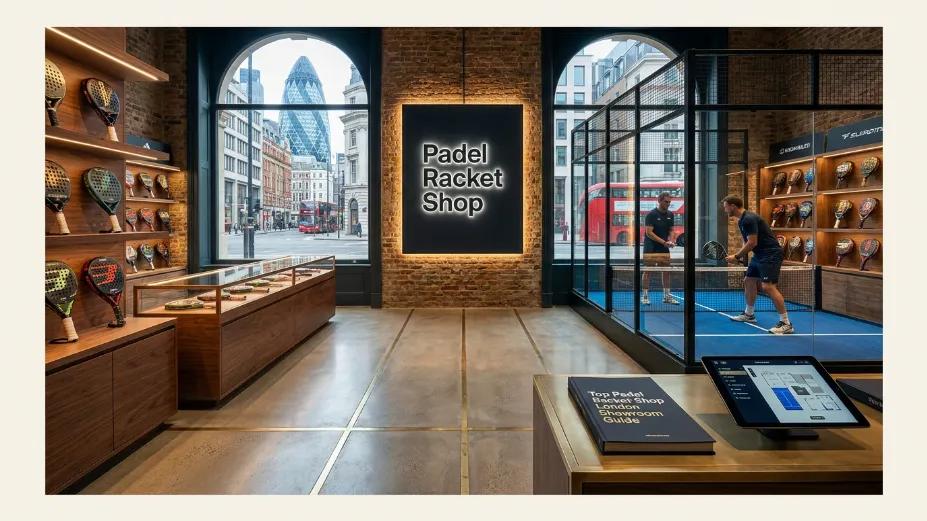
In the capital, the search for a top-tier padel racket shop london usually comes down to a choice between independent retail stores and premium club pro-shops. Independent stores like VKS Rackets in Ealing focus on giving players customized, one-on-one attention, using physical testing tools like indoor hitting walls to analyze your swing mechanics. This traditional retail approach allows you to compare different brands like Babolat padel rackets side-by-side with heritage lines like Slazenger padel rackets, helping you evaluate grip sizes and weight setups before spending any money.
On the other side, premium venue pro-shops, like the one at Rocket Padel Battersea, offer an experience built around real-world performance testing. Instead of just holding a racket in a showroom, you can take premium demo frames directly onto panoramic indoor courts to see how they handle under true match conditions. While independent retailers often provide a broader selection of brands and more flexible pricing, club pro-shops offer the unbeatable advantage of real-world on-court testing, making them an excellent choice for intermediate and advanced players who want to see exactly how a frame performs under pressure.
The Regional Landscape: Mail-Order Testing vs. Dedicated Test Courts
Outside of London, players looking for a trusted padel racket shop near me must choose between national mail-order demo programs and destination showrooms equipped with dedicated test courts. The mail-order model, led by companies like Padel Shack, offers incredible convenience by shipping up to two demo rackets anywhere in the UK, giving you a full week to test the gear on your home courts. This is a fantastic option for players living far from major cities, though it does involve dealing with upfront security deposits and shipping fees.
In contrast, destination showrooms like PDH Sports in Derby provide a high-tech, immediate alternative. By investing in an indoor testing court equipped with automated ball machines, they allow you to test multiple rackets back-to-back under perfectly controlled conditions with expert guidance. This eliminates the waiting times and shipping costs of mail-order programs, making tech-enabled destination showrooms the premier choice for players who want a fast, data-driven buying experience.
Protecting Your Investment: Combatting Counterfeits and Damaged Parallel Imports
The Dark Side of the Market: $15 Chinese Counterfeits
The massive surge in padel’s popularity across the UK, combined with the premium price tag of high-end equipment, has unfortunately triggered a major rise in counterfeit products. Rogue manufacturers operating from unauthorized overseas factories produce cheap copies of highly sought-after models, such as the Adidas Metalbone or Nox AT10 series. These fakes look nearly identical to the real thing on the outside but cost less than $15 to manufacture, and they are frequently sold online at misleadingly low prices to trap unwary buyers.
These counterfeit operations use clever cosmetic tricks, replacing premium carbon fiber weaves with cheap fiberglass layers covered by a printed graphic that mimics the look of high-grade carbon. The inside of the racket is filled with low-grade industrial foam that offers zero elasticity or shock absorption. These poorly made fakes tear apart and crack within weeks of use, and they pass dangerous vibration forces directly into the user’s hand, presenting a serious injury risk.
To protect yourself from these fraudulent products, follow this step-by-step physical inspection guide:
- Verify Weight Accuracy: Authentic manufacturers follow incredibly tight production tolerances. Use a digital scale to weigh the frame; any deviation greater than 10 to 15 grams from the official factory specification is a clear warning sign of a counterfeit product.
- Inspect Serial Numbers and Security Marks: Genuine rackets feature clean, laser-engraved serial codes directly on the frame or handle base. Counterfeit models often use cheap stickers or lack these unique identifiers entirely.
- Perform an Acoustic Test: Tap the center of the face; a real carbon fiber frame produces a crisp, clear sound, whereas a fake fiberglass substitute emits a flat, hollow noise due to poor internal bonding.
- Check the Retailer’s Credentials: Be highly suspicious of online sellers offering permanent discounts of over 30% off standard retail prices outside of official seasonal sales windows, or companies that do not provide a verified UK address.
The Thermal Danger of “Grey” Parallel Imports
Beyond outright counterfeits, British consumers face another major risk in the form of unauthorized grey-market parallel imports. Some unauthorized online operations buy genuine rackets in bulk from warmer Southern European regions and transport them into the United Kingdom using low-cost, non-temperature-controlled shipping containers. This cut-rate transport method can severely damage the quality of the product before it ever reaches the customer.
During long transit routes across the continent, these shipping containers are exposed to extreme temperature swings and high humidity. This intense heat exposure degrades the delicate internal structures of high-quality EVA foams, causing the core material to harden prematurely or lose its structural bond. This leaves the buyer with a dead core racket that lacks its original flexibility and power. To make matters worse, because these items were sourced outside official distribution channels, they do not come with an authentic UK manufacturer’s warranty, leaving the buyer completely unprotected if the frame breaks.
The Specialist Checklist: How to Verify Your Retailer
To avoid these grey-market pitfalls, always check the operational setup of an online store before buying. A major warning sign is any store using automated dropshipping systems, which you can usually spot by long shipping estimates of 5 to 10 days for items coming from continental European warehouses. Always verify that the store has a registered UK corporate office and check that they are listed as an approved seller on the official websites of major brands. This ensures your purchase is fully protected by a valid domestic warranty.
Strategic Expert Recommendations & Conclusion
The Dual-Racket Seasonal Strategy
To maintain peak performance and protect your health across the changing British seasons, dedicated year-round players should adopt a smart, two-racket strategy. Instead of trying to use a single frame through all weather conditions, invest in two distinct models tailored to seasonal changes:
- A Winter Performance Frame: Select a model equipped with a soft, flexible core to handle cold outdoor temperatures, ensuring the racket maintains its shock absorption and guards your arm against tennis elbow during winter play.
- A Summer Aggression Frame: Choose a stiffer, high-density EVA frame for hot summer months or heated indoor centers, allowing you to maximize power and precision without worrying about the core becoming too soft in the heat.
Core-to-Court Footwear Matching
Make sure your footwear choices are based strictly on the type of court surface you play on most often. If your home club uses traditional outdoor courts with thick sand layers, use deep herringbone outsoles to ensure reliable lateral stability. If you play at modern indoor centers featuring low-sand Mondo turf, switch to hybrid outsoles equipped with built-in pivot points to allow smooth rotational movement and protect your knees from dangerous twisting forces.
Supporting the Local Ecosystem
Ultimately, purchasing your gear through authorized domestic distributors and specialized local pro-shops is the best way to safeguard your investment. By supporting genuine UK retail networks, you get access to invaluable hands-on demo programs, expert fitting advice, and reliable warranty support. This premium retail experience ensures you step onto the court with authentic, high-performance equipment tailored perfectly to your game and built to withstand the unique challenges of the British environment.
Frequently Asked Questions (UK Padel Retail Field Guide)
How do cold UK winter temperatures affect premium EVA racket cores?
When temperatures drop below 10°C, the polymer chains inside high-density EVA foam contract and harden. This structural change significantly reduces the racket’s natural sweet spot and cuts down its shock-absorbing capabilities, turning the face into a stiff, unforgiving hitting surface.
Can using the wrong padel shoes cause severe knee injuries on modern indoor courts?
Yes. Wearing deep herringbone clay-court shoes on low-sand Mondo indoor turf can cause the tread to lock directly into the synthetic fibers. This high traction can cause rotational lock-up, transferring severe twisting forces straight to your knees and ankles during quick turns, risking serious ligament tears.
What are the main risks of buying grey market parallel imports online?
Grey market rackets are often transported across Europe in non-temperature-controlled shipping containers. The extreme heat exposure during transit can permanently degrade the internal EVA foam structure, leaving you with a dead core racket. Furthermore, these products do not carry an official UK manufacturer’s warranty if structural failures occur.
How can I verify if a padel racket is a cheap counterfeit before buying?
Always verify the frame’s weight on a digital scale; any variation greater than 10 to 15 grams from the official factory specifications is a major red flag. Additionally, look for crisp, laser-engraved serial codes, perform an acoustic tap test to check for real carbon density, and avoid online shops offering permanent discounts of over 30% off standard retail prices.