Nothing ruins a friendly match at your local UK club faster than a heated dispute over a “high” serve or a foot fault. Whether you are playing at a Smash Padel Cardiff court or a local centre in London, understanding the padel serve rules is the first step toward dominating the court. Unlike tennis, where the serve is a weapon of raw power, the serve in Padel is a tactical tool designed to keep your opponents at the back of the court and allow you to take the net.
In this guide, we will break down the essential padel serving rules, address the “missing angles” that most guides overlook, and ensure you are fully compliant with the latest 2026 regulations. If you are just starting your journey, you might also want to check our guide on how to play padel to get a head start on the basics.
The Fundamental Padel Rules Serve Checklist
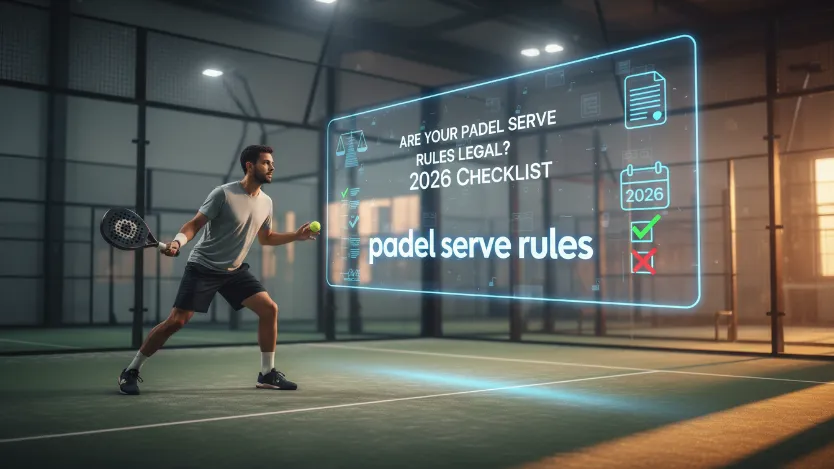
Before we dive into the technical nuances, let’s cover the non-negotiable basics of serving rules in padel. Every legal serve must adhere to these three pillars:
- The Underarm Requirement: All serves must be struck underhand. Overarm “smash” serves are strictly illegal.
- The Bounce: You must drop the ball and let it bounce once behind the service line before making contact. You cannot hit the ball directly from your hand.
- Diagonal Execution: The serve must travel cross-court into the opponent’s service box. If you are serving from the right, the ball must land in the receiver’s right-side box (from their perspective).
Mastering Your Padel Serve Rules Position
One of the most common errors in amateur Padel is a “foot fault.” To maintain a legal padel serve rules position, you must ensure that:
- Both feet are strictly behind the service line (the horizontal line at the back of the court).
- You are standing between the imaginary extension of the centre line and the side wall.
- At the moment of impact, at least one foot must be touching the ground. Jumping into a serve is a fault.
The 2026 Update (Missing Angle): A common point of confusion is whether your body can lean over the line. While your feet must be behind the line, the latest 2026 FIP clarifications state that the point of impact (where the racket hits the ball) must also be behind the service line. Many players lean forward and strike the ball “inside” the court—this is now being strictly penalised in competitive UK tournaments.
The Waist-Height Controversy: Where is the Limit?
The padel serve rules state that the ball must be struck at or below “waist height.” But where exactly is the waist? This is a major “information gap” in many online guides.
In most UK clubs, the “waist” is interpreted as the height of the player’s belly button. If you strike the ball even slightly above the naval, your opponent has the right to call a fault. For taller players, this can be a disadvantage, as their waist is naturally higher from the ground. To avoid disputes, focus on a low, controlled drop rather than trying to gain height for extra power.
The Bounce: In vs. Out (Glass and Fence)
Understanding where the ball lands after it bounces in the service box is crucial for both the server and the receiver. Here is the technical breakdown:
- The Service Box: The ball must land within the boundaries of the diagonal service box. If it hits the line, it is IN.
- The Glass Wall: If the ball bounces in the box and then hits the side or back glass, the serve is IN and the play continues.
- The Wire Fence (The Trap): If the ball bounces in the box and then hits the wire mesh fence before the second bounce, it is a FAULT. This is a common point of contention. In general play, the fence is “in,” but during a serve, it is a dead ball.
For consistent results, ensure you are using high-quality equipment. We recommend checking out the latest head padel balls for a predictable bounce that respects the padel serving rules.
Let’ Rules: When to Re-serve
A “Let” is called when the serve is technically correct but interrupted by the environment. The most common “Let” occurs when the ball clips the top of the net and lands inside the correct service box. However, there is a catch:
- If the ball clips the net and lands outside the box, it is a FAULT.
- If the ball clips the net, lands inside the box, and then hits the fence, it is a FAULT (not a let).
For more detailed tournament regulations, you can refer to the Official LTA Padel Regulations.
Equipment Matters: Rackets for the Perfect Serve
While the rules dictate *how* you serve, your racket dictates *how well* you serve. A racket with a good “sweet spot” allows for better control over the height and spin of your serve. For those looking to upgrade, browse our selection of the best padel rackets UK to find a model that fits your style. Whether you prefer a power-heavy Head Gravity Pro Padel or a more forgiving Head Flash Padel Racket, your equipment should help you stay within the padel rules serve guidelines.
Missing Angles: Tactics the Pros Use
Most beginners serve just to “get the ball in.” To play like a pro, you need to exploit the serving rules in padel to your advantage:
- The Slice Serve: By brushing the back of the ball with a high-to-low motion, you create a backspin that makes the ball stay low after hitting the glass. This makes it incredibly difficult for the receiver to return.
- The “T” Serve: Aiming for the centre line (the “T”) limits the receiver’s angles and forces them to move away from their comfort zone.
- The Side-Wall Strategy: Aiming for the ball to hit the side glass after the bounce forces the receiver to deal with an unpredictable rebound.
Frequently Asked Questions: Padel Serve Edition
Can I take a walking step while serving?
Technically, you must have one foot on the ground, and you cannot run or jump. Small “adjustment” steps are generally overlooked in social play, but in competitive matches, any significant movement during the padel serve rules position setup can be called a foot fault.
Is it legal to serve with two hands?
Yes, there is no rule forbidding a two-handed serve, though it is rare because it limits the reach and “slice” potential required for an effective Padel serve.
What happens if I swing and miss the ball?
If you attempt to hit the ball and miss, it is a FAULT. If you drop the ball but decide not to swing, you can pick it up and try again without penalty.
Does the ball have to hit the glass?
No. The ball only *needs* to land in the box. Hitting the glass is a tactical choice, not a requirement of the padel serve rules.
Can I serve from the “wrong” side?
If you serve from the wrong side and the point is finished, the result stands. If the error is noticed during the point, the point is replayed from the correct side.
Final Thoughts
Mastering the padel serve rules is about consistency and legality. By ensuring your impact is below the waist and your feet stay behind the line, you remove the risk of losing “easy” points. Ready to take your game to the next level? Make sure you have the right footwear to maintain your grip during the serve by checking out our latest padel shoes collection.
For more insights into the game, explore our comprehensive guide on what is padel and join the conversation at The Padel Gang.