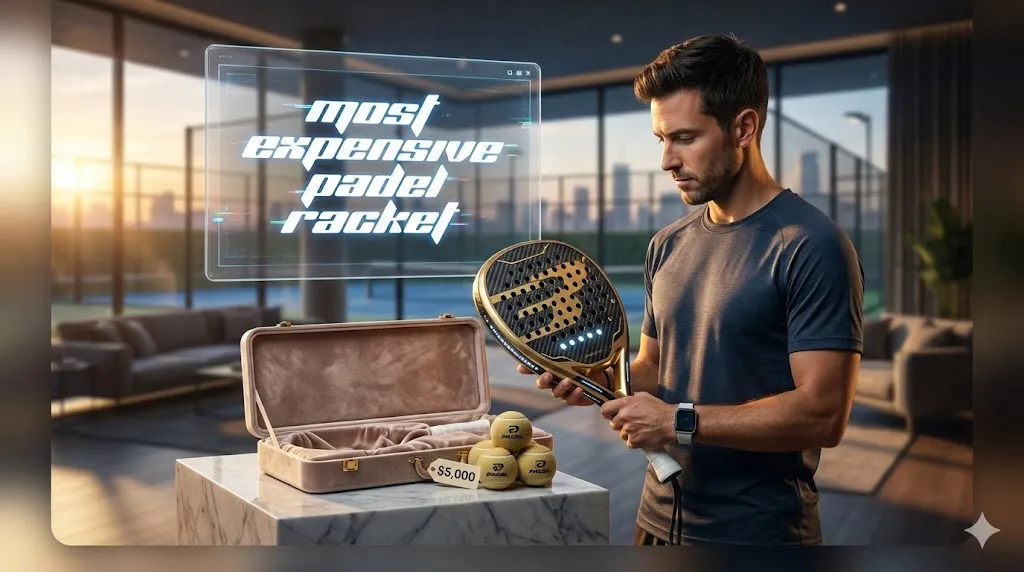
Imagine stepping onto the court with a racket that costs more than a decent second-hand car. In the booming UK Padel scene, equipment prices are skyrocketing, leaving players to wonder: are we paying for groundbreaking engineering, or just a fancy logo? The gap between a standard club racket and the most expensive padel racket on the market has never been wider.
Whether you are a seasoned pro at the local club or a curious observer of luxury trends, understanding the “why” behind these four-figure price tags is crucial. Is a £2,000 Prada racket actually playable? Does the latest 2026 tech from Bullpadel or Nox justify the £400+ investment? In this comprehensive guide, we strip away the marketing gloss to reveal the most expensive padel racket in the world, separate fashion gimmicks from performance necessities, and help you decide where your money is best spent.
The Record Breakers: What is the Most Expensive Padel Racket in the World?
When we discuss the absolute upper echelon of pricing, the market splits into two distinct categories: High-Fashion Statements and Hyper-Technical Engineering. The former is designed for the wall; the latter is designed to dominate the cage.
The “Fashion” Tier: Wall Art vs. Sports Equipment
Luxury fashion houses have identified Padel as the sport of the elite, leading to the creation of equipment that prioritises exclusivity over aerodynamics. Brands like Versace, Tiffany & Co., and Prada have released rackets that often retail between £1,500 and £3,000.
However, players asking “Why do luxury fashion rackets cost double the price of pro-level technical brands?” need to understand the reality. Often, these are standard composite moulds wrapped in designer leather or branded vinyl. While a Prada padel racket might turn heads in the clubhouse, it is rarely optimised for the fast-paced, technical demands of a competitive match. They are status symbols, not performance tools.
The “Collab” Tier: When Supercars Meet Carbon Fibre
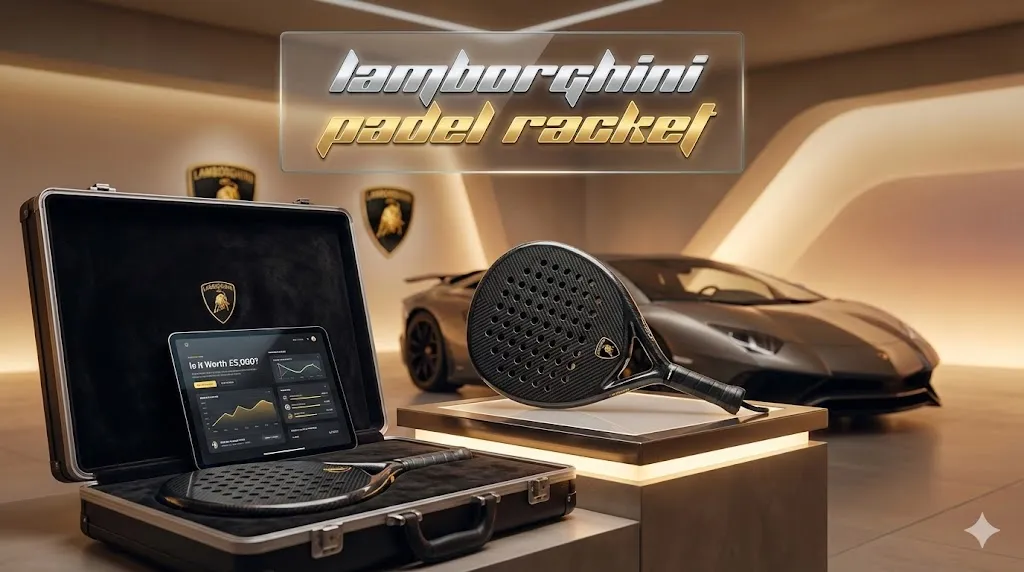
Sitting comfortably between luxury and performance is the collaboration sector. The undisputed king here is the Babolat x Lamborghini BL002. Unlike the fashion brands, this is a legitimate piece of sporting engineering.
Utilising the same carbon fibre expertise found in Lamborghini’s chassis, this racket offers genuine aerodynamic benefits. However, with a price tag often exceeding £1,000, it begs the question: is it five times better than a standard Babolat? For the collector, yes. For the player, it represents the absolute peak of the Lamborghini padel racket ecosystem—a fusion of automotive prestige and court performance.
The High-Performance Elite: Most Expensive Padel Racket 2026 (That Pros Actually Use)
Moving away from collectors’ items, let’s focus on the “real” world. When serious players search for the most expensive padel racket 2026, they are looking for the absolute best technology money can buy to improve their game. This year, the leading manufacturers have pushed the boundaries of materials science.
The 2026 market is characterised by 18K and 24K Aluminised Carbon, multi-density EVA cores, and complex aerodynamic throat designs. Here is a deep dive into the models commanding the highest prices this season:
- Nox AT10 Luxury Genius (Agustín Tapia Limited Edition):
Every year, the “Limited Edition” pack from Nox sells out instantly. The 2026 iteration features a unique combination of 18K Alum Carbon and a multi-layered core. The “pack” experience (including wristbands and keychains) drives the price up, but the racket itself is a technical marvel. The Nox padel racket range remains the benchmark for manoeuvrability and touch.
- Adidas Metalbone HRD+ (Ale Galán Edition):
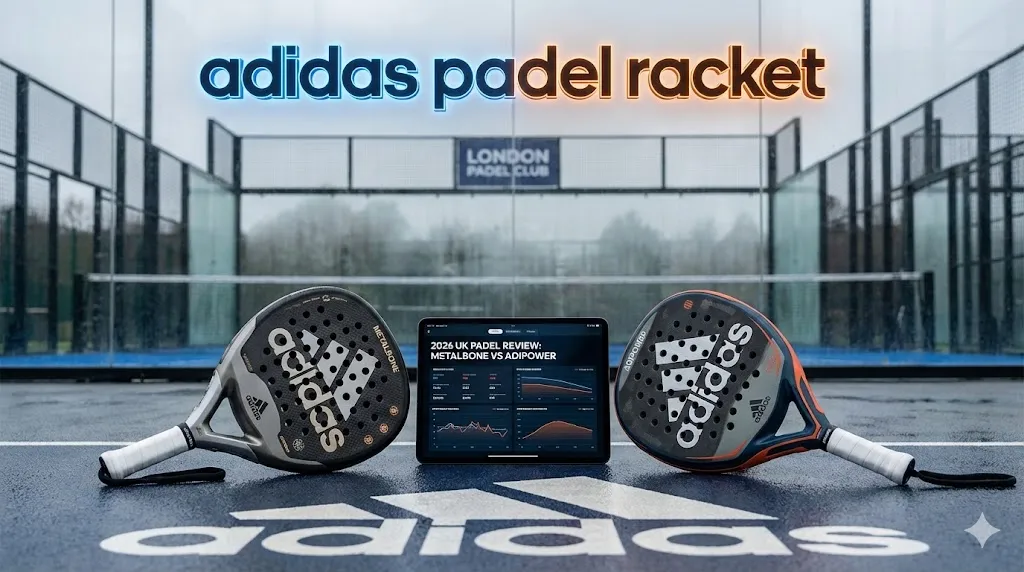
Known for its weight-balance system, the Metalbone allows players to customise the racket’s handling. The HRD+ (Hard) version is notoriously difficult to use for beginners but offers explosive power for advanced smashers. It sits at the top of the price chain due to the complexity of its manufacturing process.
- Bullpadel Vertex 04 Pro (Juan Tello / Chingotto Editions):
The Vertex series is arguably the most popular high-end racket in the UK. The 2026 Pro version introduces new “Curvaktiv” technology in the frame to resist twisting. A premium Bullpadel padel racket is often the safe bet for players wanting maximum power without risking an obscure brand.
- Handmade Spanish & Portuguese Excellence:
We must also mention brands like Siux, Shooter, and Cork Padel. Unlike mass-produced models from China, some of these are hand-finished in the Iberian Peninsula. A Cork Padel racket, for example, uses a unique anti-vibration cork coating. The labour-intensive production justifies a price tag that often exceeds mass-market brands, appealing to players who value craftsmanship over marketing.
Common Question: Do pro players actually use the exact retail version of these expensive rackets?
In 2026, the answer is “mostly yes, but with tweaks”. While the mould and carbon are often identical to what you buy in the shop, pros will customise the weight and balance lead tape to extreme specifications. However, buying the retail “Pro” version gets you 95% of the way there.
Anatomy of a Price Tag: Why Do Some Rackets Cost Over £400?
Understanding the padel racket most expensive components can help justify the investment. It’s not just inflation; it’s materials science.
Carbon Fibre Quality (12K vs. 24K vs. Aluminised)
The “K” refers to the number of threads per carbon strip (12,000 vs 24,000). Generally, a higher K number means a denser, often stiffer feel (though this depends on the weaving).
Is the price difference between 12K and 24K carbon fibre noticeable for intermediate players?
Honestly, probably not. While 24K Aluminised Carbon sounds impressive, it requires a very high ball-striking speed to activate the material’s rebound properties. An intermediate player might actually generate less power with a £450 24K racket than with a softer, cheaper fibreglass mix.
The Mould and R&D
Developing a new mould costs tens of thousands of pounds. Cheap brands reuse open moulds (generic shapes), whereas premium brands engineer proprietary aerodynamics, such as the air channels in the Bullpadel Vertex or the octagon structure of the Adidas Metalbone. You are paying for the engineers, not just the graphite.
The Durability Paradox: Do Expensive Rackets Break Easier?
This is the most common complaint on forums from London to Leeds: “I bought the most expensive padel rackets and they cracked in a month!”
Does a £400 racket actually last longer than a £150 one?
Paradoxically, often no. High-performance rackets are built like Formula 1 cars: stiff, precise, and highly stressed. They are designed for maximum energy transfer, not for hitting the glass wall or clashing with your partner’s racket.
A softer, cheaper racket (often made with more glass fibre) is more flexible and can absorb impacts better without cracking. Furthermore, expensive rackets often use a diamond padel racket shape, which pushes the weight to the top. If you clip the glass with the top of a diamond frame, the leverage force is immense, leading to cracks.
Why does my expensive diamond-shaped racket feel “dead”?
If you don’t hit the sweet spot (which is tiny on pro rackets), the ball goes nowhere. This isn’t a defect; it’s a skill issue. The “dead” feel is the racket telling you that you missed the centre.
Buying Guide: Should You Invest in a Premium Racket?
Before you drop £400, consider your level. If you are still mastering the basics, a cheap padel racket or a mid-range option is often superior because it offers a larger sweet spot and more “free” power.
- Buy Premium If: You are an advanced player (Level 5.0+), you compete in tournaments, and you need the specific texture and stiffness to control heavy spins. Also, consider premium if you have arm issues; brands like Cork or specific anti-vibration technologies in high-end models can help (though no racket cures injury).
- Stick to Mid-Range If: You play recreationally once a week. A Decathlon padel racket (Kuikma PR990 series, for example) offers 90% of the performance for 25% of the price of a designer brand.
For official regulations on racket specifications, always refer to the standards set by the International Padel Federation (FIP).
Frequently Asked Questions
1. What is the most expensive padel racket in the world right now?
Currently, the Babolat x Lamborghini BL002 holds the title for technical rackets, often exceeding £1,000. However, fashion pieces from brands like Prada can retail for over £2,000.
2. Is a harder racket better for tennis elbow?
Generally, no. Stiffer, expensive carbon rackets transfer more vibration to the arm. If you suffer from tennis elbow, look for softer foam cores (Polyethylene) or specific anti-vibration systems, rather than just buying the most expensive model.
3. Why are handmade Spanish rackets so expensive?
Brands like Shooter Padel or Cork manufacture in Europe with strict quality control and premium finishes, whereas most major brands mass-produce in Asia. You are paying for European labour costs and detailed craftsmanship.
4. Do limited edition rackets hold their value?
Rarely. Unlike watches, padel rackets are consumables. The foam core degrades over time even if not used. While a pristine 2026 Limited Edition might have some collector value, used rackets depreciate quickly.
5. What is the best expensive racket for power?
The Adidas Metalbone HRD+ and the Bullpadel Vertex 04 are widely considered the gold standard for power players in the 2026 market.