You know that feeling when you connect with the ball perfectly, yet it lacks that explosive “kick” to clear the fence? It is a frustration many players on the UK circuit face. Often, the issue isn’t your technique; it is your equipment. If you are looking to dominate the aerial game, upgrading to a diamond padel racket might be the game-changer you need.
However, these rackets are not just about brute force. They require a specific style of play and a level of technical competency. In this comprehensive guide, we will dissect everything you need to know about the diamond shape—from its mechanics and suitability for intermediate players to the truth about kids diamond padel rackets. Whether you play indoors in Manchester or outdoors in London, understanding your gear is the first step to mastering the court.
Before we dive in, if you are still exploring the wider market, check out our complete guide to padel rackets in the UK to see how diamond shapes compare to other profiles.
The Basics: What Actually Defines a Diamond Shape Padel Racket?
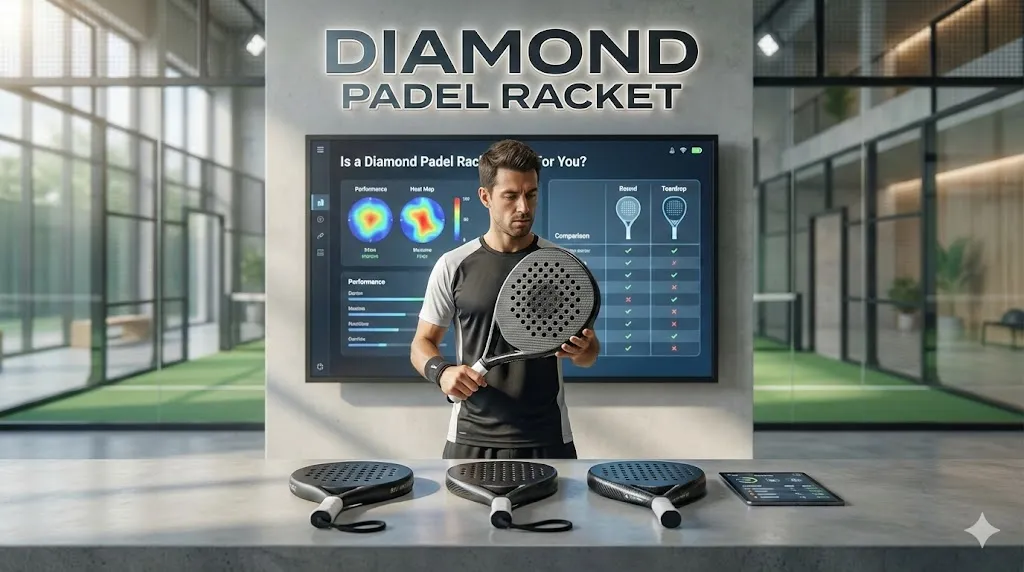
At first glance, a diamond shape padel racket is easy to identify: it is wider at the top, resembling an inverted pyramid or a diamond stone. But the real magic lies in the physics of how it plays.
High Balance (Head Heavy)
Unlike round rackets where the weight is distributed closer to the handle (low balance), diamond rackets carry their mass at the head. This “high balance” acts like a hammer. When you swing, the weight at the tip generates significant momentum, translating into pure power when you contact the ball. This is why they are the preferred weapon for aggressive players who thrive on smashes and Viboras.
The Sweet Spot Location
One critical adjustment for players switching to this shape is the sweet spot. On a diamond racket, the sweet spot is located higher up the face, not in the dead centre. This means you must adjust your positioning to hit the ball slightly higher relative to your body. While this maximises leverage for power shots, it can make the racket feel less forgiving on off-centre hits.
For official regulations regarding racket dimensions and playing standards in Britain, you can refer to the LTA Padel Equipment Guide.
Suitability: The “Am I Good Enough?” Dilemma
A common myth circulating in clubs is that diamond padel rackets are strictly reserved for advanced professionals. While they are certainly less forgiving than round models, they are not off-limits for ambitious intermediates.
Can an Intermediate Player Use One?
Yes, but with caveats. If you have a consistent overhead technique and struggle to finish points, a diamond racket can help. However, be prepared to sacrifice some control at the back of the court. The high balance makes the racket feel heavier and slightly harder to manoeuvre quickly for defensive blocks or digging out low balls.
If you feel you aren’t quite ready for the full aggression of a diamond shape, there are excellent best padel racket for intermediate options that offer a “teardrop” hybrid shape, balancing power and control effectively.
Performance & Mechanics: A Deep Dive
When selecting the best diamond padel racket for your game, you must consider more than just the shape. The materials used in the core and face play a massive role, especially in the UK climate.
Hard vs. Soft Diamond: The UK Weather Factor
In Spain, where it is hot, balls bounce high naturally. In the UK, especially during winter, the cold and damp conditions make the ball heavy and the glass walls sluggish.
- Hard Diamond Rackets: Offer maximum power but require precise technique. In cold weather, they can feel like hitting with a plank of wood if you don’t have a fast swing speed.
- Soft Diamond Rackets: These use a lower density EVA or a fibreglass face. They provide a “trampoline effect,” helping to eject the ball with less effort. For many UK players, a “Soft Diamond” is the secret weapon to maintaining power in winter conditions without sacrificing comfort.
The Pro Example
Consider the World Padel Tour stars. Players who play on the left side (the aggressive side) almost exclusively use diamond shapes to dictate play. A prime example is Ale Galán, whose aggressive aerial game is perfectly complemented by his equipment choices. You can read more about Ale Galán and his style of play to understand how a diamond racket functions at the elite level.
Rough vs. Smooth Surface
Many diamond rackets come with a rough, sandpaper-like finish. This texture helps “bite” the ball, generating massive spin on Bandejas and Viboras. Since diamond users are typically attacking players, this rough surface is a highly recommended feature to look for.
The Truth About Kids Diamond Padel Rackets
We often see parents searching for kids diamond padel rackets because they want their children to have the “most powerful” gear. This is generally a mistake that needs addressing.
Why You Should Be Careful
While some junior models mimic the aesthetic of pro diamond rackets (like a mini Bullpadel Vertex), true diamond-shaped rackets are rarely suitable for children under 12. The head-heavy balance places significant strain on a developing wrist and elbow. A child’s mechanics are usually not developed enough to handle the leverage of a diamond shape without risking injury.
For juniors, a round or light teardrop shape is vastly superior for learning control and technique. If your child is an advanced junior competitor, look for specific “Junior Pro” models that are significantly lighter (under 330g) to mitigate the balance issues.
Comfort & Health: Avoiding the “Tennis Elbow” Trap
One of the few downsides of diamond padel rackets is the increased risk of Epicondylitis (Tennis Elbow). Because the weight is further from your hand, the vibrations from off-centre hits are amplified before they reach your arm.
How to Mitigate the Risk
- Vibration Dampeners: Use accessories like “ShockOuts” inserted into the holes of the racket face.
- Undergrips: A specialised undergrip (like Hesacore or X-Grip) can reduce the vibration transmission to your hand.
- Weight Management: If switching from round to diamond, consider choosing a model that is 5-10g lighter than your previous racket to compensate for the balance shift.
Additionally, taking care of your equipment is vital. Temperature fluctuations can harden the foam core, making the racket vibrate more. Always store your racket in a thermal padel racket cover to maintain its core properties and protect your arm.
Buying Guide: Finding the Best Diamond Padel Racket
Ready to make the switch? Here is a breakdown of the top brands and models dominating the diamond category in the UK market.
1. Bullpadel (The Market Leader)
Bullpadel is synonymous with power. Their “Vertex” and “Hack” lines are arguably the most popular diamond rackets globally. They feature Hesacore grips as standard and aerodynamic frames for faster swings. Explore the full range of Bullpadel diamond options to find a model that fits your budget.
2. Adidas (The Tech Giants)
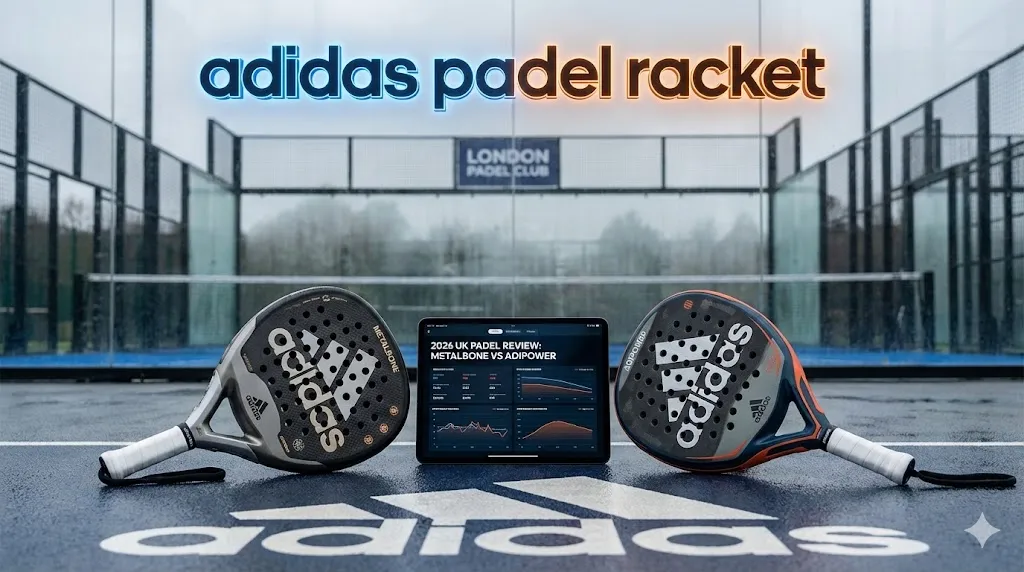
Adidas rackets, particularly the Metalbone series, offer a unique “Weight & Balance System” that allows you to customise the racket’s balance. This is perfect for players who want to tweak their racket for different match conditions. Check out the latest Adidas padel rackets.
3. Babolat (The Explosive Choice)
Babolat simplifies their range into “Viper” (Hard), “Veron” (Hybrid), and “Vertuo” (Soft). Their “Technical Viper” is a classic diamond shape designed for precision power. If you want explosive output, review the Babolat padel racket collection.
4. Head (The Hybrid Innovation)
Head often blurs the lines with “diamond-teardrop” hybrids like the Extreme Pro. These offer a slightly larger sweet spot than traditional diamonds. See the Head padel racket range for versatile power options.
Budget Considerations
High-performance diamond rackets can be expensive. However, you don’t always need the latest year’s model. Often, previous seasons’ top-tier rackets are available at a fraction of the price. Check our guide on cheap padel racket options to find a bargain without compromising on quality.
Frequently Asked Questions
Q: Does a diamond racket have a smaller sweet spot?
A: Generally, yes. The sweet spot is located higher up the face to maximise leverage. While it may be technically smaller than a round racket’s sweet spot, the main challenge is that it is further away from your hand, requiring better timing to hit consistently.
Q: Is a diamond shape padel racket suitable for beginners?
A: It is usually not recommended. Beginners benefit more from round rackets which offer maximum control and a larger sweet spot. Using a diamond racket too early can lead to frustration and bad technique habits.
Q: What is the main advantage of diamond padel rackets?
A: The primary advantage is power, specifically for overhead shots like the smash (remate) and x3. The head-heavy balance helps generate momentum for aggressive play.
Q: Can I use a diamond racket if I have tennis elbow?
A: It is risky. The high balance can strain the elbow. If you must use one, look for a “Soft” version with low-density foam, use a vibration-dampening grip, and ensure the total weight is low (around 355g-360g).
Q: Are there specific diamond rackets for women?
A: Yes, most brands offer “Light” or “Woman” versions of their top diamond rackets. These typically weigh between 345g and 360g, making them easier to handle while still providing the diamond shape’s power benefits.
Conclusion
Switching to a diamond padel racket is a statement of intent. It says you are ready to take control of the point and punish short balls. While the transition requires patience—and perhaps a bit of forearm training—the reward is a devastating overhead game that can turn the tide of a match.
Remember to assess your level honestly. If you are an intermediate player, lean towards softer, lighter diamond models to ease the transition. If you are an advanced player, the sky is the limit. Whichever you choose, ensure you buy from reputable brands and consider protecting your investment with a quality bag. You can browse our selection of padel bags to find the perfect match for your new power weapon.
Now, get on the court and smash it out of the park!