Choosing the right padel racket is a pivotal decision that often separates a casual rally from a dominant performance on the court. Among the most discussed gear in the UK padel scene, the head flash pro padel racket weight stands out as a critical metric that dictates both swing speed and power transfer. Many players struggle to balance stability with maneuverability, yet understanding the precise specifications behind this model provides the clarity needed to optimize your game. Let’s dissect the technical reality of this racket and see if its construction aligns with your unique playing style.
Padel Racket Feature Specifications
Specification values & performance impact
For players across the United Kingdom looking to upgrade, this racket offers exceptional value and widespread availability across top UK padel centres from London to Edinburgh. Retailing at a highly competitive mid-tier price point, it stands out as one of the most accessible entry points into advanced technical setups. If you are tracking down a reliable option that bridges structural durability with accessible power.
The Technical Breakdown: Mastering the Head Flash Pro Architecture
To fully grasp how this frame operates on the court, we must take a granular look at the head flash pro padel racket specifications weight shape balance materials profile. Unlike standard entry-level frames that rely heavily on basic fiberglass configurations, HEAD has strategically configured this model to serve a highly dualistic purpose: providing raw power while absorbing structural shocks before they reach the player’s arm.
Weight Distribution and Dynamic Mass
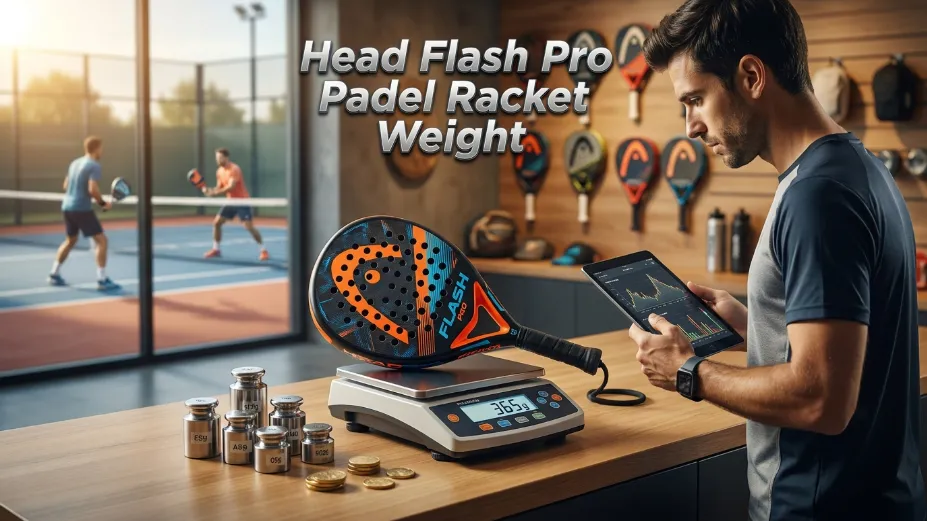
At a baseline configuration of 365g, the static head flash pro padel racket specs weight sits squarely within the sweet spot for versatile all-court play. When assessing physical mass, a difference of even 5 grams can entirely shift how a racket performs at the net. At 365 grams, this model delivers enough inherent structural stability to block high-velocity smashes from your opponents without twisting in your hand.
However, static mass is only half the equation. The 275mm balance point pushes the weight distribution slightly upward toward the upper third of the frame. This design choice creates a higher moment of inertia during your swing phase, effectively amplifying your raw leverage when delivering flat smashes or deep, trailing chiquitas into the corners.
Advanced Material Composites: Carbon, Innegra, and Power Foam
Analyzing the head flash pro padel racket specs weight materials reveals why this racket outperforms typical intermediate models in long-term structural integrity. HEAD has integrated two key proprietary structural technologies into the frame layout:
- Innegra Technology: This is the world’s lightest high-performance fibre integrated into the carbon matrix. By blending ultra-tough Innegra fibres with premium carbon, the frame achieves a composite structure that reduces structural impact vibrations by up to 17% while increasing overall torsional stiffness.
- Tailored Frame Construction: Every single tubular section of the frame is individually engineered and constructed to achieve the absolute highest level of performance, making the head flash pro padel racket specs weight materials beginner framework incredibly forgiving yet resilient.
- Power Foam Core: Unlike dense EVA cores that require immense physical effort to generate ball exit speed, the softer Power Foam setup acts as a high-rebound trampoline, making it easier to maintain length on defensive lobs even when caught out of position.
Static Weight vs. Swing Weight: The Kinetic Reality
A common misconception in the UK padel community is that a 365g racket will always handle identically across different brands. The design philosophy behind the head flash pro padel racket specifications weight shape balance materials layout emphasizes dynamic swing weight over static weight. Because of its oversized teardrop shape, the wind resistance (drag coefficient) is slightly higher than a traditional round control racket.
This means that while the racket feels highly maneuverable when held statically at the net, it delivers an unexpected punch of kinetic mass once you fully commit to an overhead motion. This makes it an ideal transition tool for tennis players who are accustomed to longer, heavier stroke mechanics and want to maintain structural follow-through without sacrificing their tactical recovery speed.
Adapting to the United Kingdom Climate: Indoor vs. Outdoor Play
Playing padel in Britain presents a distinct set of environmental variables that directly impact equipment physics. Cold, damp conditions typical of outdoor courts in Birmingham, Manchester, or London cause padel balls to absorb ambient moisture, making them significantly heavier and less reactive.
This is where the unique composition of the HEAD Flash Pro proves its worth. A lightweight or poorly balanced racket will struggle to punch a wet, heavy ball deep into the opposing court. Thanks to the 365g frame and the high-energy output of the Power Foam core, players can comfortably cut through heavy air and heavy balls without over-extending their shoulders or altering their natural biomechanics. For players struggling with equipment adjustment or looking to alter their setups, learning how to lighten your padel racket weight via custom undergrips or smart tape removal can provide minor balance tweaks for shifting microclimates.
Injury Prevention: Protecting Your Joints Against Tennis Elbow
Repetitive shock transmission is the primary cause of lateral epicondylitis among club players. When a ball collides with a padel racket, kinetic shock travels directly up the handle if the materials fail to absorb the impact energy. The combination of carbon and Innegra fibres within this frame acts as a highly efficient internal shock absorber.
By dampening the structural frequencies before they reach your wrist and elbow joints, it acts as an excellent preventative option for individuals prone to joint strain. If you have suffered from chronic joint fatigue in the past, checking historical guides on the best padel rackets for tennis elbow can help you compare how different dampening systems measure up against HEAD’s proprietary tech matrix.
Head-to-Head: HEAD Flash Pro vs. Key Market Competitors
To provide complete clarity, we must look at the missing angles that traditional reviews overlook by placing this frame directly alongside its main rivals in the intermediate sector:
HEAD Flash Pro vs. Babolat Technical Vertuo
While the Babolat Technical Vertuo leans heavily into a high-flexibility fiberglass face to provide soft power, it often lacks the structural stiffness found in the Flash Pro’s carbon-Innegra hybrid perimeter. The Vertuo features a more pronounced diamond shape, making it highly unforgiving for transitioning players. The Flash Pro’s Oversized Teardrop shape delivers a significantly larger sweet spot, ensuring that off-centre hits don’t immediately die in the net.
HEAD Flash Pro vs. Adidas Match Light
The Adidas Match Light focuses purely on maximizing maneuverability by dropping the structural weight down toward the 345g range. However, this extreme reduction in mass comes with a major performance trade-off: structural instability when blocking heavy attacking volleys. The HEAD Flash Pro’s 365g build provides the necessary mass to withstand high-velocity attacks while ensuring your blocks land deep within the transition zone.
Head Flash Pro Padel Racket Weight – FAQ
1. How does high ambient moisture in the UK affect the Power Foam core?
Unlike old-school open-cell foams, the premium Power Foam core used by HEAD is fully sealed within the protective carbon-Innegra outer matrix. This completely prevents internal moisture absorption, ensuring that your racket maintains its structural elasticity and rebound properties even during damp outdoor winter leagues across the UK.
2. What is the difference between the Flash Pro and the standard amateur Flash version?
The standard Flash model is lighter (typically around 360g) and features a slightly more flexible frame construction optimized purely for casual players. The Flash Pro incorporates additional carbon reinforcement along the frame perimeter, raising the weight to 365g to provide the extra structural stability and power required for competitive intermediate matches.
3. Is the 365g weight suitable for absolute beginners?
Yes, because the oversized teardrop shape distributes the 365g mass evenly across the entire hitting surface. This ensures that the racket does not feel overly head-heavy or cumbersome, allowing beginners to develop proper technical form without straining their wrists.
For more detailed technical guidelines, complete structural safety documents, or to browse authorized component modifications directly from the official manufacturer, you can visit the verified HEAD UK Product Archive.