Padel is no longer just a holiday activity we spot in Spain; it is exploding across the UK. From local clubs in Yorkshire to premium courts in London, the demand for high-performance equipment is at an all-time high. If you are reading this, you are likely looking to upgrade your game and have landed on one of the most discussed pieces of kit this season: the Dunlop Galactica padel racket.
Choosing the right racket can feel like a minefield. With terms like “12K Carbon,” “Tri-Max,” and varying weight balances, it is easy to get confused. Is it worth the investment? Will it cure your tennis elbow or add that explosive power to your smash? As detailed in the LTA Padel Guide, understanding your equipment is half the battle in this tactical sport.
In this comprehensive guide, we will strip away the marketing jargon. We provide an in-depth dunlop galactica padel racket review, comparing the heavy-hitting Pro, the agile Lite, and the forgiving Team models. We will explore the controversial “dry touch,” the durability of the rough surface, and ultimately help you decide if this flagship series is the right match for your style of play.
The Technology: What Makes the Galactica Special?
Before we dive into how it feels on the court, we need to understand what is under the bonnet. Dunlop has a long history in racket sports, and the Galactica series (famously used by pro player Juani Mieres) represents their top-tier engineering.
1. Japanese Carbon Construction
Unlike cheaper alternatives that use standard carbon composites, the Dunlop Galactica padel racket utilises premium 12K Japanese Carbon. In simple terms, this means higher consistency. Standard carbon can sometimes have “dead spots” or soften too quickly over time. Japanese carbon retains its structural integrity longer, offering a consistent response whether you are playing in the damp British winter or a hot summer day.
2. Tri-Max Reinforcement
If you look at the throat of the racket (the area between the handle and the face), you will see a three-pronged structure known as Tri-Max. This is not just for aesthetics. It is designed to lock the frame in place, reducing torque (twisting) when you hit the ball off-centre. For players transitioning from tennis, this provides a familiar solid sensation.
3. Extra Grip (The “Sandpaper” Effect)
Spin is vital in Padel, especially for the Vibora and Bandeja shots. The Galactica features a textured, rough finish often described as a “sandpaper” surface. This generates significantly more bite on the ball compared to smooth gloss finishes, allowing for sharper angles.
Dunlop Galactica Padel Racket Review: The Deep Dive
This is the section where we go deep. You want to know exactly how it performs, not just what the spec sheet says. When conducting a dunlop galactica padel racket review, the first thing that stands out is the unique “feel” of the impact.
The “Dry Touch” Sensation
One of the most debated aspects of this racket is its “Dry Touch.” But what does that mean?
Many modern rackets, especially those from brands like Nox or Babolat, might use a soft EVA foam that gives a “trampoline” effect—where the ball sinks in and shoots out. The Dunlop Galactica is different. It feels stiffer, crisper, and “drier.”
- The Pro: You get instant feedback. You know exactly where the ball hit the face. It offers immense precision for lobs and placements.
- The Con: It is less forgiving. If you miss the sweet spot, the racket won’t help you much. It demands good technique.
Power vs. Control
The standard Galactica and the Pro version sit in the “Medium-High” balance category. This makes them hybrid monsters. They are not pure diamond-shaped power hammers, nor are they round defensive shields. They sit perfectly in the middle.
At the net, the dunlop galactica padel racket shines. The stiffness allows you to block heavy shots from opponents without the racket wobbling in your hand. When you switch to overheads, the high balance helps bring the head down quickly for power. However, be warned: if you are used to very light rackets, you might find the Pro version slightly demanding on the wrist after a 90-minute match.
The Sweet Spot
Because of the teardrop/hybrid shape, the sweet spot is located slightly above the centre. It is generous enough for intermediate-to-advanced players, but beginners might struggle. If you hit the frame, the feedback is harsh. However, once you dial it in, the reward is a heavy, penetrating ball speed that cheaper rackets simply cannot replicate.
If you are looking to compare this feel with other top-tier brands, you might want to check out how it stacks up against Head padel rackets, which often offer a slightly softer sensation.
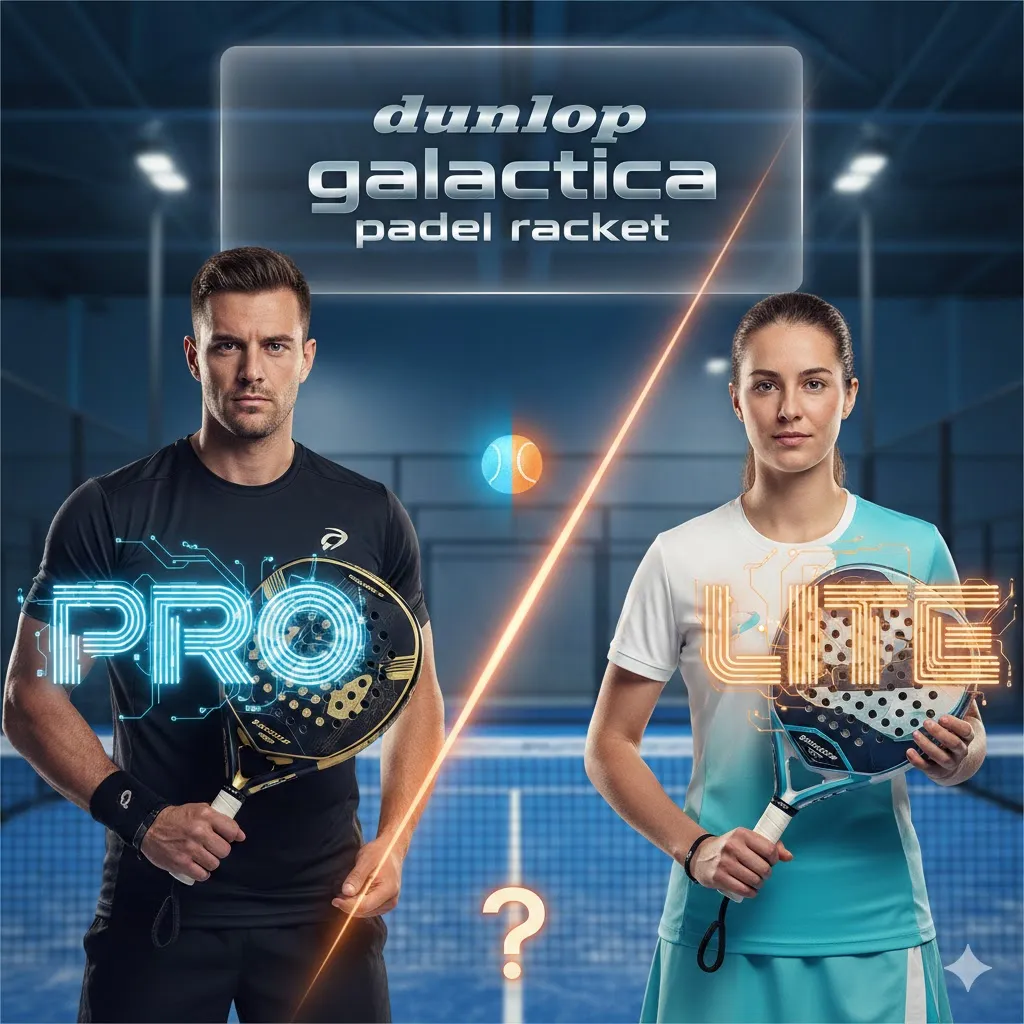
Model Showdown: Pro vs. Lite vs. Team
Dunlop has released multiple versions under the Galactica umbrella. Choosing the wrong one can be a costly mistake.
1. Dunlop Galactica Pro Padel Racket
The Heavy Hitter. This is the heaviest of the bunch (around 370g+). It is designed for the advanced player who generates their own power and wants a racket that remains stable against the hardest smashes.
- Best for: Advanced tournament players, aggressive left-side players.
- Warning: Can be tiring for the arm if your fitness isn’t up to scratch.
2. Dunlop Galactica Lite Padel Racket
The Agile Fighter. As the name suggests, the dunlop galactica lite padel racket sheds weight (around 350-360g). This drastically improves manoeuvrability.
- Best for: Defensive players who need quick reactions at the net, female players, or those prone to tennis elbow.
- Trade-off: Because it has less mass, you might feel slightly less stability when blocking very powerful shots compared to the Pro.
3. Dunlop Galactica Team Padel Racket
The Forgiving Choice. The dunlop galactica team padel racket often utilises a slightly different composite mix, sometimes introducing fiberglass or a softer carbon weave.
- Best for: Intermediates transitioning to advanced. It offers a softer feel and a larger sweet spot than the Pro.
- Recommendation: If you are moving up from a beginner bat, this is likely the best option for intermediate players within the Dunlop range.
Durability & Ergonomics
Handle and Grip
A specific detail for UK players to note: The handle on the Galactica series is known to be slightly thinner than average. If you have large hands, you will almost certainly need to apply one or two overgrips to get the correct size and prevent the racket from twisting.
Paint and Finish
Does the rough surface last? Honest answer: The “sandpaper” finish is highly effective for the first 3-4 months. However, like all textured sprays, it will smooth out over time with heavy use. The underlying carbon performance remains, but the extreme spin bite diminishes.
Regarding protection, the racket comes with a clear frame protector. Given the amount of glass and mesh interaction in Padel, we highly recommend keeping your gear safe. Always store your racket in a quality padel bag with thermal lining to protect the EVA core from UK temperature fluctuations.
See It In Action
Sometimes, words aren’t enough. To truly understand the difference in sound and handling between the Pro and Lite versions, watch this excellent playtest review below.
Frequently Asked Questions (FAQ)
1. Is the Dunlop Galactica Pro too heavy for an average player?
It depends on your technique. The dunlop galactica pro padel racket is head-heavy, which makes it feel heavier than the scale suggests. If you do not have a developed smash technique or strong forearm, it can lead to fatigue. For most club players, the Team or Lite versions are safer bets.
2. Does the “Dry Touch” cause Tennis Elbow?
Not necessarily, but it transmits more vibration than soft foam rackets. However, Dunlop includes “Sonic Core” technology to dampen this. If you suffer from elbow issues, opt for the dunlop galactica lite padel racket or ensure you use a vibration dampener and a thick overgrip.
3. How does the Galactica compare to budget rackets?
The difference is in the carbon recovery. Budget rackets often feel “dead” after 6 months. The Japanese Carbon in the Galactica keeps its pop for much longer. However, if you are just starting, there are excellent budget alternatives that might suit your wallet better until you refine your game.
4. Is the rough surface 3D or Sandpaper?
The Galactica uses an “Extra Grip” finish which is more akin to a coarse sandpaper texture rather than 3D moulded grooves. This provides superior grip on slice shots but is prone to wearing down faster than moulded 3D surfaces.
Conclusion: Which Galactica Should You Buy?
The Dunlop Galactica padel racket series is a testament to serious engineering. It steers clear of gimmicks and focuses on stability, precision, and raw power. While the “dry” feel isn’t for everyone—especially those who love a soft, spongy impact—it is a weapon in the hands of a technical player.
Final Verdict:
- Buy the Galactica Pro if: You are a competitive player looking for maximum power and have the technique to handle a demanding, head-heavy frame.
- Buy the Galactica Lite if: You prioritise speed, defend mostly from the back, or want to protect your arm without sacrificing the pro-level carbon quality.
- Buy the Galactica Team if: You want a balanced, forgiving racket that helps you improve your game without being too punishing on off-centre hits.
Ready to make your choice? Before you commit, it is always worth looking at the broader market to ensure you are getting the best deal. You can See all UK Padel Rackets here to compare the Galactica against the latest arrivals.