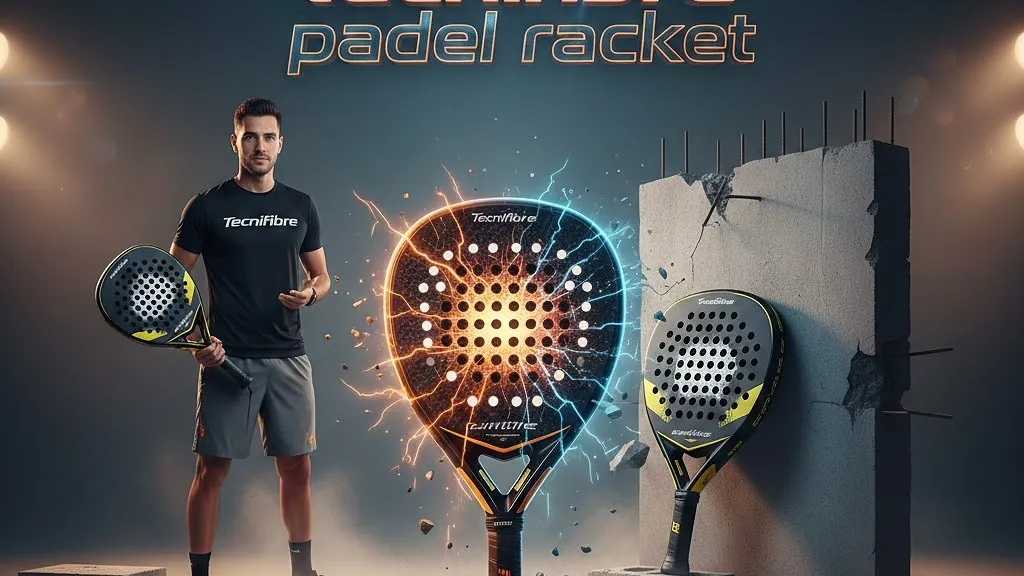
Padel is currently the fastest-growing sport in the United Kingdom, transforming from a niche holiday activity into a serious competitive pursuit at clubs from Bristol to Edinburgh. As the level of play in the UK rises, so does the demand for precision equipment. While brands like Bullpadel and Nox often dominate the headlines, discerning players are increasingly turning to a brand synonymous with technical excellence in racket sports: Tecnifibre.
Known globally for their dominance in squash and tennis, the French manufacturer has brought their “Tecnifibre Laboratory” approach to the 20×10 court. But with complex naming conventions and specific technical specs, choosing the right tecnifibre padel racket can be daunting. Are you a “Breaker” or a “Master”? Do you need the 365 or the 360?
In this comprehensive guide, we will dissect the range, specifically focusing on the high-performance tecnifibre wall breaker 365 padel racket and its forgiving sibling, the tecnifibre wall breaker 360 padel racket. We will strip away the marketing jargon and give you the raw, technical data you need to make an informed decision for your game.
Understanding the Range: Wall Breaker vs. Wall Master
Before diving into specific weights and materials, it is crucial to understand the two fundamental philosophies behind Tecnifibre’s padel catalogue. Unlike some brands that mix shapes randomly, Tecnifibre splits their range into two distinct families based on player psychology and tactical needs.
1. The Wall Breaker (The Attacker)
The Wall Breaker series is designed for the aggressor. If you play on the left side, or if your game is built around the smash (remate) and aggressive volleys, this is your line. These rackets feature a Teardrop or slightly Diamond shape. The balance is typically higher (towards the head), which helps generate leverage and power on overheads.
2. The Wall Master (The Strategist)
The Wall Master series caters to the tactician. Often favoured by right-side players or those who prioritise defence, lobs, and surgical placement over raw power. These rackets utilise a Round shape with a lower balance point, making them exceptionally easy to manoeuvre in high-pressure defensive situations.
If you are browsing for general padel rackets uk, understanding this primary split is the first step to narrowing down your choice.
Decoding the Numbers: 360, 365, 375
Tecnifibre uses a simple numerical system to indicate the average weight of the frame (in grams):
- 360: Light and manoeuvrable. Ideal for intermediates, juniors transitioning to adult frames, or players who value speed over stability.
- 365: The “Standard” Pro weight. This offers the optimal trade-off between mass for power and lightness for reaction speed.
- 375: The Heavyweight. Designed for elite players who have the physical strength to wield a heavier frame for maximum ball output.
Deep Dive: The Wall Breaker Series (Power & Spin)
This section is for the players who want to finish the point. The Wall Breaker is Tecnifibre’s answer to the modern, fast-paced game. We will look specifically at the two most popular models in the UK market.
The Tecnifibre Wall Breaker 365 Padel Racket
The tecnifibre wall breaker 365 padel racket is the flagship model for the advanced attacking player. It is not merely a “stiff” racket; it is a precision instrument designed for maximum energy transfer.
Technical Composition:
- Shape: Teardrop.
- Face Material: High Modulus Carbon (HMX).
- Core: High-density EVA rubber.
- Bridge: D-Bridge Geometry.
The “D-Bridge” Difference:
Unlike standard open throats, the Wall Breaker 365 features a specific “D-Bridge” reinforcement at the heart of the racket. This raises the flex point of the frame. In practical terms, when you hit the ball hard, the racket bends less near the handle and keeps the energy focused on the head. This results in an explosive sensation on smashes.
Court Feel & Performance:
When you make contact with the sweet spot using the Wall Breaker 365, the sound is a crisp, dry “crack” rather than a thud. The Spin Skin 3D texture (a relief on the face) grabs the ball noticeably on *Viboras*, allowing for aggressive slice. However, be warned: this racket demands good technique. The sweet spot is located higher up the face (standard for teardrops), and off-centre hits can feel unforgiving if your timing is late.
Who is it for?
This is for the player who is confident in their overheads and wants to hit the ball x3 or x4. If you struggle with tennis elbow, you might find this frame slightly too rigid unless you have impeccable mechanics.
The Tecnifibre Wall Breaker 360 Padel Racket
Often mistakenly viewed as just a “lighter version” of the 365, the tecnifibre wall breaker 360 padel racket is actually a completely different beast in terms of composition and playability.
The Hidden Spec Change:
While the 365 uses full High Modulus Carbon, the Wall Breaker 360 often incorporates a Graphite or Hybrid layup. Why does this matter? Graphite/Fiberglass mixes are more flexible than pure carbon. This flexibility creates a “trampoline effect.”
Why Intermediates Love It:
The tecnifibre wall breaker 360 padel racket offers “easy power.” You do not need to swing as fast as a pro to get the ball over the net because the face assists you. The sweet spot is noticeably larger than on the 365, extending slightly lower down the face.
Agility at the Net:
At 360g, this racket moves through the air significantly faster. In fast exchange volleys, this 5-gram difference (combined with a slightly lower balance than the 365) allows you to prepare your racket quicker. If you are looking for the best padel racket for intermediate players who want to start playing aggressively, this is arguably the best entry point in the Tecnifibre range.
Deep Dive: The Wall Master Series (Control & Precision)
If the Breaker is the hammer, the Master is the scalpel. The tecnifibre wall master 365 padel racket is designed for players who construct the point from the back of the court.
The Arch-Bridge Advantage:
While the Breaker uses the D-Bridge, the Wall Master uses an “Arch-Bridge.” This design increases the stability of the frame against torsion. When you are blocking a heavy smash from your opponent, the racket resists twisting in your hand, giving you a stable platform to redirect the ball.
Comfort and Touch:
The tecnifibre wall master 365 padel racket is widely considered one of the most comfortable high-end rackets on the market. The round shape centres the sweet spot, and the construction tends to dampen vibration better than the Breaker series. For players transitioning from tennis who are used to “feeling” the ball on the strings, the Master series offers excellent feedback.
Comparing it to other market leaders, if you have tried a Babolat Padel Racket (like the Counter Viper) and found it too hard, the Wall Master 365 offers a similar control profile but with a slightly softer, more plush sensation.
Expert Technical Insights: The Niche Details
Tecnifibre includes several proprietary technologies that distinguish their tecnifibre padel rackets from competitors like Head or Adidas. Here is what you need to know about the tech under the hood.
1. X-TOP Technology: The Game Changer
Standard padel rackets have a plastic bumper guard glued to the top to protect against scratches. Tecnifibre’s innovation, known as X-TOP, removes this plastic entirely.
- The Construction: They use a mix of active Aramid fibres (the material used in Kevlar vests) coated with a PTFE (Teflon) treatment, integrated directly into the frame’s resin.
- The Benefit: Plastic bumpers are heavy and sit at the furthest point from your hand, making a racket feel “head heavy” and sluggish. By removing it, the X-TOP design creates a racket that cuts through the air much faster. It also removes the common issue of the bumper peeling off after a few months.
2. Spin Skin 3D
You will notice a rough texture on the face of high-end Tecnifibre models. Unlike the sandpaper finish found on some rackets (which wears off), Spin Skin 3D is a structural relief decal. It is highly effective for low-speed shots where the ball stays on the face longer—such as chiquitas or floaty slices. However, do not expect it to generate topspin on a smash; that comes purely from your wrist action and padel shoes positioning.
3. Handle Ergonomics
A note for players with large hands: Tecnifibre handles can feel slightly shorter and more compact compared to a standard Head Padel Racket. If you have a two-handed backhand, you may need to remove the thick factory grip and replace it with a thin overgrip to maximise the usable handle space, or simply grip higher up the throat.
Buying Advice for the UK Market
When purchasing a tecnifibre padel racket in the UK, there are a few logistical factors to keep in mind.
Weight Tolerances
If you buy a tecnifibre wall breaker 365 padel racket, it will rarely weigh exactly 365g. Manufacturing tolerances in carbon fibre production mean a racket can vary by +/- 10g.
Pro Tip: If you are buying from a specialist UK retailer, ask them to weigh the specific frame before they ship it. A “365” model that actually weighs 372g will play very differently to one that weighs 361g.
Customisation
Because of the X-TOP technology, the head of the racket is lighter. If you find the Wall Breaker 360 slightly too light for your blocks, you can safely add a purely adhesive protector tape (weighing approx 6-8g) to the top. This effectively essentially turns the balance into that of a 365 model without changing the core stiffness.
Frequently Asked Questions (FAQ)
Q: What is the main difference between the Tecnifibre Wall Breaker and Wall Master series?
The primary distinction lies in their shape and playing style. The Wall Breaker range features a teardrop or diamond shape, designed specifically for aggressive players seeking maximum power and explosive smashes. In contrast, the Wall Master series utilises a round shape, prioritising precision, control, and manoeuvrability, making it ideal for tactical defenders and counter-attackers.
Q: What do the numbers (360, 365, 375) represent in the model names?
These numbers refer to the average weight of the racket in grams.
360: Generally targeted at intermediate players or those preferring a lighter, more manoeuvrable frame.
365: The standard weight for advanced players, offering an optimal balance of stability and power.
375: A heavier frame designed for pro-level players who can handle the extra mass to generate maximum power.
Q: Is the Tecnifibre Wall Breaker 365 suitable for intermediate players?
It is generally recommended for advanced players due to its specific balance and stiffness. However, an ambitious intermediate player with good technique (specifically in overheads) may find it aids their power game. If you lack consistent centring, the Wall Breaker 360 might be a more forgiving starting point due to its slightly softer composition.
Q: What is the material difference between the Wall Breaker 360 and the Wall Breaker 365?
This is a common point of confusion. The Wall Breaker 365 typically features a High Modulus Carbon (or full carbon) face, which provides high rigidity for explosive power but requires precise hitting. The Wall Breaker 360, often designed for developing players, usually incorporates a Graphite or Hybrid (Carbon/Fiberglass mix) face. This makes the 360 softer and more comfortable on impact, offering a larger sweet spot at the expense of some raw power.
Q: Does the Wall Master 365 generally feel softer than the Wall Breaker 365?
Yes. While both are premium rackets, the Wall Master 365’s round shape and construction tend to absorb more vibration, offering a “plush” feel. The Wall Breaker 365 is designed to be stiffer to transfer energy directly into speed, which can feel harder on the arm if you miss the sweet spot.
Q: How does the “X-TOP” technology affect the durability of the racket?
Tecnifibre’s X-TOP technology replaces the traditional plastic bumper guard with a mix of active fibres (aramid) and a Teflon (PTFE) treatment integrated directly into the frame.
Benefit: It reduces the racket’s head weight significantly, making it more aerodynamic and less sluggish than rackets with glued-on plastic protectors.
Durability: Tests and user feedback suggest it is surprisingly resistant to abrasion against walls and fences, though some players note that direct, heavy impacts on sharp edges might expose the weave faster than a thick plastic guard would.
Q: Are Tecnifibre Wall Breaker rackets safe for players with tennis elbow?
The high-end Wall Breaker models (365 and 375) are quite stiff and head-heavy, which can place strain on the forearm if your technique is not perfect. If you suffer from tennis elbow (lateral epicondylitis), it is advisable to look at the Wall Master series or the lighter Wall Breaker 360, as their softer cores and lower balance points transmit fewer harsh vibrations to the arm.
Q: I find some padel handles too short; how does Tecnifibre compare?
Some players have noted in forums that Tecnifibre handles can feel slightly shorter or more compact compared to brands like Babolat or Head. If you have large hands or use a two-handed backhand, you might need to remove the thick factory grip and replace it with a thin overgrip, or grip higher up the shaft, to accommodate your style.
Q: Does the “Spin Skin 3D” surface actually help with slice?
Yes, but it’s subtle. The Spin Skin 3D is a textured relief (decal-based roughness) rather than a sandpaper-like finish. It is effective at engaging the felt of the ball on slow-speed controlled shots (like *chiquitas* or heavy slices), but don’t expect it to magically generate spin on high-speed smashes where technique is the dominant factor.
Q: Why does my new Tecnifibre racket weigh slightly different than the stated 365g?
It is industry standard for padel rackets to have a manufacturing tolerance of +/- 5 to 10 grams. A “365” model could legitimately weigh between 360g and 370g. If weight precision is critical for you, we recommend asking the retailer to weigh the specific unit before shipping, as this variance is common across all major brands, not just Tecnifibre.
Q: Should I use a frame protector on top of the X-TOP technology?
Technically, you don’t need one as the X-TOP is designed to resist abrasion. Adding an aftermarket adhesive protector will add roughly 6-10 grams to the head of the racket. This will shift the balance upwards, making the racket feel heavier and more powerful but slightly harder to manoeuvre. Do this only if you play on courts with exposed metal fencing or rough concrete walls.
Q: Where is the best place to buy Tecnifibre rackets in the UK?
Look for reputable specialist retailers like Padel Shack, Total Padel, or major tennis/racket sports outlets that offer a “demo” service. Buying from UK-based authorised dealers ensures your warranty is valid, which is crucial for carbon fibre equipment.
Final Verdict: Which Tecnifibre Racket Should You Choose?
Tecnifibre has succeeded in creating a focused, high-performance range that cuts through the noise of the crowded padel market. By clearly separating Power (Breaker) and Control (Master), they allow players to self-select based on their court personality.
- Choose the Tecnifibre Wall Breaker 365 if: You are an advanced player who thrives on the left side, loves to smash, and wants a racket that rewards aggressive precision.
- Choose the Tecnifibre Wall Breaker 360 if: You are an ambitious intermediate looking to add power to your game without sacrificing comfort, or if you find pro-level rackets too heavy and sluggish.
- Choose the Tecnifibre Wall Master 365 if: You are the “computer” of the team—placing lobs with millimetric precision—or if you need a racket that is kind to your arm during long matches.
For more information on where to play and how to get started with tournaments, you can visit the LTA Padel website. Remember, the best racket is the one that feels like an extension of your arm, so try to demo these frames at your local club before committing.